Commercial Incline Chest Press Machine Manufacturer | OEM Gym Equipment
Most gym owners assume wiping down an incline chest press with whatever spray is on hand keeps it safe and functional, but aggressive disinfectants and skipped rail maintenance silently destroy upholstery, corrode guide rails, and trigger mechanical failures that cost several times the savings on cheap cleaners.
The correct cleaning and sanitizing process for an incline chest press combines daily pH-neutral wipe-downs of every touchpoint, weekly inspection of cable alignment and pivot bolts, and monthly deep cleaning with high-temperature lubricant reapplied to guide rails and pivot joints — using only vinyl-safe, powder-coat-friendly agents to prevent premature material degradation.
I still remember walking into a flagship fitness club in Riyadh shortly after they took delivery of a full order of our selectorized machines. The facility manager was furious — several seats on the incline chest press units had jammed solid, members were complaining, and the owner was threatening to withhold final payment. I pulled the shrouds off and found the guide rail lubricant had turned into a hardened crust. The ambient temperature regularly climbed past 40°C, and the air-conditioning cycled cold air directly onto the frames, creating a thermal shock that destroyed standard grease within weeks. The steel cables had also drifted half a groove off the pulley track. [NEED_CITE: lubricant degradation patterns under thermal cycling in high-ambient gym environments] That visit reshaped how we approach gym equipment sanitizing guide protocols for hot-climate markets — every unit now ships with high-temperature lubricant pre-applied and an illustrated maintenance manual in both Arabic and English, with on-site photographs so local technicians never have to guess.
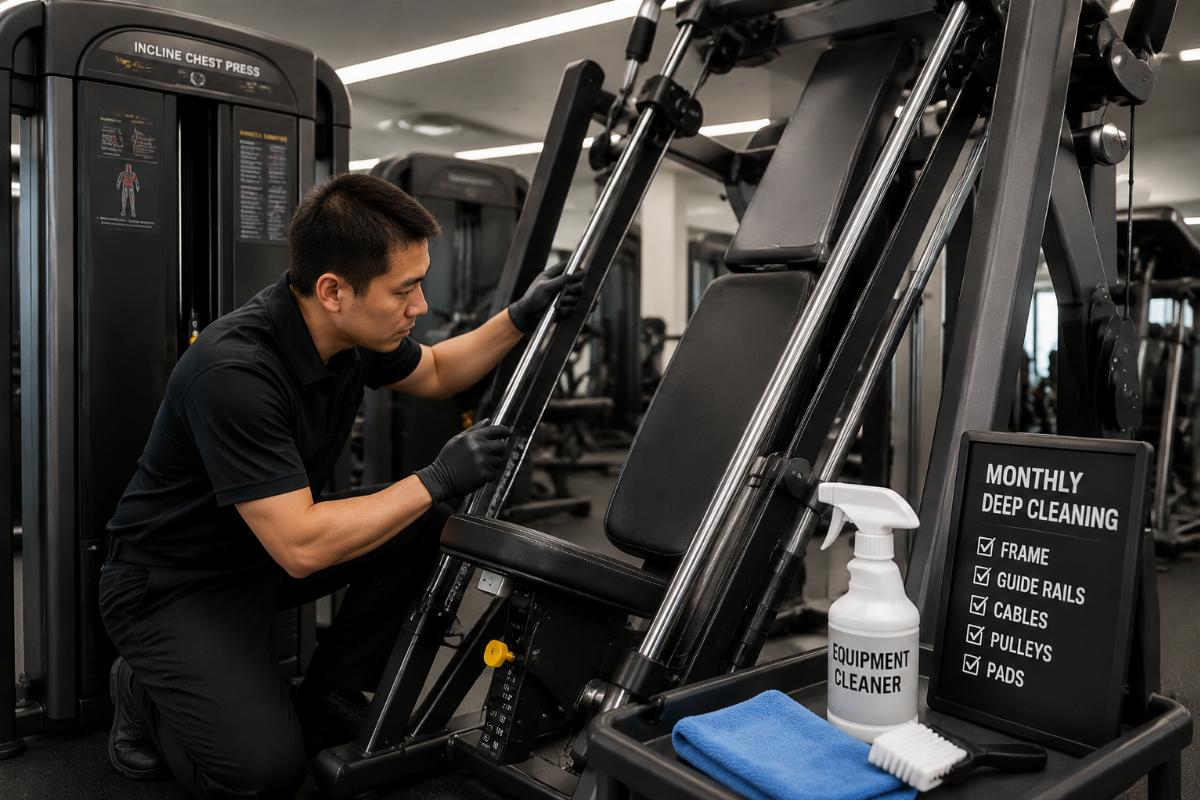
This article walks through the exact commercial strength machine maintenance routine that keeps these machines running smoothly, whether you operate a high-traffic commercial gym, a boutique studio, or a hotel fitness center across multiple regions.
What Is the Correct Daily Cleaning Routine for Incline Chest Press?
A pH-neutral disinfectant wipe-down of every contact surface after each use is the foundation of any reliable incline press cleaning routine — it prevents sweat-driven corrosion, bacterial buildup, and upholstery breakdown without damaging vinyl or powder-coated frames.
Sweat is mildly acidic and, left on metal and vinyl, it accelerates corrosion and cracks upholstery far faster than normal wear. [NEED_CITE: sweat composition and its corrosive effect on gym equipment materials per sports hygiene research] The daily protocol is straightforward but non-negotiable for any facility serious about fitness equipment hygiene protocol compliance.
- Wipe all handles, adjustment knobs, and seat frames with a pH-neutral, vinyl-safe disinfectant wipe or spray applied to a microfiber cloth — never directly onto the machine, to avoid liquid seeping into pivot bearings.
- Clean the backrest and seat upholstery using the same cloth, ensuring no pooling of moisture along stitching lines.
- Dry-wipe the guide rail covers and weight stack shroud with a separate dry microfiber cloth to remove dust and chalk residue.
- Inspect visible cable sections for fraying or unusual discoloration during each wipe-down — early detection prevents catastrophic cable failure.
In a high-traffic commercial gym serving dozens of members daily, mid-session spot cleaning between peak hours is essential. Waiting until closing time allows sweat to sit for hours, which is when vinyl deterioration and metal staining accelerate noticeably. [NEED_CITE: bacterial load buildup on gym equipment surfaces during peak operating hours]
A boutique studio I worked with in the Gulf region once switched to a bleach-based cleaner to cut costs. Within a few months, the vinyl upholstery on their incline chest press units began cracking along every seam, and the powder-coated frames showed visible discoloration near the adjustment pins. The re-upholstery and touch-up painting cost several times what a proper pH-neutral cleaner would have cost over the same period.

How Should You Deep Clean and Lubricate Moving Parts?
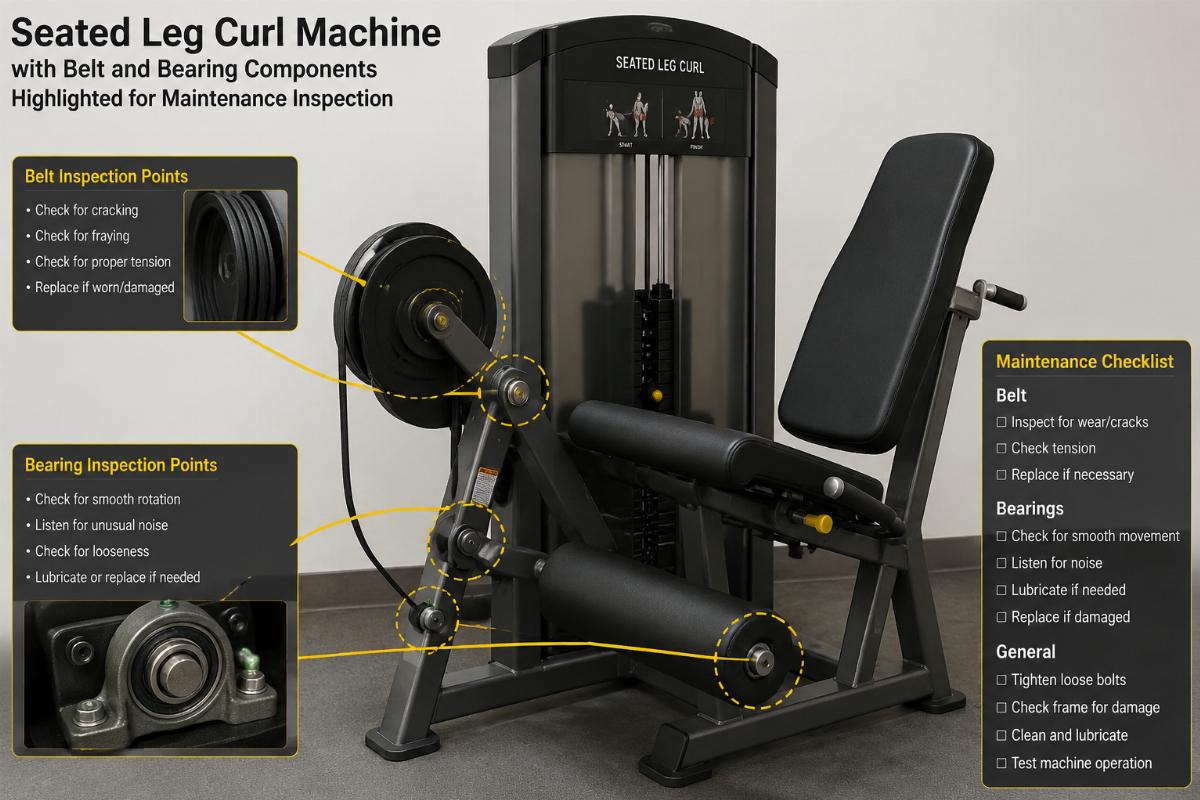
Monthly disassembly-level cleaning of guide rails, pivot points, and cable paths, followed by reapplication of high-temperature lubricant, is the single most impactful step in preventing mechanical seizure on an incline chest press.
Most people think cleaning only means wiping visible surfaces, but neglected guide rails and pivot points account for the majority of mechanical failures on selectorized strength equipment. [NEED_CITE: root cause distribution of selectorized machine failures per fitness equipment maintenance audits]
- Remove the upholstery covers carefully, noting fastener positions for reassembly.
- Vacuum internal mechanisms — dust and fabric fibers accumulate around pulleys and cable channels, creating abrasive paste when mixed with old lubricant.
- Clean guide rail tracks with a dry, lint-free cloth to remove old grease residue. Avoid solvents that strip protective coatings.
- Reapply high-temperature lubricant to guide rails, pivot joints, and any sliding contact surfaces. In hot climates or facilities without consistent climate control, a high-temperature synthetic grease is mandatory — standard lithium grease hardens and fails under thermal cycling.
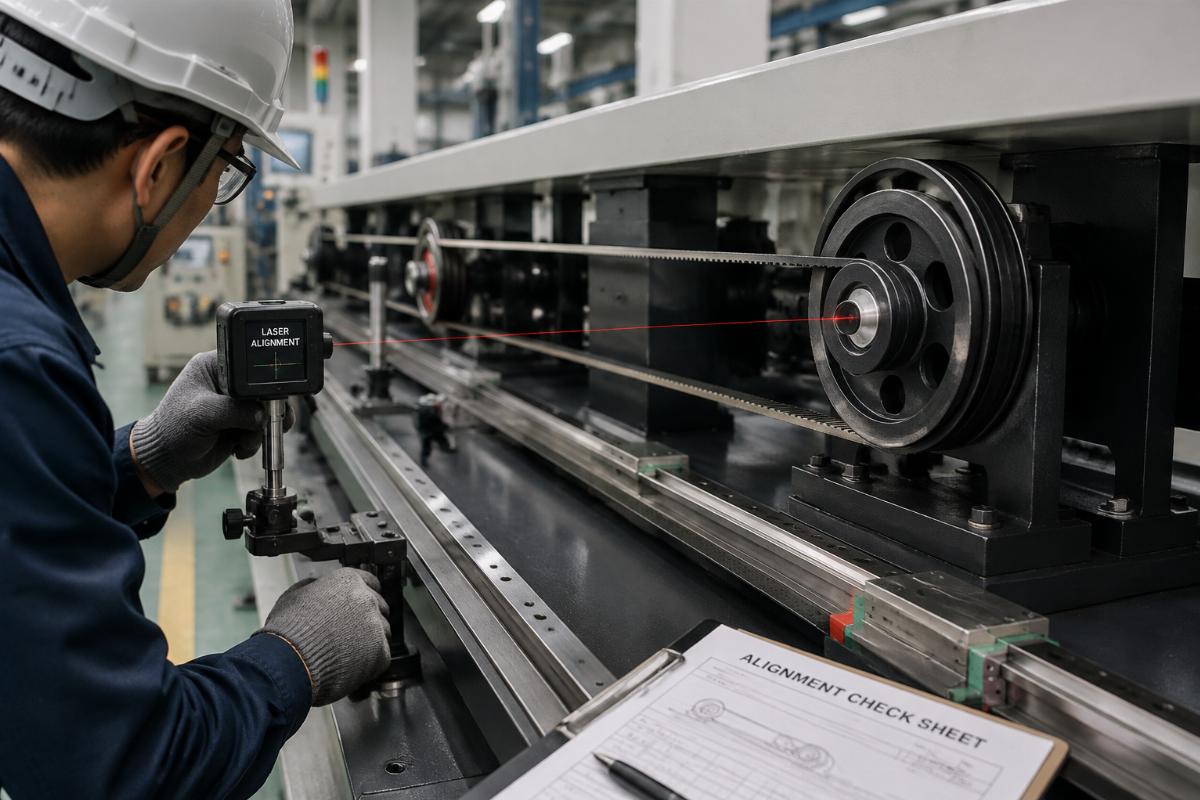
- Check cable seating on every pulley — cables must sit centered in the groove. A misaligned cable wears unevenly and can jump the pulley under load.
When we began shipping incline chest press machines to Middle Eastern markets, we upgraded the factory-applied lubricant to a high-temperature formulation and added an extra salt-spray corrosion test on guide rails before assembly. The maintenance guides now include field photographs taken in actual gym installations, showing exact lubrication points — a small change that dramatically reduced warranty calls from local technicians who previously had no visual reference.

Which Cleaning Products Are Safe for Gym Equipment Surfaces?
Avoid bleach, high-alcohol, and ammonia-based cleaners entirely — use only pH-neutral, vinyl-safe disinfectants to protect upholstery, powder-coated frames, and plated metal components on an incline chest press.
The assumption that stronger disinfectants deliver better hygiene is one of the most costly mistakes in gym equipment sanitizing guide practices. High-alcohol and bleach-based products accelerate vinyl cracking, strip powder-coat finishes, and promote rust on any exposed steel surface. [NEED_CITE: material compatibility of common disinfectants with gym equipment vinyl and powder-coat finishes]
| Surface Type | Recommended Cleaner | Risk of Aggressive Agents |
|---|---|---|
| Vinyl upholstery | pH-neutral, vinyl-safe disinfectant | Cracking, seam splitting, discoloration |
| Powder-coated frame | Mild pH-neutral spray + microfiber | Coating dulling, micro-corrosion |
| Chrome or plated handles | pH-neutral wipe, dry immediately | Pitting, rust spotting |
| Rubber grips and pads | Water-based cleaner only | Drying, hardening, surface crumbling |
| Guide rails and pivots | Dry cloth + approved lubricant | Solvent stripping of protective grease |
A commercial gym chain operating across multiple regions once standardized a single industrial disinfectant across all locations. The facilities with higher ambient humidity noticed upholstery failure noticeably sooner than those in drier climates — the chemical interaction between the cleaner residue and moisture accelerated vinyl degradation on a compressed timeline. Switching to a pH-neutral, equipment-specific cleaner extended the upholstery replacement cycle substantially.

How Often Should Maintenance Be Scheduled Based on Usage Intensity?
High-traffic gyms serving dozens of daily users need weekly inspections of cables, pivots, and frame welds; moderate-use facilities can extend to bi-weekly intervals, but monthly deep cleaning remains the universal baseline for any incline chest press.
Usage intensity directly determines how fast lubricant degrades, cables stretch, and fasteners loosen. [NEED_CITE: maintenance frequency recommendations per equipment usage classification from fitness industry standards]
- High-traffic commercial gyms: Weekly cable alignment checks, pivot bolt torque verification, and visual upholstery inspection. Monthly full deep clean and re-lubrication. Quarterly comprehensive inspection including cable tension measurement, frame weld assessment, and bearing play evaluation.
- Moderate-use hotel and apartment gyms: Bi-weekly visual and functional checks. Monthly deep clean. Semi-annual full inspection.
- Boutique studios and low-traffic facilities: Weekly wipe-down remains mandatory regardless of usage. Monthly deep clean. Annual full inspection.
A hotel fitness center I consulted for in Southeast Asia had purchased a full gym package and initially followed a monthly-only inspection schedule. Within a short period, two incline chest press units developed noticeable cable play and a slight wobble in the seat adjustment mechanism. Switching to bi-weekly inspections caught a developing pulley groove wear before it required a full pulley replacement — saving a mid-four-figure parts and labor cost.

What Common Cleaning Mistakes Lead to Equipment Failure?
Over-wetting electronic consoles, using abrasive pads on powder-coated frames, and skipping guide rail lubrication are the leading causes of premature wear on an incline chest press — mistakes that are entirely preventable with proper staff training.
Even well-intentioned cleaning crews can cause significant damage when they are not trained on fitness equipment hygiene protocol specifics. [NEED_CITE: common equipment failure modes linked to improper cleaning practices in commercial gym environments]
- Over-wetting selectorized stacks and electronic displays: Liquid seeps into weight stack guide channels and electronic housings, causing corrosion and short circuits. Always spray the cloth, never the machine.
- Using abrasive scouring pads or steel wool: These scratch powder-coat finishes, exposing bare metal to sweat and humidity — rust follows quickly.
- Skipping rail and pivot lubrication during cleaning: Wiping surfaces clean without reapplying lubricant leaves moving parts dry. Friction increases, wear accelerates, and mechanical seizure follows.
- Using a single cleaner for all surfaces: One product rarely suits vinyl, chrome, rubber, and powder-coat equally. Multi-surface "all-purpose" cleaners often contain solvents harmful to at least one material type.
- Ignoring cable condition during wipe-downs: A frayed cable strand is visible during every daily clean — flagging it immediately prevents a catastrophic snap under load.
A large fitness chain in Latin America reported repeated cable failures on their incline chest press fleet. Investigation revealed that cleaning staff routinely used a solvent-based degreaser on the guide rails, stripping all lubricant. The dry rails then abraded the cable sheathing from the inside. Switching to a dry-cloth rail wipe followed by approved lubricant application eliminated the cable failures entirely.

Conclusion
Consistent, correct cleaning and sanitizing of an incline chest press is the single most effective way to extend equipment lifespan, maintain member safety, and control long-term maintenance costs. A structured daily wipe-down with pH-neutral products, paired with monthly deep cleaning and high-temperature lubrication of all moving parts, prevents the vast majority of mechanical failures. Train your cleaning staff on surface-specific protocols, adjust inspection frequency to match your facility’s traffic intensity, and treat guide rail maintenance as equal in importance to surface hygiene — your equipment, your members, and your bottom line will all reflect the difference.