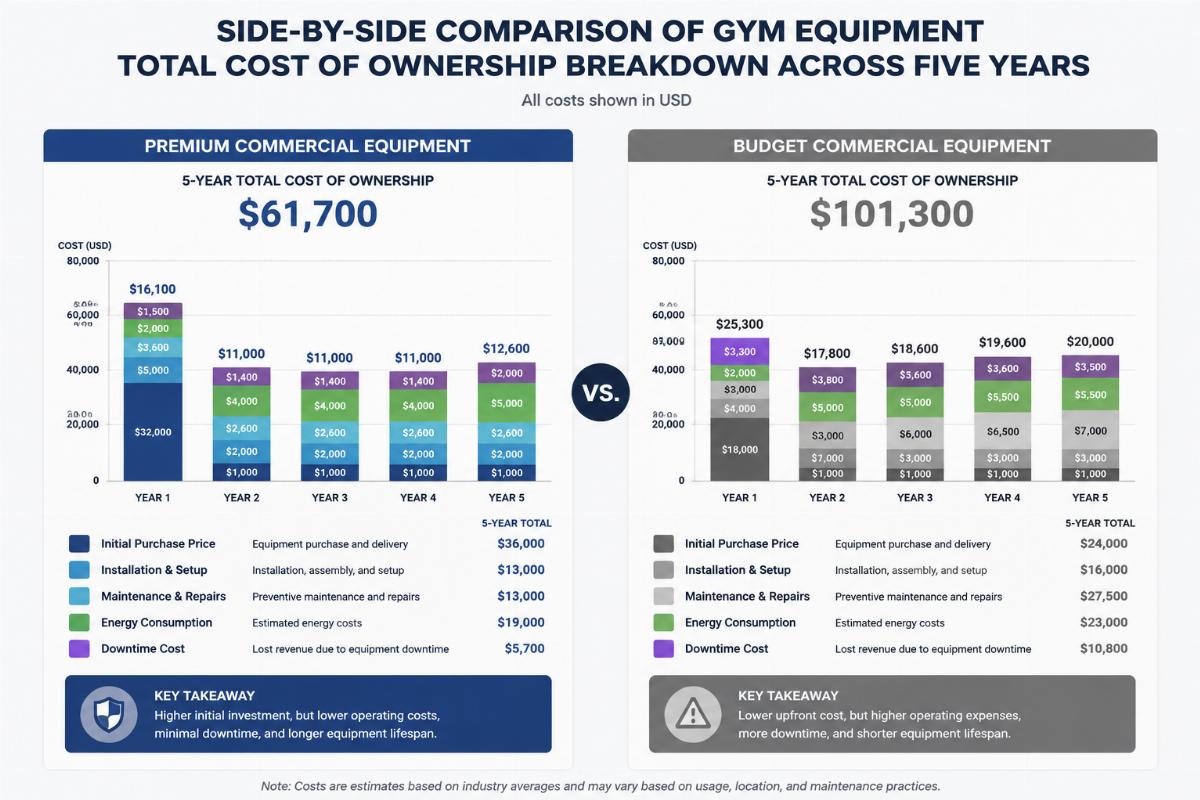
Titan Fitness Chest Press Machine OEM Manufacturer for Rehabilitation Clinics
Most buyers think a cross-reference is just about matching outer dimensions. The real bottleneck is a single line of mismatched text between the nameplate and the CE certificate.
A Titan Fitness chest press cross-reference is a spec-by-spec comparison against OEM-compatible commercial chest press machines, covering tube wall thickness, seat cushion density, cable diameter, weight stack tolerance, and CE/ISO certification coverage. For rehabilitation clinics and small commercial gyms, the OEM route often delivers better compliance flexibility, lower MOQ thresholds, and container consolidation options that branded alternatives simply cannot match.
I still remember a shipment to a rehab clinic in Riyadh. The client wanted private-label branding on just two seated chest press units. We managed to fill an entire container by combining it with other rehab and strength gear. When the cargo reached Jeddah port, customs held it for nearly three weeks because the nameplate parameter and the CE certificate model number differed by a single character. The storage fees ended up costing more than the machines themselves. That kind of detail is what separates a smooth delivery from a financial headache. [NEED_CITE: common customs clearance failure patterns for fitness equipment under EN ISO 20957]
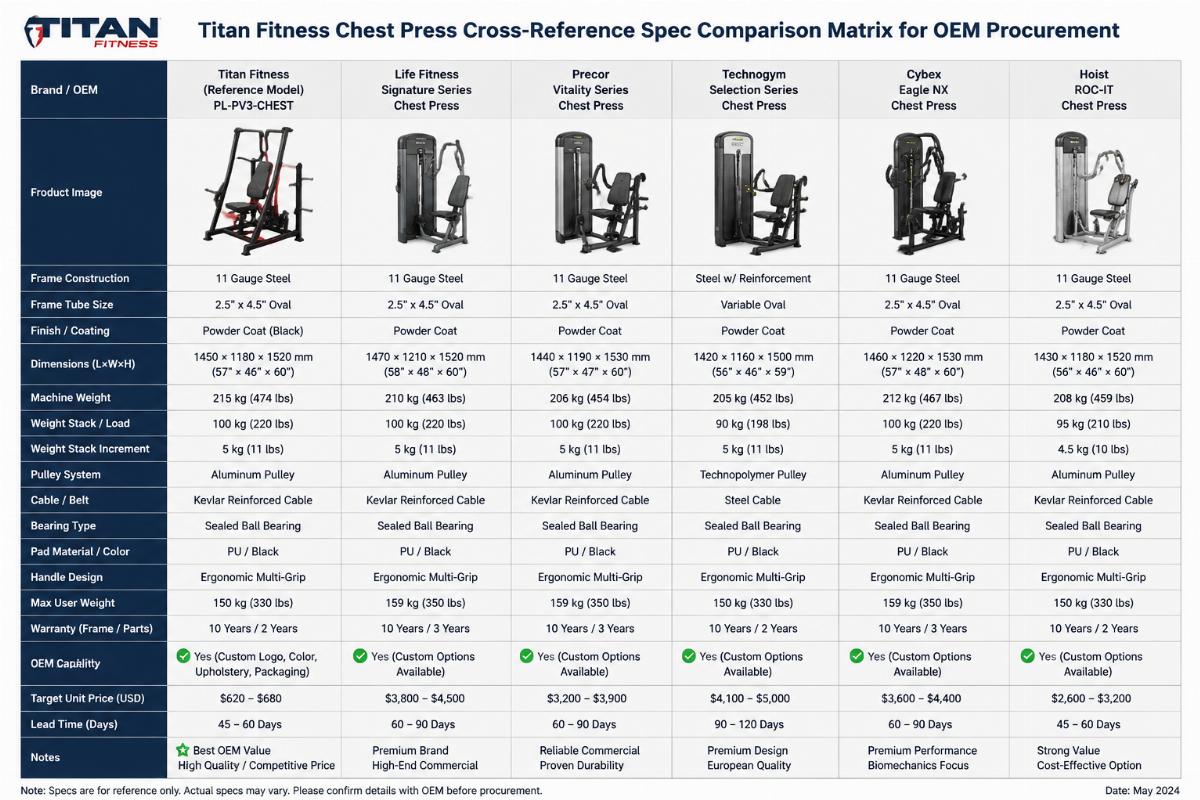
Let me walk you through what actually matters when you run a Titan Fitness chest press cross-reference, where most buyers get trapped, and how to structure an order that survives both quality inspection and customs clearance.
What Is a Titan Fitness Chest Press Cross-Reference?
A cross-reference is not a side-by-side photo comparison. It is a structured audit of mechanical specs, certification scope, and supply chain terms against the original branded unit.
When a rehabilitation clinic or a boutique gym owner searches for a Titan Fitness chest press cross-reference, they are usually trying to solve one of three problems: the original brand has long lead times, the price is too high for a low-volume order, or the specific model is discontinued. The cross-reference process maps the original machine’s critical parameters to an OEM alternative that can match or exceed performance while offering more flexible purchasing terms.
In rehabilitation settings, the selection logic differs sharply from commercial gym procurement. Clinics prioritize smooth resistance curves, precise seat adjustment increments, and low starting weight increments for patient recovery protocols. Commercial gyms care more about durability under high daily usage and aesthetic consistency across the floor. [NEED_CITE: selection criteria differences between rehabilitation and commercial strength equipment per IHRSA facility guidelines]
The cross-reference must cover at least five dimensions:
- Frame tube dimensions and wall thickness
- Seat cushion foam density and vinyl grade
- Pulley system cable diameter and routing path
- Weight stack plate tolerance and guide rod finish
- Certification model coverage and test report validity
Skipping any of these dimensions creates downstream risk. I have seen buyers match the frame size perfectly but overlook the cable routing angle, which changes the resistance feel entirely. For a rehab patient recovering from shoulder surgery, that difference is not acceptable.
Key Specs to Compare: Titan Fitness vs. OEM Alternatives
The spec matrix is where most cross-references fail because buyers compare visible dimensions while ignoring hidden structural and certification parameters.
Below is a qualitative comparison framework that covers the dimensions that actually determine long-term performance and compliance risk.
| Parameter | Titan Fitness Branded | OEM Alternative (Bick) | Why It Matters |
|---|---|---|---|
| Frame Tube Wall Thickness | Standard commercial grade | Heavy-duty commercial grade | Determines long-term rigidity under repetitive loading |
| Seat Cushion Foam Density | Medium-high density | High-density molded foam | Affects comfort during extended rehab sessions |
| Cable Diameter | Standard commercial | Reinforced commercial grade | Directly influences service interval and safety margin |
| Weight Stack Tolerance | Standard production | Precision-machined plates | Reduces noise and ensures consistent resistance feel |
| CE Certification Coverage | Selective models | Broad model range under EN ISO 20957 | Determines customs clearance speed and legal compliance |
| ISO Certification | Limited documentation | Full facility and product ISO coverage | Required by many institutional procurement policies |
| OEM Branding Flexibility | Not available | Full private-label capability | Critical for clinic branding and distributor exclusivity |
| MOQ Threshold | High for direct orders | Flexible down to single-unit orders | Enables small clinics to procure without overcommitting |
[NEED_CITE: EN ISO 20957 safety standard requirements for selectorized strength equipment]
A rehabilitation clinic procurement manager in Southeast Asia once requested a cross-reference for a Titan Fitness chest press. The initial quote from the OEM supplier looked attractive. But when we pulled the CE certificate, the model number on the certificate did not match the nameplate specification the factory intended to produce. The difference was a single suffix character. Had the buyer not caught it during the cross-reference audit, the shipment would have faced the same customs hold I experienced in Jeddah.
The lesson is simple: the cross-reference must verify that every nameplate parameter has a direct, character-for-character match in the certification document. [NEED_CITE: CE certification model number consistency requirements for fitness equipment exports to EU and MENA markets]
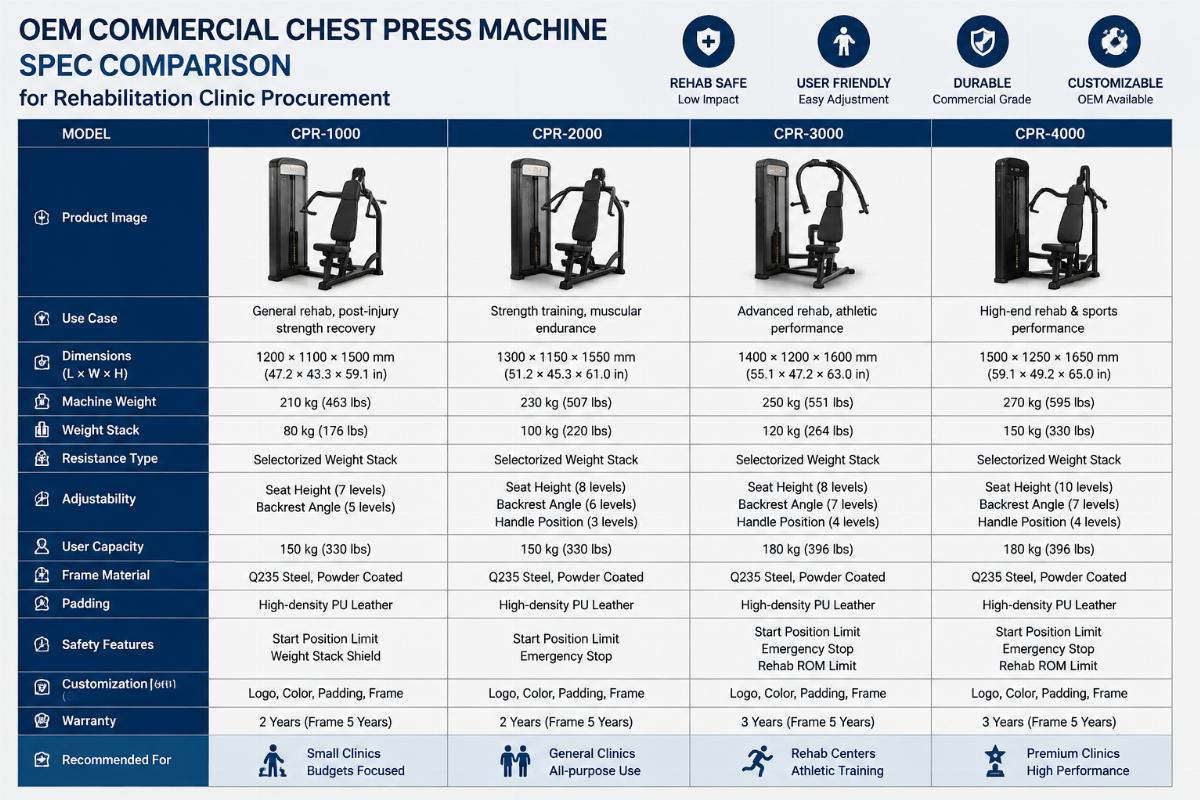
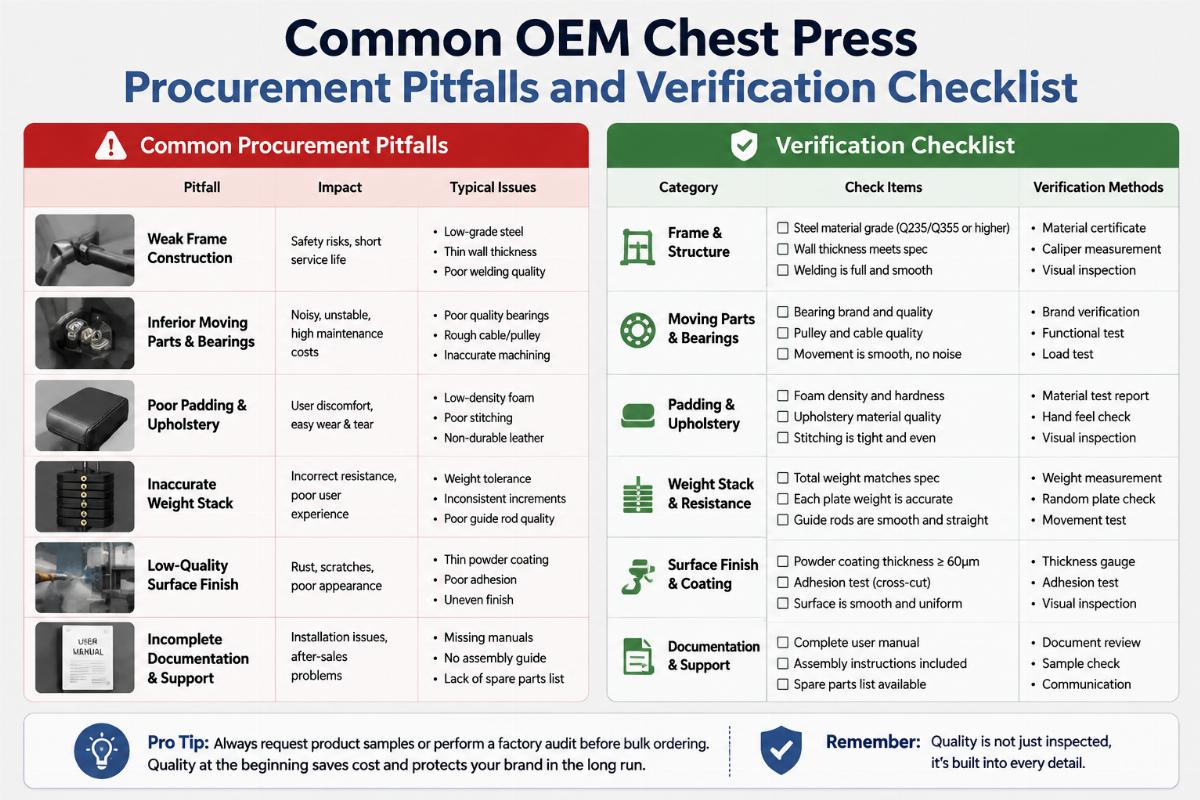
Common Pitfalls in OEM Chest Press Procurement
The three most expensive mistakes in OEM chest press procurement are nameplate-certificate mismatch, incomplete certification model coverage, and spare parts supply discontinuation.
Let me break down each pitfall with real scenarios I have encountered.
Pitfall One: Nameplate-Certificate Mismatch
This is the silent killer of international shipments. The factory produces the machine to the correct spec, but the nameplate engraving uses a slightly different model designation than what appears on the CE test report. Customs officers at the destination port are trained to flag exactly this discrepancy. The cargo sits in the port warehouse, accumulating daily storage fees that can multiply the original equipment cost many times over.
The fix is straightforward but requires discipline: before production begins, send the client a nameplate layout drawing and the corresponding CE certificate page. Require written sign-off on the exact character match. I now check even the screw hole positions on the nameplate mounting bracket, because a misplaced hole can force the factory to tilt the plate at an angle that makes the text unreadable during inspection.
Pitfall Two: Incomplete Certification Model Coverage
Some manufacturers hold CE certification for a limited range of models. When a buyer orders a variant that falls outside the certified scope, the factory may ship it with a certificate that technically does not cover that specific configuration. This is especially common with seat adjustment variations or cable routing modifications.
The solution is to request the full certification schedule from the supplier and cross-check every ordered configuration against it. [NEED_CITE: certification scope verification procedures for multi-configuration strength equipment]
Pitfall Three: Spare Parts Supply Discontinuation
A cheap chest press is not cheap if the pulley system fails after a year and the supplier cannot provide replacement cables. For rehabilitation clinics, equipment downtime directly affects patient scheduling and revenue. The cross-reference must include a spare parts availability commitment, covering at least cables, pulleys, seat adjustment pins, and weight stack guide rods.
I always advise buyers to request a spare parts list with part numbers and lead times before placing the order. A supplier willing to provide this documentation transparently is usually a supplier confident in long-term product support.
How to Consolidate Low-MOQ Orders into Full Containers
The assumption that low-MOQ orders cannot fill a container is wrong. With strategic multi-category consolidation, even a two-unit clinic order can ship as a full container load at per-unit freight costs comparable to bulk orders.
Rehabilitation clinics and boutique studios rarely need dozens of the same machine. They need a curated selection: one chest press, one leg extension, one cable crossover, a set of adjustable dumbbells, and perhaps a small functional trainer. Individually, these items barely fill a pallet. Combined, they fill a container.
The consolidation strategy works in three layers:
Layer One: Category Grouping
Group equipment by structural compatibility. Plate-loaded machines and selectorized machines share similar crating dimensions. Free weights and functional accessories can fill the voids inside machine crates. Cardio equipment requires separate crating but can share the container if floor space is planned correctly.
Layer Two: Spatial Optimization
A standard twenty-foot container offers roughly thirty-three cubic meters of usable space. A single commercial chest press crate occupies less than two cubic meters. The remaining space can accommodate a full clinic setup including flooring, mirrors, and accessories. The key is to create a loading plan before production begins, not after the machines are crated. [NEED_CITE: container loading optimization methods for mixed fitness equipment shipments]
Layer Three: Documentation Unification
When consolidating multiple equipment types into one container, the commercial invoice, packing list, and certificate of origin must reflect every item accurately. Customs brokers at the destination need a single, coherent document set. Mismatched documentation across consolidated items triggers the same inspection delays as nameplate-certificate mismatches.
I worked with a distributor in West Africa who needed to equip three small gym locations from a single order. Each location required a different equipment mix. By consolidating all three setups into one container with separate internal partitions and a unified document set, we reduced the per-location freight cost substantially compared to shipping three separate LCL consignments.

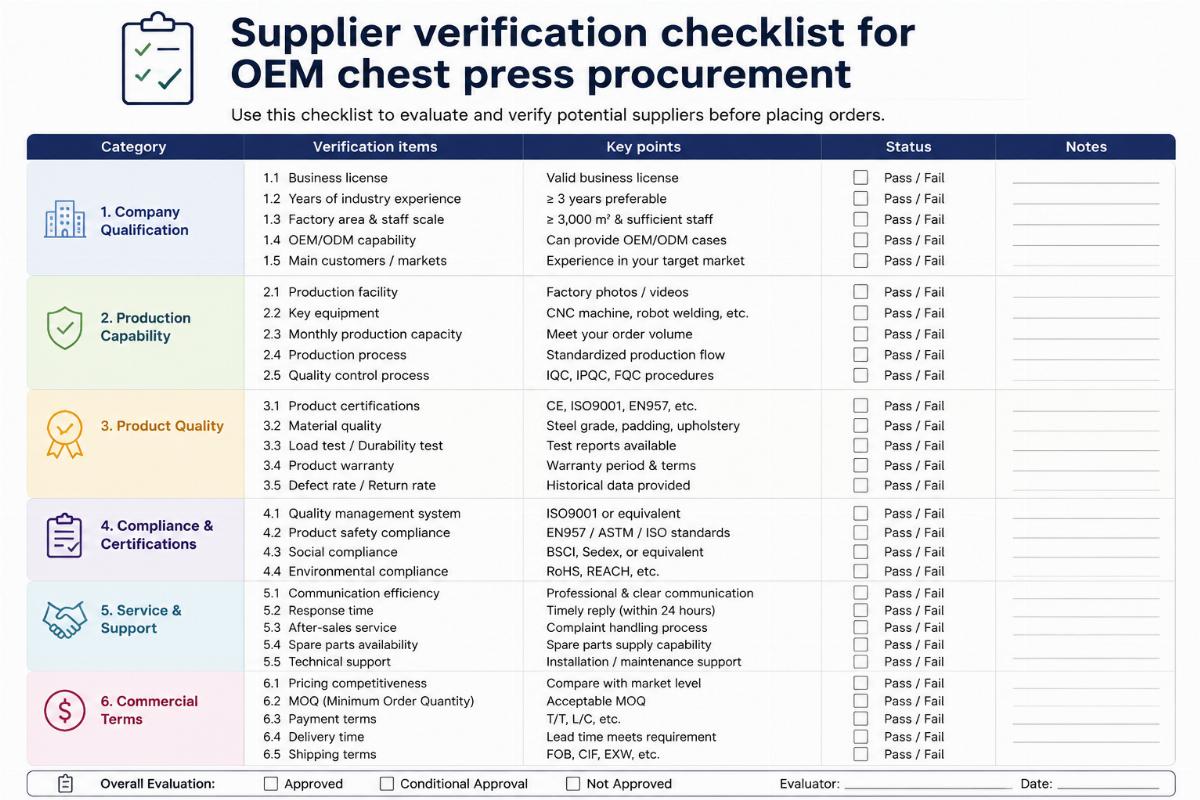
How to Verify Supplier Claims Before Placing an Order
Trust but verify. Every supplier claim about certification, material quality, and production capability should be confirmed through independent, document-based verification before any deposit is paid.
The verification process follows a clear sequence.
Step One: Third-Party Test Report Validation
Request the supplier’s third-party test report numbers and verify them directly with the issuing laboratory. Many buyers accept a PDF copy of a test report at face value. But reports can be outdated, modified, or even fabricated. A quick email to the testing laboratory confirming the report number and the product models covered takes a few days but prevents months of customs delays.
[NEED_CITE: third-party test report verification methods for fitness equipment certification]
Step Two: Sample Confirmation Protocol
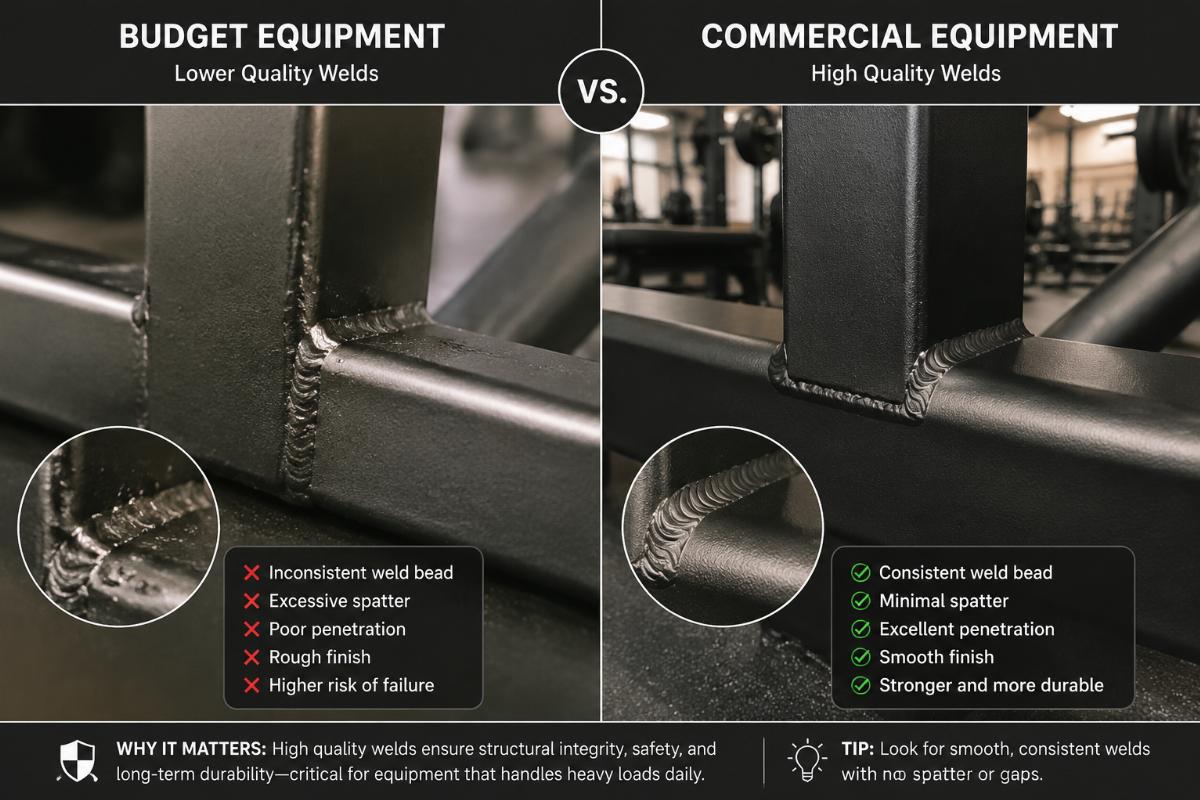
Before committing to a full order, request a pre-production sample or at minimum a detailed production prototype. Inspect the sample against the cross-reference spec matrix. Check weld quality, cable routing smoothness, seat adjustment mechanism precision, and nameplate engraving accuracy. Photograph every detail and share the images with the end client for approval.
Step Three: Contract Clause Precision
The purchase contract must specify not just the product model and price, but the exact certification model numbers, nameplate parameter text, spare parts supply duration, and penalty clauses for documentation mismatches. Vague contract language leaves the buyer with no recourse when the shipment arrives with non-conforming documentation.
I have seen buyers lose significant sums because the contract stated "CE certified" without specifying which models were covered. When customs rejected the shipment, the supplier argued that other models in their range were certified, just not the ones shipped. Precise contract language eliminates this ambiguity.
Conclusion
A successful Titan Fitness chest press cross-reference depends on spec-level detail, certification precision, and supply chain transparency, not just visual similarity or price comparison.
Rehabilitation clinics and small commercial gyms benefit most from OEM alternatives when the cross-reference covers structural specs, certification model coverage, and spare parts availability. Container consolidation makes low-MOQ orders economically viable. And independent verification of every supplier claim before order placement remains the single most effective risk reduction step in international fitness equipment procurement.