Leg Press Machine End-of-Life Recycling Disposal Supplier
Most gym owners assume an entire leg press is worthless scrap metal; in reality, a significant portion of its weight consists of non-ferrous metals and salvageable components that can generate net revenue rather than disposal costs.
Proper end-of-life disposal of a leg press machine requires systematic dismantling to separate ferrous frames, non-ferrous cables and pulleys, and non-recyclable upholstery and plastics—each stream handled through distinct recycling channels. Strategic component separation, combined with identification of refurbishable parts, can offset the majority of decommissioning labor costs while ensuring environmental compliance for hazardous materials like foam padding and pre-2000 painted surfaces. [NEED_CITE: scrap metal recovery methodology for commercial fitness equipment per ISO 14001 environmental management standards]
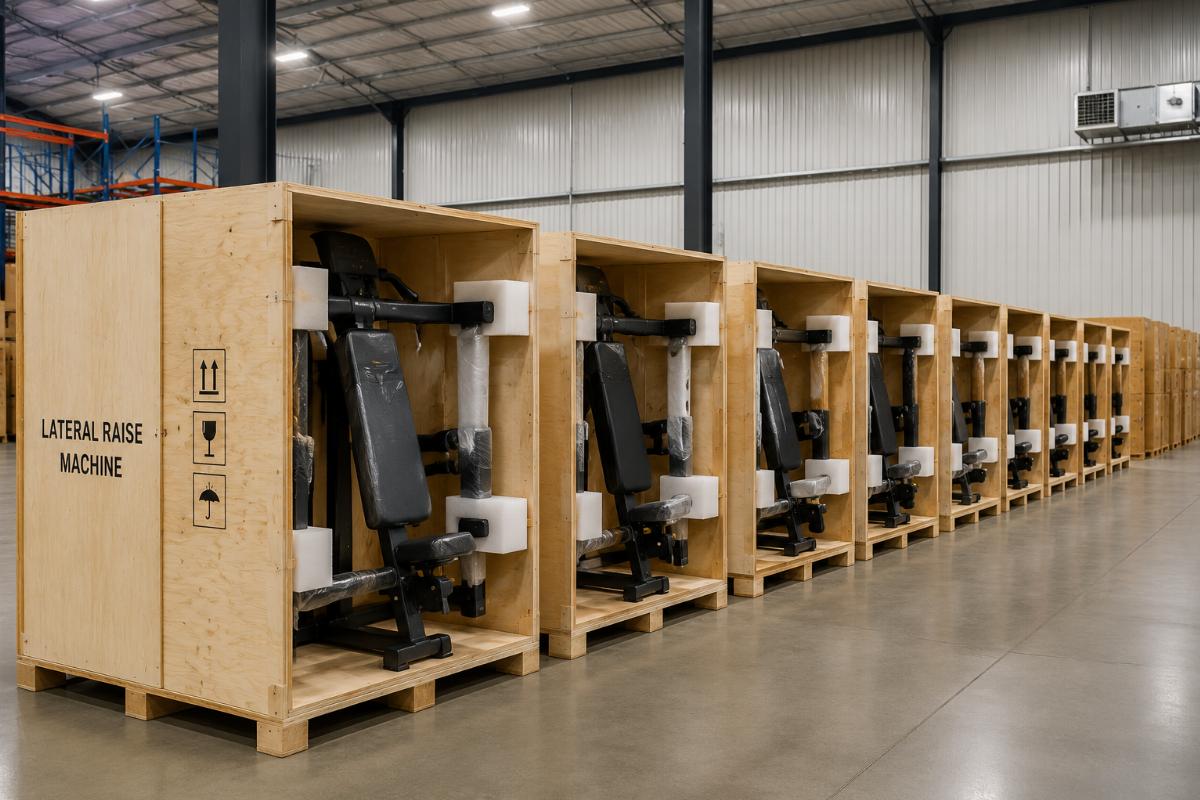
I still remember a shipment that arrived in Dubai years ago—selectorized leg press units with weight stacks that had corroded badly during ocean transit because the packaging lacked proper moisture barriers. The client refused the entire container. That loss pushed me to study not just how machines are built, but how they die. Now, dealing with decommissioned units from coastal gyms in humid climates and multi-location chains upgrading their floors, I see the same pattern: operators treat old leg presses as monolithic scrap, leaving money and compliance risks on the table.
Let me walk you through what actually happens when a leg press reaches end-of-life, and how to handle each stage properly.
What Components in a Leg Press Machine Are Recyclable?
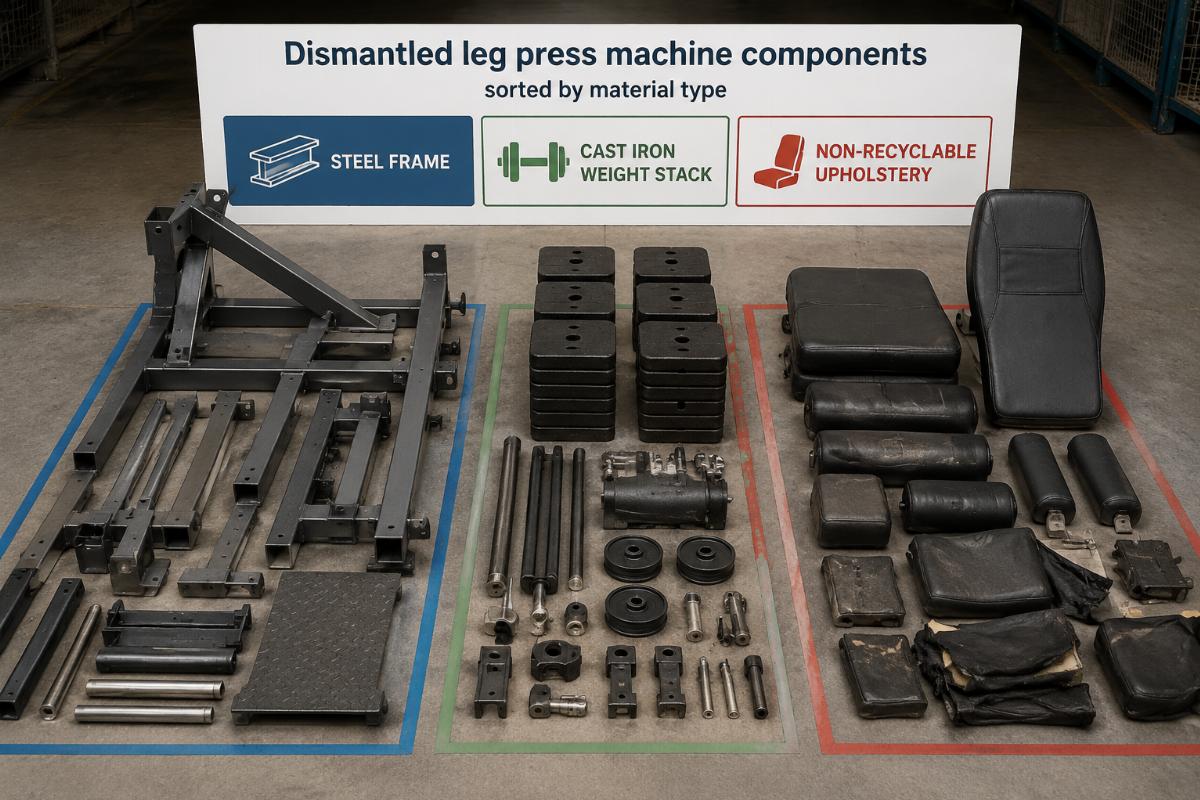
A leg press contains three distinct material streams—ferrous metals, non-ferrous metals, and non-recyclables—each requiring separate handling to maximize recovery value.
The frame, seat support structures, and weight stacks on selectorized models are predominantly ferrous steel or cast iron. These components carry the bulk of the machine’s weight and represent the most straightforward scrap revenue. Cables, pulleys, adjustment pins, and certain guide rod assemblies often contain non-ferrous alloys or zinc-plated steel that commands different pricing tiers at scrap yards. [NEED_CITE: ferrous versus non-ferrous metal classification methodology for fitness equipment recycling]
Then there is what I call the "hidden weight problem." Upholstery foam, vinyl or leatherette seat covers, plastic shrouds, rubber bumpers, and molded end caps collectively account for a noticeable portion of the machine’s total mass. These materials are non-recyclable through standard metal scrap channels and must be separated before the frame hits the shear.
| Material Category | Typical Components | Recycling Stream |
|---|---|---|
| Ferrous Metals | Main frame, weight stack plates, guide rods | Standard scrap steel |
| Non-Ferrous Metals | Cables, pulley wheels, adjustment mechanisms | Specialty metal recycling |
| Non-Recyclables | Upholstery, foam, plastic shrouds, rubber bumpers | Separate waste disposal |
A coastal gym operator I worked with in Southeast Asia had units sitting in a salt-air environment for several years. The frames showed surface corrosion, but the cast iron weight stacks underneath retained substantial material value once properly cleaned and sorted. The mistake many make is dumping the entire unit into a single scrap bin, which contaminates the metal stream and reduces the price per ton the recycler will pay.

How to Dismantle a Leg Press Machine for Maximum Scrap Recovery?
Systematic top-down disassembly following a material separation protocol yields noticeably higher scrap value compared to whole-unit disposal, while also ensuring hazardous components are identified before cutting begins.
The sequence matters. Start by removing all upholstery—seat pads, back rests, and any foam-padded contact surfaces. This exposes the underlying frame joints and prevents foam residue from contaminating metal cuts. Next, detach the weight stack or plate-loading horns along with their guide rods. On selectorized units, the weight stack pins and selector mechanisms come off as a sub-assembly. Then separate the frame into its major welded sections—base frame, uprights, and carriage rail—sorting each by alloy type as you go. [NEED_CITE: industrial equipment dismantling sequence for optimal scrap metal recovery]
Here is where field experience counts. I have seen crews use angle grinders to slice through entire assemblies without checking what is inside the tubing. Some leg press frames contain internal cable routing channels, and cutting through those without removing cables first contaminates the steel with copper or synthetic rope residue. Always trace cable paths before making any cuts.
For plate-loaded models, the process is simpler—remove the loading horns, detach the carriage sled from its rail, and break down the frame at bolted joints where possible. Welded joints should only be cut when bolted disassembly is not feasible, as thermal cutting creates slag that reduces scrap grade.
A multi-location fitness chain in the Middle East recently decommissioned a large batch of selectorized leg presses during a floor upgrade. By coordinating bulk dismantling with a scrap buyer who understood material separation, they avoided the typical single-stream disposal that would have cost them noticeably more in tipping fees while generating zero revenue. [NEED_CITE: bulk gym equipment decommissioning logistics and scrap buyer coordination best practices]

Which Leg Press Parts Can Be Refurbished vs. Must Be Scrapped?
Guide rods, seat frames, pulley systems, and certain frame sections are often salvageable for refurbishment; however, worn cables, degraded bushings, and cracked welds require mandatory replacement and cannot be reused.
This is where the economics shift from scrap revenue to component resale or internal refurbishment. Equipment refurbishers actively source used leg press components—particularly guide rods that remain straight and within tolerance, pulley systems with intact bearings, and seat frame structures that can accept new upholstery. These parts carry value well above their scrap weight.
Cables, on the other hand, are mandatory scrap. Once a cable shows fraying, kinking, or significant wear at contact points with pulleys, it cannot be safely reused. The same applies to bushings that have developed play, welds showing hairline cracks under inspection, and weight stack plates with deep pitting that affects stacking alignment.
I have worked with refurbishers who pull entire batches of decommissioned machines, strip them down, and rebuild the salvageable units using a mix of recovered and replacement components. The key is knowing which parts to keep and which to cut. A seat frame with solid welds and no structural deformation is worth far more as a refurbished component than as scrap steel.
This is also where sourcing reliable replacement parts becomes critical. When refurbishable components are identified—say, a solid guide rod set paired with a frame that needs new cables and bushings—the rebuild only works if replacement parts match OEM specifications. Mismatched cable diameters or incorrect bushing tolerances create safety liabilities and premature wear. We supply OEM-spec replacement cables, bushings, seat pads, and pulley assemblies that integrate directly into refurbished leg press frames, allowing refurbishers to extend machine lifecycles at a fraction of the cost of full replacement. [NEED_CITE: fitness equipment refurbishment component compatibility standards and safety requirements]

What Are the Environmental Compliance Requirements for Gym Equipment Disposal?
Upholstery foam, hydraulic fluids in certain adjustable models, and painted components from pre-2000 manufacturing may require hazardous waste handling per local environmental regulations—non-compliance carries significant penalty risk.
Most gym operators do not realize that the foam padding inside leg press seats is classified differently from ordinary waste in many jurisdictions. Polyurethane foam from older manufacturing processes may contain flame retardants or blowing agents that require special disposal handling. Similarly, vinyl and leatherette covers can release harmful compounds if incinerated improperly.
For leg presses with adjustable incline mechanisms that use hydraulic cylinders, the hydraulic fluid inside must be drained and disposed of as hazardous waste. This is often overlooked because the cylinders are sealed units—operators assume they can scrap the entire assembly. They cannot, at least not legally in most regulated markets.
Pre-2000 painted frames present another compliance layer. Older powder coat and paint formulations may contain lead-based compounds that require testing before the metal can be processed through standard scrap recycling channels. [NEED_CITE: hazardous waste classification for fitness equipment components per national environmental protection agency guidelines]
A gym facility in Europe learned this the hard way when their scrap hauler flagged the painted frame components during routine processing. The resulting testing, containment, and specialized disposal costs exceeded what they would have paid for proper upfront segregation. The lesson: check manufacturing dates, identify any hydraulic or fluid-containing components, and confirm local hazardous waste classification before sending anything to a standard scrap yard.

How to Calculate Net Disposal Cost vs. Scrap Revenue?
Proper material sorting and bulk scrap buyer negotiation can offset a substantial portion of decommissioning labor costs, potentially turning what operators assume is a pure expense into a net-positive or break-even operation.
The calculation starts with labor. Dismantling a leg press systematically takes longer than simply loading it onto a truck. But that extra labor time is what unlocks material separation value. A whole unit sent to a scrap yard gets priced at mixed scrap rates—the lowest tier. Separated ferrous, non-ferrous, and salvageable components each command their own pricing.
Factor in the avoided costs: hazardous waste disposal fees for foam and fluids, tipping charges for non-recyclable plastics and rubber, and potential regulatory penalties for non-compliance. When you subtract these from the gross scrap revenue of sorted materials, the net position shifts noticeably.
For multi-unit decommissioning projects—say, a chain replacing an entire floor of selectorized machines—bulk negotiations with scrap buyers who understand fitness equipment composition can secure premium pricing tiers. The volume justifies the buyer’s effort to handle separated streams, and the operator benefits from better per-ton rates.
| Cost Factor | Whole-Unit Disposal | Sorted Component Disposal |
|---|---|---|
| Scrap Revenue | Mixed scrap rate (lowest tier) | Tiered rates by material grade |
| Labor Cost | Lower (minimal handling) | Higher (systematic dismantling) |
| Hazardous Waste Fees | Risk of unexpected charges | Identified and budgeted upfront |
| Net Position | Typically negative | Noticeably improved or break-even |
The operators who understand this equation stop viewing decommissioning as a sunk cost and start treating it as a material recovery operation. The difference in outcome is substantial, especially at scale. [NEED_CITE: scrap metal pricing tier structure and bulk negotiation methodology for commercial equipment disposal]

Conclusion
End-of-life leg press disposal is a material recovery operation, not a waste removal task—treating it as such changes the economics entirely. Systematic dismantling separates ferrous metals, non-ferrous components, and non-recyclables into distinct streams, each with its own value and compliance requirements. Identifying refurbishable parts extends machine lifecycles through targeted replacement of worn components, while proper hazardous material handling avoids regulatory penalties. The net result transforms decommissioning from a cost center into a recoverable operation.