Prone Leg Curl Storage Handling During Off-Season Wholesale Supplier OEM Factory Direct
Covering a prone leg curl with a plastic sheet during off-season storage is one of the fastest ways to destroy it.
Proper prone leg curl storage handling during off-season requires systematic partial disassembly, climate-controlled environment management, and scheduled protective maintenance to prevent hydraulic cylinder seizure, upholstery mold growth, and cable system corrosion — failures that account for the majority of post-downtime equipment damage in commercial gyms worldwide.
I still remember a video call from a gym owner in Riyadh. He had parked several prone leg curl units against the wall of an un-airconditioned warehouse for the summer shutdown. When he pulled the tarps off months later, the chrome-plated hydraulic rods were seized solid, and the pads had bloomed with dark mildew spots. He was furious, convinced the machines were poorly built. The truth was far simpler: the warehouse swung between extreme daytime heat and cool nights, humidity stayed above seventy percent, and the machines had been wrapped tight in non-breathable plastic — essentially steaming themselves from the inside. [NEED_CITE: corrosion acceleration mechanisms under thermal cycling and high humidity per ASTM G85] That incident reshaped how I now brief every distributor and facility manager on prone leg curl storage handling during off-season.
Let me walk you through exactly what goes wrong, what environmental thresholds trigger damage, and the field-tested protocol that keeps these machines ready to perform when the season restarts.
Why Do Prone Leg Curls Fail After Off-Season Storage?
Most post-storage failures have nothing to do with manufacturing quality — they stem entirely from how the equipment was parked and protected during idle months.
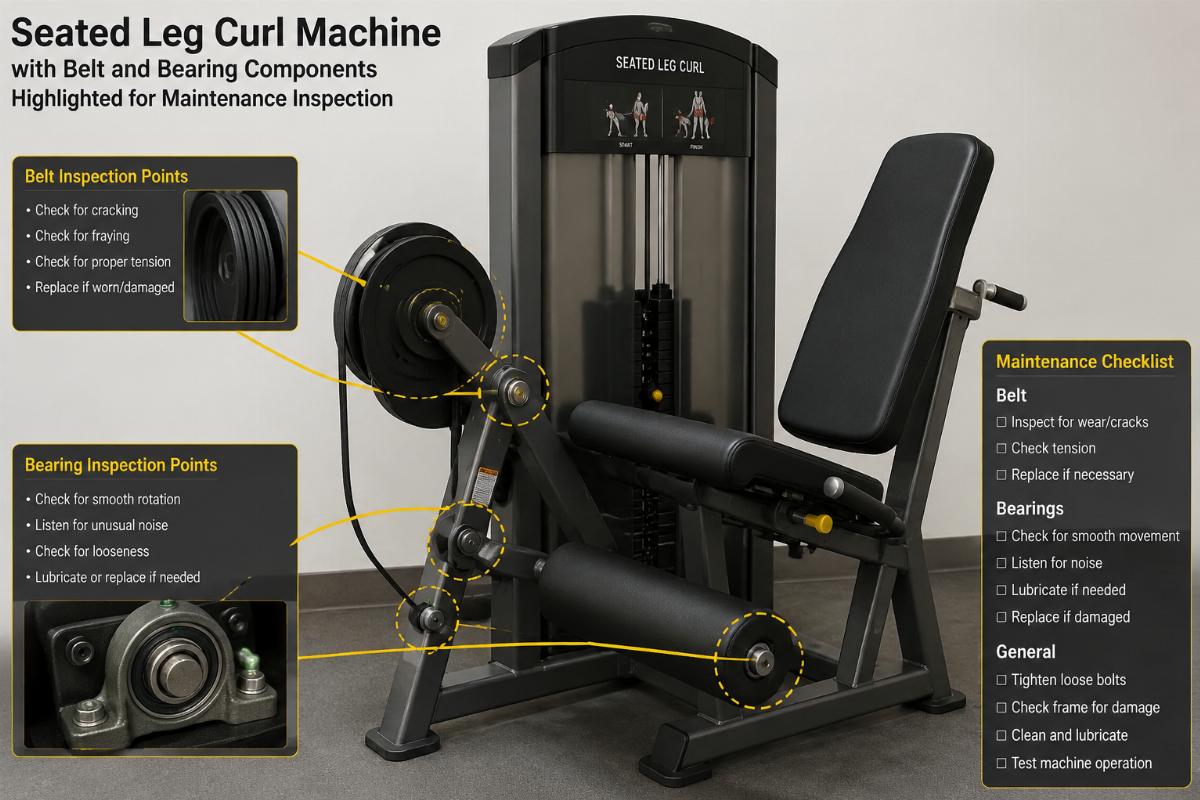
The prone leg curl is particularly vulnerable because it combines three failure-prone subsystems: a hydraulic or plate-loaded resistance mechanism, padded upholstery with foam cores, and a cable-pulley network under constant tension. When left idle without preparation, each subsystem degrades in a different way, but all three accelerate under the same environmental neglect.
Hydraulic cylinders are the single most common casualty. During active use, the piston rod moves frequently, redistributing oil film across the chrome surface and wiping away moisture. During prolonged static storage, that protective film drains downward, leaving the upper exposed rod surface dry. Ambient humidity then initiates micro-pitting corrosion along the rod. Once the machine is restarted, those pits score the rod seals, causing internal leakage and eventual cylinder failure. [NEED_CITE: static storage corrosion mechanisms in hydraulic cylinders per ISO 4413]
Upholstery is the second casualty. High-density PVC padding — the type used on commercial-grade prone leg curls — resists sweat and short-term moisture well. But when stored in humid, unventilated conditions for extended periods, the foam core beneath the vinyl absorbs ambient moisture. Mold colonizes the foam layer invisibly, and by the time surface mildew appears, the pad is structurally compromised.
Cable and pulley systems suffer silently. Steel cables stored under tension in humid environments develop localized rust at contact points with pulley grooves. The rust increases friction, and when load is reapplied, the cable frays prematurely — often snapping within the first few sessions of the new season.
A distributor in Southeast Asia learned this the hard way. After a monsoon season, he stacked machines tightly against a warehouse wall without spacing. When he recommissioned them, multiple pulley bearings had corroded into seizure, and several cables showed visible strand breaks. The replacement cost ran into multiple thousands — entirely avoidable with basic prone leg curl storage handling during off-season protocols.

What Environment Conditions Destroy Stored Equipment?
Relative humidity above sixty-five percent combined with temperature swings exceeding ten degrees Celsius creates the most aggressive corrosion and mold environment for stored fitness equipment.
Understanding the environmental thresholds is critical because most warehouse operators assume "dry-looking" equals safe. It is not. Corrosion initiates at the microscopic level long before visible rust appears, and mold spores germinate inside foam padding well before surface growth becomes obvious.
The critical parameters to monitor are:
- Relative humidity ceiling: Sustained exposure above sixty-five percent RH triggers electrolytic corrosion on exposed steel and chrome surfaces. Above seventy-five percent, the corrosion rate increases sharply, and mold germination on organic materials accelerates. [NEED_CITE: corrosion rate thresholds for ferrous metals at varying humidity levels per ISO 9223]
- Temperature fluctuation range: Daily swings exceeding ten degrees Celsius cause condensation cycles on metal surfaces. Even in a warehouse that feels dry, nighttime cooling can drop surface temperatures below the dew point, depositing microscopic moisture films on chrome rods and steel frames.
- Air circulation: Stagnant air pockets — created by tight stacking, wall contact, or floor-level placement — trap localized humidity and prevent evaporative drying. This is why machines stored in corners or pressed against exterior walls suffer disproportionately.
A facility manager in Eastern Europe stored his prone leg curl inventory in a heated warehouse during winter, but the heating ran on intermittent schedules. The temperature cycled between near-freezing and moderate warmth. By spring, the PVC pads had hardened and developed visible cracks — the repeated thermal expansion and contraction had embrittled the vinyl compound. Meanwhile, cables stored near exterior walls showed rust patterns that corresponded exactly to the cold-zone condensation lines.
The takeaway: prone leg curl storage handling during off-season is not just about picking a room. It is about actively managing the micro-environment around each machine.

How to Prepare Prone Leg Curls for Long-Term Storage?
A four-step preparation protocol — partial disassembly, thorough cleaning, targeted lubrication, and breathable covering — is the industry-standard method for preserving prone leg curls through seasonal downtime.
This is where most gym owners and distributors cut corners, and where the damage originates. Simply throwing a tarp over the machine is not just insufficient — it is counterproductive. Non-breathable covers trap residual moisture against the surface, creating a micro-greenhouse effect that accelerates corrosion rather than preventing it.
Here is the step-by-step protocol I have refined across installations in multiple regions:
Step 1: Partial disassembly of removable components.
Remove the pad assembly, weight stack pins (if applicable), and any adjustable lever arms. This serves two purposes: it allows thorough cleaning of hidden contact surfaces, and it relieves compression on the foam padding, preventing permanent deformation during storage. On commercial prone leg curls with hydraulic resistance, ensure the cylinder is fully retracted to minimize exposed rod length.
Step 2: Complete surface cleaning.
Wipe all chrome surfaces, frame welds, and cable pathways with a clean, lint-free cloth dampened with a mild solvent. Remove all traces of sweat residue, dust, and old lubricant. Sweat contains chlorides that act as corrosion accelerants — even invisible dried residue will initiate pitting over months of storage. [NEED_CITE: chloride-induced pitting corrosion on stainless and chrome surfaces per ASTM G48]
Step 3: Targeted lubrication of critical surfaces.
Apply a thin, even coat of silicone-based lubricant to all chrome rod surfaces. Silicone lubricants are preferred because they do not attract dust, do not degrade rubber seals, and provide a moisture-displacing barrier. For cable systems, run a light oil through the cable pathway by cycling the mechanism several times after application. Avoid petroleum-based greases on pulley bearings — they thicken in cold conditions and impede movement.
On the prone leg curl models we manufacture at Bick, the hydraulic rods receive a chrome-plating treatment specifically chosen for corrosion resistance, and the pads use high-density PVC formulated for mold resistance. Even with these material advantages, the lubrication step remains essential — no surface treatment eliminates the need for proper storage preparation.
Step 4: Breathable covering and elevated placement.
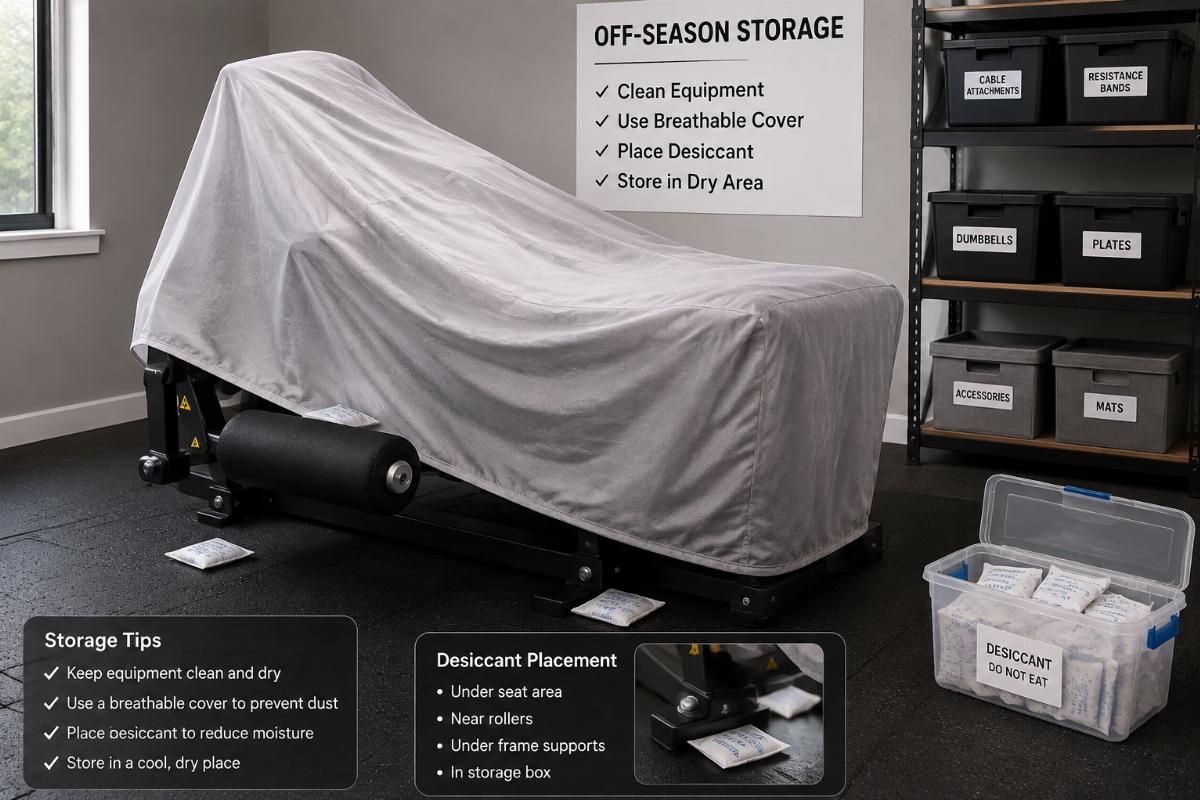
Cover the machine with a cotton or specialized breathable equipment cover — never plastic sheeting. Place the machine on pallets or moisture-barrier mats to elevate it at least several centimeters above the floor, where humidity concentrates and concrete slabs transmit ground moisture.

What Maintenance Checks Are Needed During Storage?
Monthly humidity verification, quarterly mechanical actuation, and a comprehensive pre-commissioning inspection are non-negotiable checkpoints for any prone leg curl in extended storage.
Preparation at the start of the off-season is only half the equation. Equipment left untouched for months still degrades — just more slowly. Periodic intervention catches developing problems before they become failures.
The maintenance rhythm should follow this schedule:
Monthly: Humidity and environment audit.
Check the warehouse hygrometer reading. If relative humidity has crept above the sixty-five percent threshold, activate dehumidification or improve ventilation. Inspect the floor-level area around each machine for standing water or condensation. Verify that breathable covers remain dry to the touch — any dampness indicates a moisture trap that needs correction.
Quarterly: Mechanical actuation cycle.
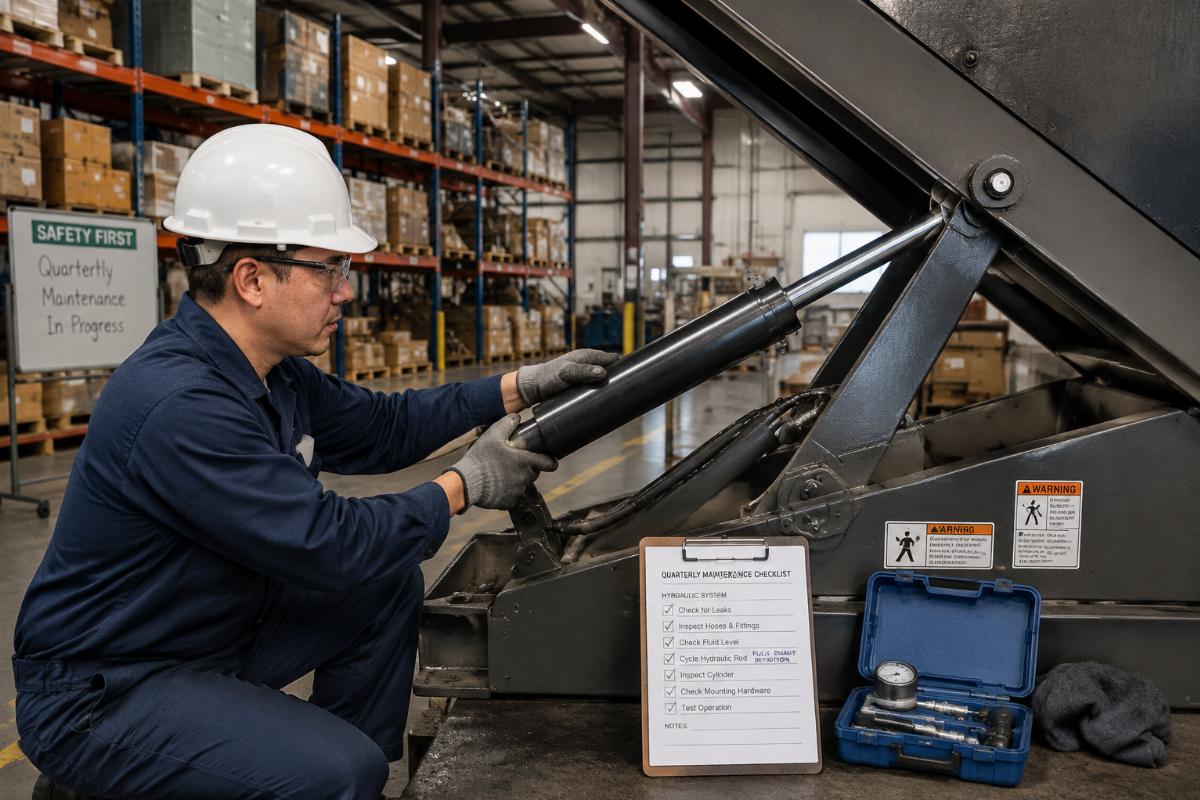
This is the single most overlooked step. Move every hydraulic cylinder through its full range of motion at least once per quarter. This redistributes the lubricant film across the chrome rod surface, wiping away any incipient corrosion before it can pit. Cycle the cable-pulley system under light load to keep cables flexing and pulley bearings rotating. Static bearings develop false brinelling — localized indentations caused by vibration without rotation — which creates permanent roughness in the bearing race. [NEED_CITE: false brinelling mechanisms in static bearings per ISO 15243]
Pre-commissioning: Full functional inspection.
Before returning any prone leg curl to active service, conduct a systematic check: inspect all cable strands for fraying or rust discoloration, verify smooth pulley rotation without grinding, test hydraulic cylinder movement for binding or weeping, examine pad surfaces for mold odor or vinyl cracking, and confirm that all adjustment mechanisms operate freely.
A gym chain operator in the Middle East had skipped the quarterly actuation step for two consecutive off-seasons. When he finally recommissioned the equipment, multiple hydraulic cylinders required seal replacement and rod re-chroming — a repair bill that dwarfed the cost of the original maintenance protocol. The lesson was expensive but clear: prone leg curl storage handling during off-season is an ongoing commitment, not a one-time event.
How to Restart Equipment After Off-Season Without Damage?
Graduated load testing, comprehensive re-lubrication, and full functional validation prevent the "first-session failure" that plagues improperly recommissioned prone leg curls.
The temptation after months of storage is to put the machine straight into service and let the first users test it. This is a mistake. The first operational session should be a controlled validation, not a revenue-generating workout.
The restart protocol should proceed in this sequence:
Re-lubrication pass.
Even if the machine was properly prepared before storage, months of static positioning mean the lubricant film has drained and settled. Apply a fresh thin coat of silicone lubricant to all chrome surfaces. Run the cable system through multiple full cycles with light resistance to distribute fresh lubricant through pulley grooves and cable strands.
Graduated load testing.
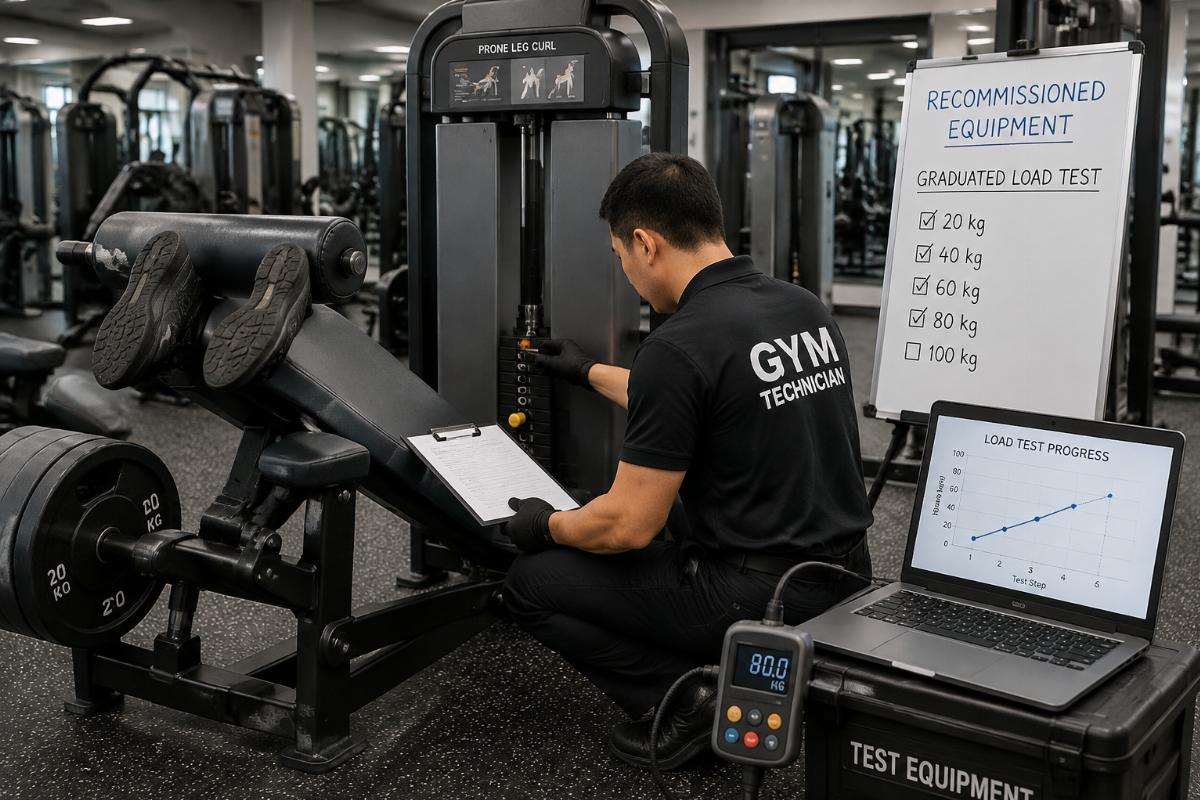
Begin with the lightest resistance setting and perform multiple repetitions through the full range of motion. Listen for unusual sounds — grinding, clicking, or scraping — that indicate bearing damage or cable misalignment. Progress through resistance levels incrementally, pausing at each stage to verify smooth operation. Only after the machine performs cleanly at maximum resistance should it be cleared for member use.
Pad and upholstery validation.
Press firmly across all pad surfaces to check for foam degradation — any soft spots or crumbling indicates internal mold damage that requires pad replacement, not just surface cleaning. Inspect vinyl seams for separation or cracking, particularly at high-stress contact points.
Adjustment mechanism verification.
Cycle every adjustment pin, lever, and seat position through its full range. Stiffness or binding indicates corrosion at the contact point that needs cleaning and re-lubrication before use.
This restart protocol is included in the maintenance documentation we provide with every Bick prone leg curl shipment, along with a spare parts kit covering the most common wear items. Factory-direct supply means that replacement pads, cables, and seals are available without intermediary delays — a practical advantage when recommissioning an entire gym floor after seasonal downtime.
Conclusion
Off-season storage is not idle time — it is active preservation. The majority of prone leg curl failures after seasonal downtime trace directly to inadequate storage protocols: uncontrolled humidity, non-breathable covers, skipped maintenance cycles, and rushed recommissioning. Following a systematic preparation, monitoring, and restart process protects hydraulic systems, upholstery, and cable networks from preventable degradation. Proper prone leg curl storage handling during off-season is not complicated, but it is non-negotiable for any operator who expects equipment to perform reliably when the season returns.