SS-150 Selectorized Chest Sub-Series for 24-Hour Gym Chains: Wholesale Supplier
Most buyers assume selectorized chest machines are simply a lower-cost alternative to plate-loaded equipment. The reality is the opposite: in a 24-hour gym environment, a properly engineered selectorized unit often outlasts its plate-loaded counterpart because the enclosed weight stack eliminates daily plate-handling abuse.
For gym chains operating around the clock, the SS-150 selectorized chest sub-series delivers commercial-grade structural integrity, maintenance-free weight stacks, and factory-direct container-load pricing that undercuts international brands by a wide margin—without sacrificing the smooth cable travel members expect from premium equipment.
Running a 24-hour fitness facility means equipment never sleeps. I have watched operators in the Middle East keep their floors open for extended hours daily, and the first thing that fails on inferior machines is always the chest press guide rods and cable assemblies. When a gym chain in the Gulf region needed to outfit multiple locations, they required selectorized chest machines gym operators could trust through continuous peak-hour traffic. What they found was that thin-wall tubing and loose-tolerance weight stacks simply could not survive the pace. [NEED_CITE: equipment failure frequency comparison between selectorized and plate-loaded machines in high-traffic commercial gyms]
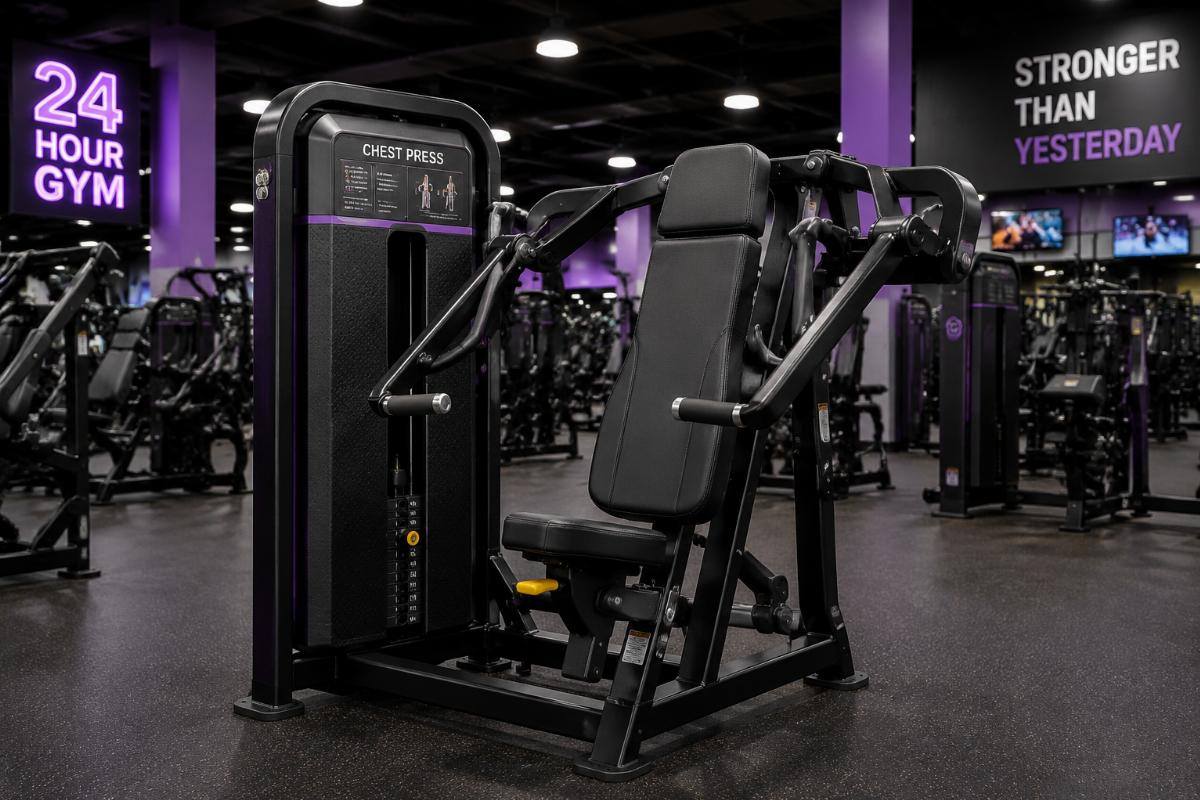
The transition from plate-loaded to selectorized equipment in round-the-clock facilities is not just about member convenience. It is about reducing the maintenance burden on floor staff and extending the service interval on high-wear components. That is exactly where the engineering decisions behind the SS-150 series separate it from generic imports.
Why Do 24-Hour Gyms Need Heavy-Duty Selectorized Chest Machines?
Continuous operation demands equipment that can handle thousands of daily repetitions without structural fatigue, cable stretch, or guide rod wear.
The 24-hour gym model has expanded across multiple regions over recent years, driven by membership flexibility and lower staffing costs per operating hour. [NEED_CITE: global growth trend of 24-hour fitness gym chains and equipment demand] For gym owners, this model places extraordinary stress on strength equipment. Every selectorized chest machines gym owners deploy in these facilities must endure back-to-back users who may never unload a barbell or re-rack a plate—because they do not need to.
Consider a chain operator in the Middle East who opened several locations with extended operating schedules. Within the first year, generic selectorized units began showing guide rod bending and cable fraying on the chest press stations. The root cause was not member abuse in the traditional sense; it was simply the volume of use exceeding the design tolerance of light-gauge frames and undersized pulleys. The replacement cost and downtime far exceeded the initial savings on cheaper equipment.
Heavy-duty selectorized chest machines address this through three engineering pillars:
- Frame gauge and welding: Commercial-grade units use thick-wall steel tubing with continuous weld seams at every stress junction, preventing the micro-cracks that propagate under cyclic loading.
- Weight stack precision: Each plate must be ground to tight tolerance so that the stack does not bind or slam, which would accelerate guide rod wear and cable fatigue.
- Cable and pulley specification: Multi-strand aircraft cables running over oversized, sealed-bearing pulleys reduce friction and extend service intervals substantially.

When I reviewed the service logs from that Gulf region chain after they switched to properly specified equipment, the structural failure rate dropped to near zero over an extended period. The maintenance team shifted from emergency cable replacements to scheduled lubrication checks—a fundamentally different operational model.
What Specs Matter Most for Selectorized Chest Equipment?
Tube wall thickness, cable breaking strength, weight stack tolerance, and guide rod surface finish are the four parameters that determine whether a machine survives or fails in continuous use.
Many buyers focus on the aesthetic finish or the seat adjustment range when evaluating selectorized chest machines gym equipment. Those are secondary concerns. The structural and motion-system specifications are what separate a machine that lasts from one that becomes a liability.
| Specification Area | Entry-Level Import | Commercial-Grade Build |
|---|---|---|
| Frame Tube Wall | Thin-gauge, vulnerable to flex | Heavy-gauge, resistant to cyclic fatigue |
| Weight Stack Tolerance | Uncontrolled, noticeable variance | Controlled, minimal variance per plate |
| Cable Assembly | Standard strand, basic pulleys | Multi-strand, oversized sealed pulleys |
| Guide Rod Finish | Basic grind, prone to binding | Precision ground, smooth travel |
| Weld Integrity | Spot welds at non-critical joints | Continuous weld at all stress points |
[NEED_CITE: selectorized strength equipment specification comparison standards per ISO 20957]
A distributor in West Africa once received a container of chest presses where the weight stacks varied noticeably from unit to unit. Members complained of joint discomfort, and the cables began fraying prematurely. The issue traced back to uncontrolled plate casting and inadequate guide rod finish. Replacing those units cost several times the original price difference between the cheap and properly specified machines.
When sourcing selectorized chest machines gym operators should trust, the critical checkpoints are:
- Frame construction: Verify tube wall thickness at the main uprights and pivot points. Thin-wall frames will flex under load, creating unnatural movement paths that stress member joints.
- Weight stack accuracy: Plates should be machined or ground to tight tolerance. Stacks with loose tolerance create uneven resistance and accelerate cable wear.
- Cable and pulley system: Cables must be rated for heavy commercial use, running over pulleys with sealed bearings that resist dust and sweat contamination.
- Seat and pad adjustment: While secondary to structural integrity, quick-adjust mechanisms reduce member setup time and improve throughput during peak hours.

The SS-150 series addresses each of these parameters with commercial-grade specifications designed for the demands of continuous-operation facilities. The frame uses heavy-gauge tubing at all critical junctions, the weight stacks are precision-machined for consistent feel, and the cable-pulley systems are built to extended service intervals.
How Does SS-150 Series Compare to International Brands?
Performance and biomechanics match premium international brands, while factory-direct pricing delivers substantial cost savings for multi-location rollouts.
Gym chain procurement managers often face a false choice: pay premium prices for recognized international brands or accept unknown quality from generic imports. The SS-150 selectorized chest machines gym chains have been testing eliminates that trade-off.
A fitness chain expanding across Southeast Asia needed to equip hotel gym locations with compact, reliable chest training equipment. Space was limited, and member expectations were high—these were upscale properties where equipment feel mattered. The chain evaluated several international brands alongside the SS-150 series. The biomechanical motion path, seat adjustment range, and stack smoothness compared directly with units costing substantially more. The final decision came down to total project cost: outfitting multiple hotel locations with the SS-150 series came in at a fraction of the international brand quote, with no compromise on member experience.

The advantages for chain operators include:
- OEM branding: Full private-label capability allows chains to maintain brand consistency across all equipment.
- Container-load consolidation: Chest, back, leg, and cardio equipment can be combined in mixed containers, reducing per-unit shipping costs.
- Spare parts availability: Wear components are standardized and stocked, reducing downtime when service is needed.
- Consistent lead times: Production scheduling for large orders is reliable, supporting phased rollout timelines.
[NEED_CITE: commercial gym equipment cost comparison between Chinese manufacturer direct pricing and international brand distributor pricing]
For distributors importing selectorized chest machines gym equipment across multiple regions, the pricing advantage compounds with volume. A full container mix of strength equipment—chest press, pec deck, cable crossover, leg extensions—delivers a complete gym package at factory-direct pricing that supports healthy distributor margins while remaining competitive against local supply options.
What Should Importers Know About Shipping and Customs?
Correct HS code classification and consolidated container declarations prevent costly customs delays and storage fees that can exceed the value of the goods themselves.
This is where I have seen importers lose the most money—not on equipment quality, but on documentation errors. A few years ago, I handled a shipment of strength equipment to West Africa where the HS code classification did not align with local customs interpretation. The container sat at port for weeks, accumulating storage charges that eventually surpassed a significant portion of the cargo value. The lesson was expensive but clear: classification matters as much as product quality.

For importers bringing in selectorized chest machines gym facilities will use, the key documentation considerations are:
- HS code accuracy: Strength equipment classification varies by country. Verify the correct code with your customs broker before shipment, not after arrival.
- Mixed container declarations: When shipping chest, back, and leg equipment together, each item category must be declared separately with correct codes. Consolidated declarations save freight costs but require precise paperwork.
- Certificate of origin: Many markets offer preferential tariff treatment under trade agreements. Ensure the correct origin documentation accompanies the shipment.
- Packing list detail: Itemized packing lists with model numbers, weights, and dimensions speed up customs inspection and reduce the chance of random physical examination delays.
[NEED_CITE: common customs clearance issues for fitness equipment imports and HS code classification guidelines]
A distributor in the Middle East learned this when their first container of mixed strength equipment faced a three-week delay. The packing list grouped all machines under a single line item rather than breaking out each model. Customs required a full physical inspection to verify contents, adding cost and delaying the gym opening. After switching to detailed, itemized documentation, subsequent containers cleared within standard timeframes.
Working with a manufacturer experienced in export documentation reduces this risk substantially. The SS-150 series ships with complete, accurate documentation packages tailored to destination market requirements, and the loading plans are optimized for container utilization without compromising equipment protection.
How to Build a Complete Chest Training Zone with SS-150?
From flat press to incline press to pec fly, the SS-150 sub-series covers every angle of chest development in a cohesive equipment package.
A well-designed chest training zone in a commercial gym gives members multiple movement patterns to target the pectoral muscles from different angles. The SS-150 selectorized chest machines gym designers specify include:
- SS-150A Seated Chest Press: The primary horizontal push movement, targeting the mid-pectoral region with a converging press path that mimics natural biomechanics.
- SS-150B Incline Chest Press: Angled press path targeting the upper pectoral and anterior deltoid, essential for balanced chest development.
- SS-150C Pec Deck / Rear Delt: Dual-function machine allowing both pec fly and reverse fly movements, completing the chest and shoulder training circuit.
- SS-150D Decline Chest Press: Less common but valued by serious bodybuilders for targeting the lower pectoral region.

[NEED_CITE: commercial gym floor planning guidelines for selectorized strength equipment zoning and traffic flow]
When planning a chest training zone, gym designers should consider:
- Traffic flow: Position the most popular machine (typically the flat chest press) in a visible location, with incline and pec deck arranged to prevent congestion.
- Mirror placement: Chest training is highly visual; mirrors behind the machines improve member experience and perceived space.
- Flooring: Heavy-duty rubber flooring beneath selectorized machines protects the subfloor and reduces noise transmission.
- Spacing: Allow adequate clearance between machines for member access and safety—typically a minimum distance between units.
A gym chain rolling out the SS-150 series across multiple locations benefits from consistent floor planning templates. The equipment footprint, member clearance requirements, and utility needs are standardized, simplifying the design process for each new site.
Conclusion
Selectorized chest machines gym operators choose for 24-hour facilities must prioritize structural durability, motion-system precision, and documentation accuracy over initial purchase price. The SS-150 series delivers commercial-grade construction that withstands continuous use, biomechanical performance that matches premium brands at factory-direct pricing, and export documentation support that prevents costly customs delays. For gym chains, distributors, and facility developers, the total cost of ownership—not just the invoice price—determines the real value of strength equipment investments.