Buy Glute Machine for Commercial Gym Setup | OEM Manufacturer
Most buyers assume a higher stated load capacity means a safer glute machine for gym use. In reality, frame geometry and weld integrity—not the number on the spec sheet—determine whether the unit survives its first year on a commercial floor.
Selecting a glute machine for gym setup requires evaluating tube thickness, rail travel smoothness, and seat-mount reinforcement rather than chasing brand labels or inflated weight ratings. A factory-direct glute machine for gym operators typically delivers commercial-grade durability at a fraction of premium brand pricing, provided the buyer verifies structural claims through test reports and sample inspections.
I still remember the first time I stood inside a newly built iron gym in the Gulf region. The owner had ordered a full set of plate-loaded equipment, including a hip thrust unit that looked solid on paper. Within weeks of opening, the base weld near the foot plate cracked during a routine heavy set. The machine was dead on arrival—not because the user overloaded it, but because the gusset plate was too thin to handle repeated eccentric stress. That single failure delayed the gym’s soft opening and cost the owner a mid-five-figure sum in replacement and reputational damage. Since then, I have inspected production lines across Shandong Province and shipped container loads of strength equipment to distributors worldwide. The lesson never changed: a glute machine for gym environments must be judged by its skeleton, not its paint job.

If you are sourcing equipment for a commercial floor, a fitness chain, or a distribution warehouse, the following breakdown will help you separate marketing claims from structural reality.
What Specs Matter Most When Buying a Glute Machine for Gym Use?
Frame tube dimensions, load-bearing weld design, and rail system construction are the three non-negotiable specifications that separate a commercial glute machine for gym floors from a light-duty studio toy.
When buyers request a glute machine for gym projects, the first question I get is almost always about maximum user weight. The number looks impressive on a brochure, but it tells you almost nothing about real-world durability. What actually matters is how the frame handles that load over thousands of cycles.
Here is a qualitative comparison of what separates a robust commercial unit from a marginal one:
| Specification Area | Commercial-Grade Build | Budget-Grade Build |
|---|---|---|
| Main Frame Tube Wall | Thick-wall, heavy-gauge steel | Thin-wall, light-gauge steel |
| Weld Reinforcement at Base | Full gusset plates with continuous weld | Spot welds, minimal reinforcement |
| Rail/Slide System | Precision linear bearings, hardened shafts | Basic bushings, unhardened rods |
| Seat Pad Density | High-density molded foam, slow-rebound | Low-density foam, compresses quickly |
| Adjustment Mechanism | Pin-lock with reinforced collar | Friction-fit pins, loose tolerance |
| Certification | CE-compliant, tested per EN standards | Self-declared, no third-party testing |
The main frame tube should use heavy-gauge rectangular steel. A thicker wall resists bending under dynamic loads—especially during the eccentric phase of a hip thrust, where forces spike unpredictably. [NEED_CITE: structural load analysis of plate-loaded hip thrust machines under dynamic conditions]
The rail system is equally critical. A glute drive machine that uses hardened linear bearings on precision-ground shafts will maintain smooth travel for years. Units that cut costs with plain bushings and unhardened rods develop play and wobble within months of heavy use. [NEED_CITE: linear motion system durability comparison in commercial strength equipment]
Seat pad density is often overlooked but directly affects member retention. High-density molded foam retains its shape through thousands of sessions, while cheap foam flattens out, turning a premium movement into an uncomfortable grind. [NEED_CITE: foam density and compression set resistance in fitness equipment upholstery]

How to Verify Supplier Claims Before Placing an Order?
Requesting weld inspection documentation, load test video evidence, and physical sample units are the only reliable ways to confirm whether a glute machine for gym use matches its specification sheet.
Any factory can print a number on a catalog page. The discipline lies in proving that number under real conditions. When I evaluate a new production partner for a commercial glute machine for gym distribution, I follow a verification sequence that has saved my clients from costly mistakes.
First, ask for weld inspection reports. A reputable manufacturer will provide documentation showing that critical joints—especially the base-to-frame connection and the seat-mount bracket—have been inspected for penetration depth and continuity. [NEED_CITE: weld inspection standards for commercial fitness equipment per EN ISO 3834]
Second, request a load test video. Not a static photo of a weight stack sitting on the machine, but a dynamic test where the rail travels through its full range under load. Watch for any flex in the frame, any binding in the rail, and any noise from the seat mount. A well-built glute machine for gym use moves silently and smoothly even at maximum rated capacity.
Third, order a sample unit before committing to a full container. I have seen distributors in Southeast Asia place bulk orders based on catalog specs alone, only to discover that the production batch used thinner tube than the sample they originally approved. A single sample shipment costs a fraction of a container and protects the entire order. [NEED_CITE: pre-shipment inspection protocols for imported fitness equipment]
Fourth, verify certification authenticity. A CE mark means nothing if the manufacturer cannot produce the corresponding test report from an accredited laboratory. [NEED_CITE: CE certification verification process for fitness equipment imported into regulated markets]
A distributor in the Middle East once shared a story with me: they received a full container of hip thrust machines where the seat adjustment pins did not align with the adjustment holes. The tolerance stack-up was so poor that users had to force the pin into place. That kind of defect does not show up in a catalog—it only surfaces when you hold the product in your hands.

Why Do Glute Machines Fail in High-Traffic Gyms?
Structural failures in commercial glute machines almost always originate at the base weld and seat-mount junction—not at the rated load capacity—because repeated dynamic loading exposes design shortcuts that static weight ratings cannot predict.
The hip thrust movement generates unique force vectors. Unlike a leg press where the load travels in a relatively straight line, a hip thrust creates rotational torque at the seat mount and eccentric shock at the foot plate. A glute machine for gym environments that is not engineered for these specific forces will develop fatigue cracks at predictable weak points.
The most common failure I have documented across multiple gym floors is cracking at the base gusset weld. This is the junction where the vertical frame tube meets the floor-contact base. If the gusset plate is undersized or the weld is incomplete, repeated loading creates a stress concentration that propagates into a crack. The crack may start hairline-thin and invisible, but within a few hundred cycles it becomes structural.
The second failure point is the seat-mount bracket. This component must support not just the user’s body weight but also the dynamic force of the hip thrust motion. A bracket that is welded only on two sides, or that uses a thin backing plate, will eventually separate from the main frame. [NEED_CITE: fatigue failure analysis of welded joints in dynamic fitness equipment]
A chain gym operator in the Gulf region experienced exactly this pattern. They purchased a batch of glute machines from a supplier who quoted an attractive price and an impressive load rating. Within a short operational window, multiple units developed frame cracks. The root cause was not overloading—security footage confirmed that users were well within the stated capacity. The root cause was inadequate gusset reinforcement and incomplete weld penetration at the base joint. The operator had to replace the entire batch, absorb the shipping loss, and manage member complaints during the downtime.
This pattern repeats because many manufacturers optimize for catalog numbers rather than engineering integrity. A thicker gusset plate and a full-penetration weld add material cost and labor time—expenses that a price-driven buyer may not appreciate until the machine fails on the gym floor.

What Is the Real Cost Difference Between Factory-Direct and Branded Glute Machines?
A factory-direct glute machine for gym procurement typically costs substantially less than equivalent branded equipment while delivering the same commercial-grade construction—provided the buyer sources from a manufacturer with verified quality systems and OEM capability.
The fitness equipment market carries a well-known pricing gap. Premium international brands command significant markups that reflect distribution networks, marketing spend, and brand equity. A glute machine for gym use bearing a top-tier logo may cost multiples of an identically specced unit produced in Shandong Province.
This is not a secret. What many buyers do not realize is that the structural gap between a premium branded machine and a well-manufactured factory-direct unit is often negligible. Both use heavy-gauge steel. Both use linear bearing rail systems. Both use high-density foam padding. The difference is the name on the shroud and the margin built into the invoice.
I have overseen OEM production runs where the same production line, the same materials, and the same quality checks produced units destined for branded distribution and units destined for factory-direct export. The physical product was identical. The price tag was not.
For a commercial gym owner outfitting a new facility, this difference compounds quickly. Equipping a full glute training zone with branded machines can consume a budget that would cover not only factory-direct glute machines but also complementary equipment—cable crossovers, hip abduction units, and free weight stations—when sourced from a single manufacturer.
A distributor in Southeast Asia shifted from branded sourcing to factory-direct OEM procurement and reported that the cost savings allowed them to expand their product range without increasing their capital outlay. Their customer base—mid-tier commercial gyms and boutique studios—received equipment that performed identically to branded alternatives at a price point that improved the distributor’s margin and the end buyer’s ROI.
The key condition is supplier verification. Factory-direct pricing only delivers value when the manufacturer maintains rigorous quality control, holds relevant certifications, and provides after-sales support including spare parts availability. [NEED_CITE: total cost of ownership comparison between OEM and branded fitness equipment]

How to Build a Complete Glute Training Zone Beyond One Machine?
A high-performing glute training area pairs a primary hip thrust machine with cable crossover stations, hip abduction equipment, and targeted free weight options to support comprehensive programming and maximize member engagement.
A single glute machine for gym floors serves the hip thrust movement pattern, but serious lifters and informed programming demand variety. The gluteal complex responds to multiple movement planes—hip extension, hip abduction, and external rotation—and a well-designed training zone addresses all of them.
The hip thrust machine anchors the zone. It provides the loaded hip extension movement that has become a staple of modern lower-body programming. A commercial-grade glute machine for gym use should accommodate a wide range of user sizes through adjustable seat positions and back pad angles.
Flanking the hip thrust unit, a cable crossover or functional trainer enables cable pull-throughs, single-leg cable kickbacks, and banded hip abductions. These movements target the gluteus medius and minimus—muscles that the hip thrust machine does not fully engage. [NEED_CITE: biomechanical analysis of gluteal muscle activation across common resistance exercises]
A dedicated hip abduction machin*isolates the gluteus medius under load, complementing the compound hip thrust pattern. For gyms with space constraints, a combination hip abduction-addition unit serves both functions in a single footprint.
Free weight options round out the zone. A set of resistance bands, a plyometric box for elevated hip thrusts, and accessible barbell and plate storage allow members to perform Bulgarian split squats, deficit reverse lunges, and barbell hip thrusts on a bench. These variations keep programming fresh and accommodate members who prefer free-weight movements over machine-based work.
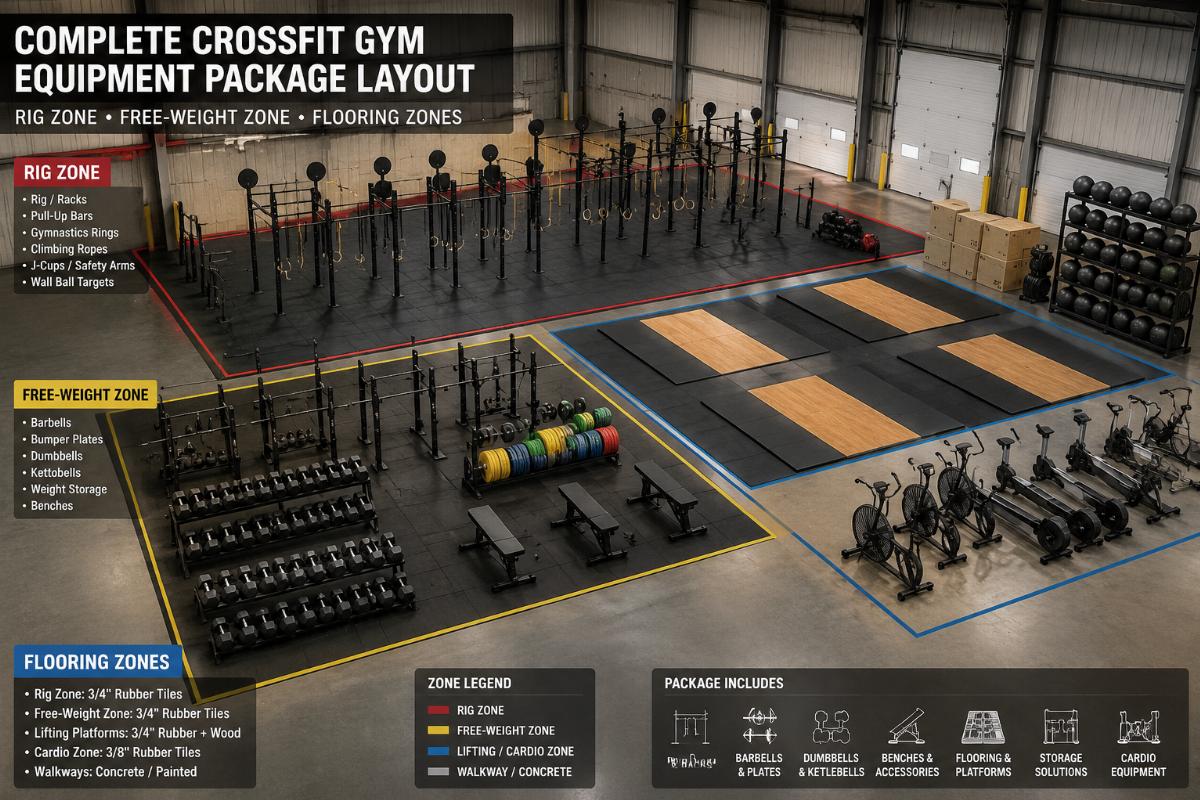
The spatial layout matters. Positioning the hip thrust machine as the visual centerpiece, with cable stations and free weight storage arranged around it, creates a dedicated zone that signals to members that glute training is a priority. This psychological cue drives usage, which in turn justifies the equipment investment through higher member satisfaction and retention.

Conclusion
A glute machine for gym environments must be evaluated on frame integrity, weld quality, and rail system durability—not on catalog load ratings or brand prestige. Factory-direct sourcing from a verified manufacturer delivers commercial-grade construction at a fraction of branded pricing, enabling gym owners and distributors to equip complete training zones without compromising on quality or budget.