Buy Commercial Functional Trainer for Gym Setup | OEM Factory Direct
Most buyers think heavier weight stacks mean better machines. In reality, the majority of users never touch the top plates, and shipping dead weight eats your margin alive.
Choosing the right functional trainer for gym setup depends entirely on your venue type—commercial chains need heavy-duty frames and high-cycle cables, hotels demand corrosion resistance and noise control, while boutique studios prioritize compact footprints and space efficiency. The real cost difference lies not in the exterior shell, but in cable tensile grade, pulley bearing precision, and frame steel wall thickness.
Back when I was working the welding floor in a fitness equipment plant in the Pearl River Delta, I watched pallets of functional trainers get loaded into containers. Some were destined for high-end gym chains in the Gulf; others went to budget studio chains in Southeast Asia. The frames looked identical from the outside. The difference? One batch used wire rope rated at a higher tensile grade with sealed nylon pulleys, while the other used basic galvanized cable with open bearings. The first group ran for years without a service call. The second group had cable fraying complaints within months. That gap in internal components is what separates a functional trainer for gym setup that lasts from one that becomes a liability [NEED_CITE: wire rope fatigue failure modes per EN 1078 and ASTM F2216].

The lesson stuck with me through every deal since: spec sheets lie, but steel thickness and cable grade do not. Let me walk you through how to make the right call for your specific operation.
How to Choose the Right Functional Trainer for Your Gym Type?
The same functional trainer for gym setup will perform completely differently depending on whether it sits in a high-traffic commercial floor, a humid hotel fitness room, or a compact studio. Each environment demands a different configuration priority, and buying the wrong spec means either overspending on features nobody uses or replacing equipment far too soon.
For large commercial gyms and fitness chains, the priority is structural endurance under continuous multi-user daily loads. These facilities see hundreds of actuations per day across dozens of members. The frame needs heavier wall thickness to resist flex under dynamic cable loads, and the weight stack should accommodate progressive overload for serious lifters. Pulley systems must handle non-stop rotation without generating heat or play. When I helped a Middle East gym chain reconfigure their order, we compared their original spec against a well-known international brand’s blueprint. By adjusting the starting weight increment on the selectorized stack and switching to a higher-grade pulley assembly, we brought the per-unit cost down noticeably while actually improving the performance profile for their member demographic [NEED_CITE: commercial gym equipment duty cycle standards per EN 957-1]. The savings on each unit multiplied across a full container load translated into a substantial margin improvement for the buyer.
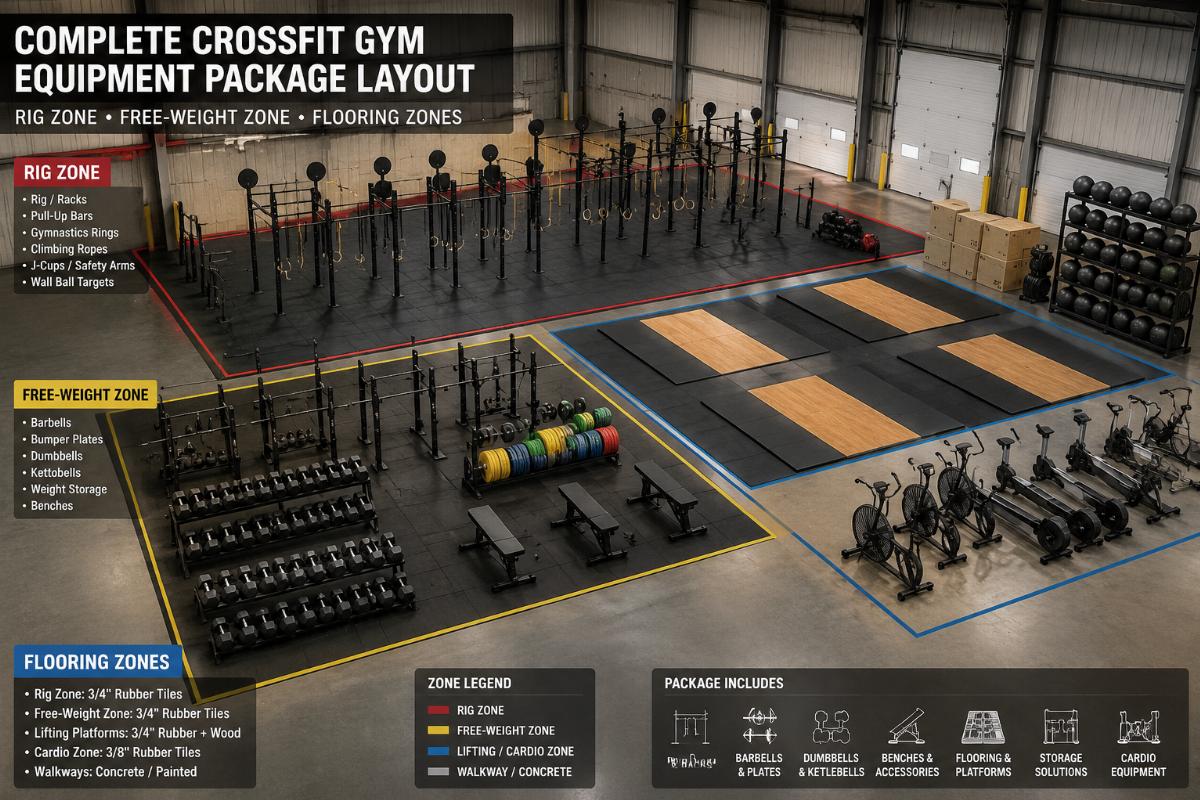
For boutique studios and CrossFit-style boxes, the calculus flips entirely. Floor space is the most expensive asset. A compact dual adjustable pulley configuration with a smaller footprint delivers the same exercise variety as a full-size unit but frees up square footage for additional revenue-generating zones. The weight stack can be lighter because the typical user profile in these studios focuses on functional movement patterns rather than maximal loading. I worked with a studio owner in Europe who needed to fit a full functional training zone into a converted warehouse. By switching to a space-optimized functional trainer for gym setup with integrated attachment storage and a reduced-depth frame, he added two additional training stations in the same floor plan.
Hotel and serviced apartment fitness centers present a third set of constraints. These environments often have higher ambient humidity from pool areas, and equipment sits idle for stretches before peak usage waves. Corrosion protection becomes a non-negotiable requirement. Internal components need sealed bearings and treated cables to resist moisture ingress. Noise transmission is another critical factor—guest rooms are often directly above or adjacent to the fitness area, so pulley systems must operate quietly even under load. We specified a marine-grade coating treatment on the frame and sealed nylon pulley assemblies for a hotel project in a coastal Southeast Asian city. The maintenance interval extended substantially compared to standard indoor-spec equipment [NEED_CITE: corrosion resistance testing methodology per ASTM B117 salt spray standards].
| Venue Type | Frame Priority | Cable Spec | Weight Stack | Noise Control |
|---|---|---|---|---|
| Commercial Gym | Heavy-wall steel | High tensile grade | Full-range plates | Standard |
| Boutique Studio | Compact footprint | Standard commercial | Moderate range | Standard |
| Hotel / Apartment | Corrosion-resistant | Sealed, treated | Moderate range | High priority |

What Specs Actually Matter: Cables, Pulleys, and Weight Stacks?
Two functional trainers for gym setup can look identical on the showroom floor but diverge completely in service life based on three hidden variables: wire rope tensile grade, pulley bearing type, and frame steel wall thickness. These are the parameters that determine whether a machine serves reliably for years or generates service complaints within months.
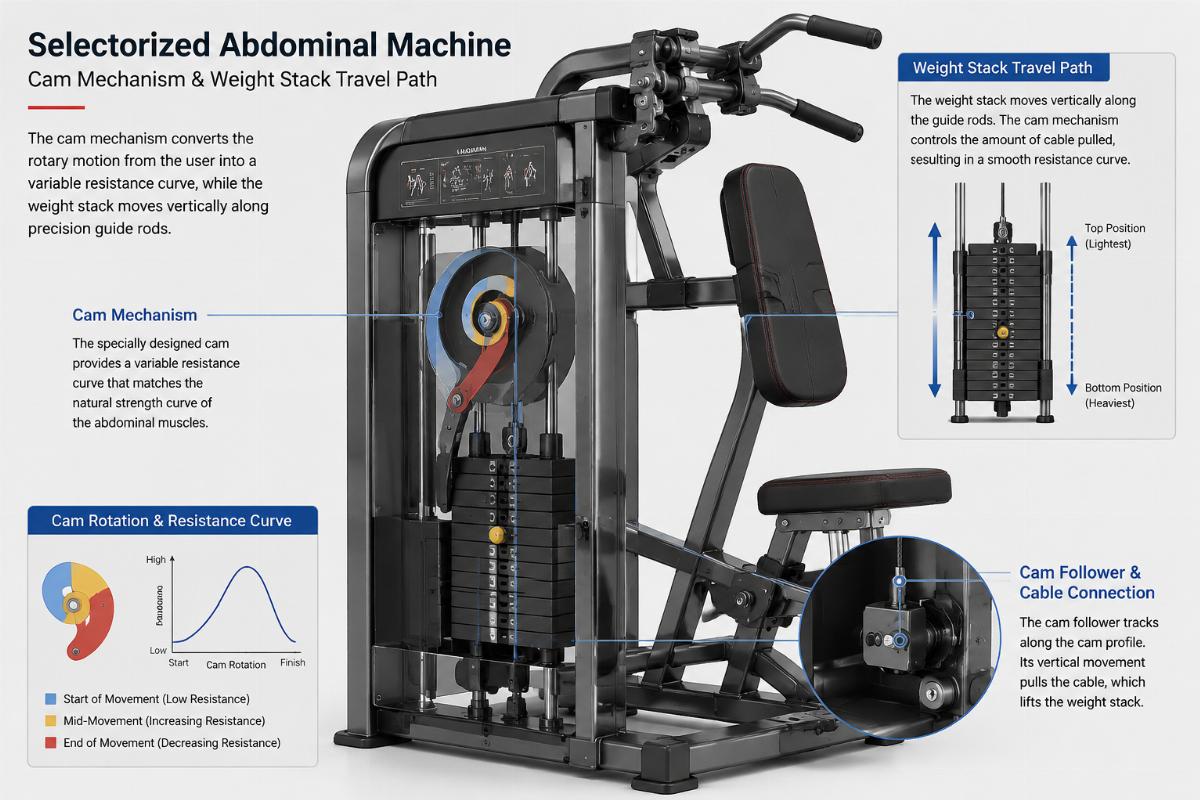
The wire rope is the single most critical wear component. It undergoes continuous flexing over pulleys under load, which generates internal fatigue. The tensile strength grade of the steel used in the wire rope directly determines how many flex cycles it endures before strands begin to break. Higher-grade rope with controlled strand construction resists fatigue crack initiation far longer than basic commercial cable [NEED_CITE: wire rope fatigue life factors per ISO 4309]. The difference in material cost between grades is modest per unit, but the difference in replacement frequency is dramatic. Buyers who optimize purely on initial purchase price often end up paying multiples in warranty claims and replacement cables.
Pulley assemblies are equally consequential. The bearing inside the pulley determines rotational smoothness and long-term play. Sealed precision bearings maintain alignment and reduce rope wear by minimizing friction-induced heat. Open or unsealed bearings collect dust and debris from the gym environment, which accelerates wear and creates the grinding sensation that members immediately notice. The pulley material itself matters—machined nylon pulleys with controlled surface finish are gentler on wire rope than stamped metal alternatives, extending cable life significantly [NEED_CITE: pulley material wear comparison per ASTM F2216].
Frame steel wall thickness is where many budget-oriented manufacturers cut corners invisibly. A functional trainer for gym setup with thin-wall tubing may pass static load testing but develops micro-flex under dynamic cable loads. Over time, this flex loosens bolted connections, misaligns pulley tracks, and creates the wobble that undermines user confidence. The frame is the skeleton of the machine—there is no substitute for adequate wall thickness and proper gusset reinforcement at high-stress junctions.
Weight stacks deserve a contrarian take. Most buyers instinctively request the heaviest stack available, assuming it signals quality. But the majority of gym members—across commercial, hotel, and studio environments—never select plates above a moderate threshold. Adding extra plates increases unit weight substantially, which inflates shipping costs per container and raises the per-unit landed cost. For a recent full-gym package deal, we recommended reducing the stack to a range that matched actual member usage data from comparable facilities. The freight savings across multiple containers were significant, and not a single end user complained about insufficient load [NEED_CITE: gym member weight stack utilization distribution studies].
| Component | Budget Spec | Commercial-Grade Spec |
|---|---|---|
| Wire Rope | Basic galvanized | High tensile grade, controlled strand |
| Pulley Bearing | Open / unsealed | Sealed precision bearing |
| Pulley Material | Stamped metal | Machined nylon, controlled finish |
| Frame Wall | Thin-wall, minimal gusseting | Heavy-wall, reinforced junctions |
| Weight Stack | Maximum plates | Right-sized to user data |

OEM vs. Off-the-Shelf: Where Can You Save Substantially?
The price gap between a branded functional trainer for gym setup and a factory-direct OEM equivalent is not about quality—it is about brand markup, distribution layers, and configuration rigidity. Understanding this gap is the single most impactful decision a buyer can make when outfitting a facility or building a distribution business.
Off-the-shelf catalog products from established international brands carry pricing that reflects decades of brand investment, global marketing, and multi-tier distribution networks. The equipment itself is excellent, but a substantial portion of the purchase price funds infrastructure that does not touch the gym floor. For buyers outfitting a single facility or building a regional distribution operation, that premium compounds across every unit in the order.
OEM manufacturing flips this equation. A functional trainer for gym setup produced under OEM specification allows the buyer to control exactly where the budget is allocated. You can specify heavy-wall frame steel and high-grade cable where performance matters, while eliminating cost from areas that do not affect the end user—such as proprietary cosmetic trim or brand-specific attachment interfaces. The result is equipment that matches the performance profile of premium brands at a fraction of the landed cost. I have seen this gap reach a level where buyers reinvest the savings into additional equipment units, expanding their gym floor coverage without increasing the total budget.
The OEM route also unlocks branding flexibility. Distributors importing into regional markets can apply their own brand identity, custom color schemes, and localized manual and labeling packages. This transforms a commodity purchase into a differentiated product line with proprietary market positioning. For gym chains, OEM branding ensures visual consistency across locations and eliminates the mixed-brand aesthetic that signals cost-cutting to members.
MOQ flexibility is another critical advantage. Traditional brand purchasing often requires committing to fixed configurations in large volumes. OEM manufacturing can accommodate mixed-container orders—combining functional trainers with racks, free weights, and cardio equipment in a single consolidated shipment. This turnkey approach eliminates the logistics complexity of sourcing from multiple vendors and ensures that every piece of equipment shares consistent build quality and aesthetic standards.
For a recent project supplying a fitness chain across multiple locations, the buyer initially requested catalog-equivalent specifications. After reviewing actual usage patterns and member profiles, we reconfigured the functional trainer for gym setup specs—adjusting pulley ratios, weight stack increments, and attachment packages to match real-world demand. The per-unit cost dropped noticeably, and the buyer used the savings to add complementary functional training accessories across every location. The end users never knew the spec had changed, because the performance envelope matched their actual needs perfectly.

How to Validate a Chinese Manufacturer Before Ordering?
Ordering a functional trainer for gym setup from an overseas factory without proper validation is the fastest way to turn a cost-saving strategy into an expensive lesson. The manufacturing landscape includes facilities with rigorous quality systems alongside operations that prioritize volume over consistency. A structured validation process separates reliable partners from risky ones.
The factory audit is the starting point, but it must go beyond surface impressions. A clean showroom and polished reception area tell you nothing about production discipline. What matters is the welding floor—inspect the consistency of weld beads on frame joints. Uniform, well-penetrated welds indicate controlled welding parameters and trained operators. Inconsistent or porous welds signal corner-cutting that will manifest as frame flex or joint failure under load [NEED_CITE: structural welding quality inspection criteria per AWS D1.1]. Check the powder coating line—proper surface preparation including degreasing, phosphating, and controlled curing temperature determines whether the finish resists chipping and corrosion or flakes within months.
Sample testing is non-negotiable before committing to volume. Order a single unit and subject it to the conditions it will face in actual use. Run the cable system through extended cycle testing to detect early signs of strand fatigue. Load the weight stack to maximum and check for frame deflection at critical junction points. Operate the pulley system continuously and monitor for bearing noise or heat buildup. These tests reveal quality gaps that no specification sheet can hide.
Certification documentation requires careful scrutiny. International safety standards provide a baseline for structural integrity and user protection. Request test reports from recognized third-party laboratories rather than self-declared compliance certificates. Verify that the report scope actually covers the specific model being ordered—some manufacturers use test reports from different configurations to claim compliance [NEED_CITE: fitness equipment safety certification requirements per EN 957 series and ASTM F2216].
Warranty terms reveal manufacturer confidence. A supplier willing to provide extended frame warranty and clear spare parts availability demonstrates confidence in their production quality. Vague warranty language or reluctance to commit to spare parts supply after the initial order is a warning sign. The functional trainer for gym setup is a long-life capital asset—after-sales support infrastructure matters as much as initial build quality.
Communication responsiveness during the pre-order phase predicts post-order service quality. A manufacturer that provides detailed technical responses, shares production timeline updates proactively, and raises potential spec concerns before production begins is demonstrating the partnership discipline that protects your investment.
| Validation Step | What to Check | Red Flag |
|---|---|---|
| Factory Audit | Weld consistency, coating prep | Inconsistent beads, bare metal under coating |
| Sample Testing | Cable cycle life, frame deflection | Noise, play, visible flex under load |
| Certification | Third-party lab reports, model match | Self-declared only, mismatched model scope |
| Warranty Terms | Frame coverage, spare parts commitment | Vague language, no parts availability |
| Communication | Technical depth, proactive updates | Evasive answers, delayed responses |

Conclusion
The right functional trainer for gym setup is determined by venue demands, not by the thickest spec sheet. Cable tensile grade, pulley bearing quality, and frame steel thickness drive real-world performance and longevity far more than external appearance or maximum weight stack capacity. OEM sourcing from a validated manufacturer delivers commercial-grade equipment at substantially lower cost, provided buyers invest in proper factory audit, sample testing, and certification verification before committing to volume.