Commercial Kettlebell Set Care for Boutique Studios | Bick OEM Supplier
Water is not always safe for cleaning cast iron equipment.
To maintain a commercial kettlebell set in a boutique studio, implement a daily pH-neutral wipe-down to remove sweat salts, store bells vertically on dedicated racks to prevent coating adhesion failure, and inspect handles weekly for micro-chips that trap moisture and accelerate internal rust.
The smell of a high-end fitness studio is distinct. It is not just the scent of rubber flooring or fresh air; it is the metallic tang of sweat mixed with humidity. I remember standing in a boutique studio in Bangkok, watching a trainer drop a PVC-coated bell onto an epoxy floor. The sound was dull, but the damage was immediate. A small chip appeared on the base. Three months later, that same bell was returned to our facility in Dongguan with the coating peeling away from the core like sunburned skin. The owner was furious, blaming the manufacturing quality. However, the root cause was not the factory production line, but the tropical humidity combined with improper post-workout care. Sweat, which is largely salt and water, had seeped into the micro-cracks. In a controlled environment, this might have been manageable. In an uncontrolled humid zone, it acted as an electrolyte, accelerating corrosion between the cast iron core and the polymer coating [NEED_CITE: corrosion mechanisms in coated ferrous metals]. This experience shifted my perspective from merely selling equipment to educating clients on longevity. Proper maintenance of a commercial kettlebell set is not about aesthetics; it is about structural integrity and safety.
Understanding why coatings fail requires looking beyond the visible surface. Most studio owners assume that heavy usage causes wear. While true to an extent, the primary enemy is often environmental and chemical. Cast iron is porous at a microscopic level. When a protective layer such as powder coat or PVC is applied, it forms a barrier. However, if that barrier is compromised by impact or if moisture is trapped against it due to poor storage, the bond fails. In coastal or tropical regions, the ambient moisture content in the air is significantly higher. When sweat is left on the equipment, it does not evaporate quickly. Instead, it pools in the crevices where the handle meets the body of the bell. This residual moisture accelerates internal rust, which expands and pushes the coating off from the inside out [NEED_CITE: impact of humidity on metal coating adhesion]. Therefore, the first step in preserving your commercial kettlebell set is recognizing that humidity and sweat residue are the primary drivers of premature failure, not just physical impact.
Daily Cleaning Routine for High-Traffic Sets
Use pH-neutral cleaners and dry immediately to prevent corrosion.
Cleaning protocols in many gyms are surprisingly ineffective. Staff often use generic all-purpose cleaners or, worse, plain water and a rag. Water leaves behind mineral deposits and, more critically, takes time to evaporate. During that evaporation period, the metal is vulnerable. Generic cleaners often contain acids or alkalis that can degrade the chemical structure of PVC or powder coatings over time, making them brittle and prone to cracking [NEED_CITE: chemical compatibility of fitness equipment coatings].
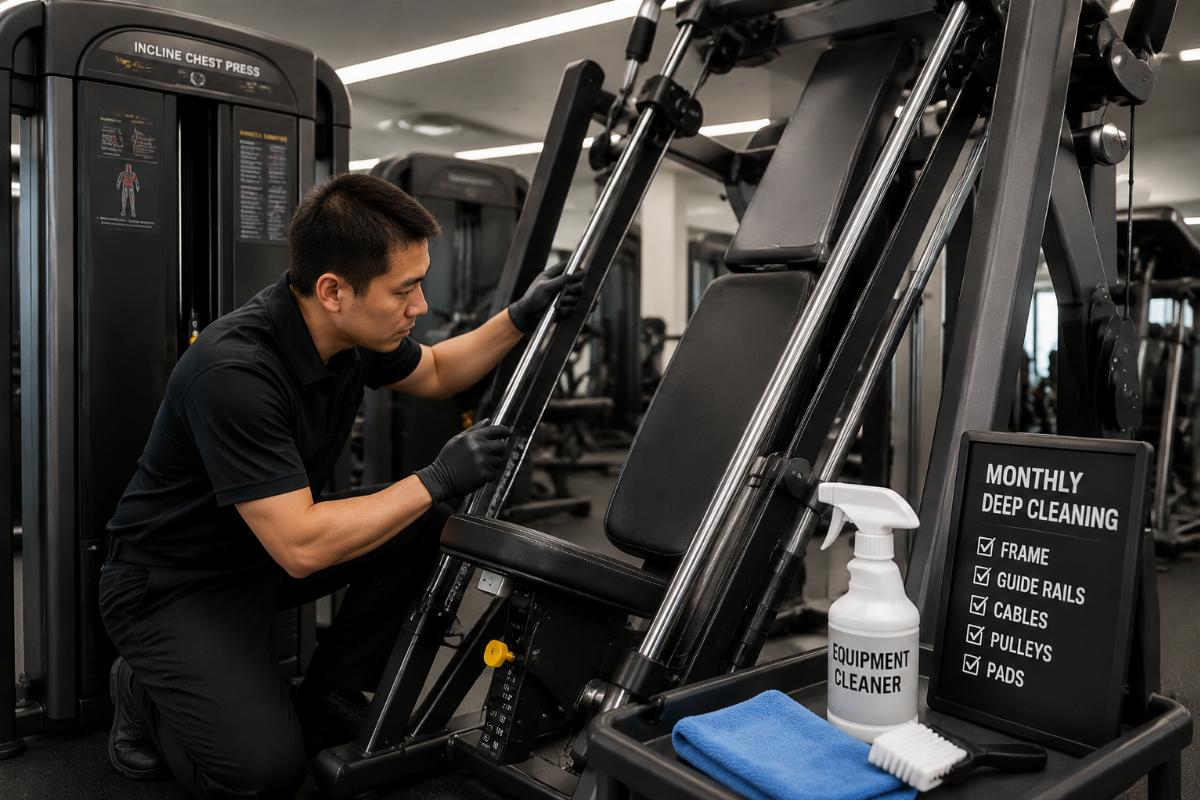
To protect your investment, adopt a strict daily routine. First, select a cleaner specifically designed for fitness equipment. These are typically pH-neutral, meaning they will not react with the coating or the metal. Second, use microfiber cloths. They are absorbent enough to lift sweat and oils without scratching the surface. Third, and most importantly, dry the equipment immediately after wiping. Do not let it air dry.
- Inspect: Before cleaning, visually scan the commercial kettlebell set for any visible chips or cracks. If found, mark them for repair or replacement.
- Apply: Spray the pH-neutral cleaner onto the microfiber cloth, not directly onto the kettlebell. This prevents liquid from pooling in the handle gap.
- Wipe: Thoroughly wipe down the entire surface, paying special attention to the handle and the base where the bell sits. These areas accumulate the most sweat and debris.
- Dry: Use a second, dry microfiber cloth to remove any remaining moisture. Ensure no damp spots remain, especially in the junction between the handle and the body.
A common mistake I observed in a studio in Shenzhen was the use of bleach-based disinfectants. While effective against bacteria, bleach is highly corrosive to metal and can discolor or weaken polymer coatings. Switching to a specialized, pH-neutral cleaner reduced the visible degradation of their equipment noticeably within a few months. The time saved per week by using the right tools is minimal, but the extension in equipment lifespan is substantial [NEED_CITE: maintenance cost savings with proper cleaning agents].
Storage Solutions to Prevent Physical Damage
Vertical racks reduce contact points and prevent chipping compared to floor stacking.
How you store your weights is just as critical as how you clean them. Many boutique studios, constrained by space, opt to stack kettlebells on the floor or on low shelves. This practice creates point-load stress on the coatings. When two coated surfaces rub against each other, or when a heavy bell rests on a specific spot of another, the friction and pressure can cause micro-abrasions. Over time, these abrasions become entry points for moisture and dirt.
Furthermore, stacking wet bells is a recipe for adhesive failure. If a bell is placed on top of another while still damp from sweat, the moisture gets trapped between the two surfaces. This creates a localized humid environment that accelerates rust and undermines the bond between the coating and the cast iron core. The result is bubbling and peeling, exactly what happened in the Bangkok case.
Vertical storage is the superior solution. By using a dedicated rack, each kettlebell hangs or sits independently, minimizing contact with other equipment. This reduces the risk of chipping and allows for better air circulation around the entire surface of the bell, facilitating faster drying if any moisture remains. For our clients, we often recommend vertical rack accessories designed to minimize contact area. These racks not only save floor space but also enhance the longevity of the commercial kettlebell set by eliminating the friction and moisture trapping associated with horizontal stacking.
In a recent project for a hotel gym in Dubai, the facility manager switched from floor stacking to vertical racking. The reduction in visible coating damage was evident within weeks. The bells remained intact, and the studio maintained its premium aesthetic without constant touch-ups or replacements. This shift also improved safety, as vertically stored bells are easier to access and less likely to be dropped during retrieval [NEED_CITE: ergonomic benefits of vertical weight storage].
Inspection Checklist for Coating Chips and Handle Roughness
Small chips can be sealed, but structural cracks require immediate replacement for safety.
Regular inspection is the final pillar of maintenance. It is not enough to clean and store; you must actively monitor the condition of your equipment. A simple weekly checklist can prevent minor issues from becoming major hazards. Focus on two main areas: the coating integrity and the handle texture.
Coating chips are inevitable in a high-traffic environment. However, not all chips are equal. Small, superficial chips that do not expose the raw metal can often be monitored. If the chip exposes the cast iron, it must be addressed immediately. Exposed iron will rust rapidly, and the rust can spread under the surrounding coating, causing further delamination. For small exposures, a touch-up paint or sealant designed for metal can be used to create a temporary barrier. However, this is a stop-gap measure. If the chipping is extensive, the bell should be taken out of service.
Handle roughness is another critical indicator. Over time, the texture of the handle can wear down, becoming either too smooth (slippery) or too rough (abrasive). Both conditions pose safety risks. A slippery handle increases the chance of the bell slipping from the user’s grip, while a rough handle can cause blisters and tears. Inspect the handles for any sharp edges or burrs that may have developed due to coating failure or manufacturing defects. If a handle feels uneven or has sharp protrusions, the kettlebell should be removed from the floor immediately.
| Inspection Item | Condition | Action Required |
|---|---|---|
| Coating Surface | Intact, no visible damage | Continue regular cleaning |
| Coating Surface | Minor chip, no metal exposed | Monitor, clean carefully |
| Coating Surface | Chip exposing raw metal | Seal immediately or replace |
| Handle Texture | Smooth, consistent grip | No action needed |
| Handle Texture | Rough, sharp edges, or burrs | Remove from service, replace |
| Structural Integrity | Cracks in cast iron body | Immediate replacement required |
This checklist ensures that your commercial kettlebell set remains safe and functional. Ignoring small signs of wear can lead to catastrophic failures, such as a handle breaking off during a swing. Such incidents not only endanger users but also expose the studio to liability. Regular inspections, therefore, are a crucial part of risk management [NEED_CITE: fitness equipment safety standards and liability].
When to Replace vs. Repair Commercial Kettlebells
Structural cracks require immediate replacement for safety.
Deciding whether to repair or replace a kettlebell depends on the severity of the damage. As mentioned, small coating chips can be sealed. However, this is only viable for cosmetic or minor protective issues. If the damage affects the structural integrity of the bell, replacement is the only option.
Structural cracks are rare in high-quality cast iron kettlebells but can occur due to extreme impact or manufacturing defects. A crack in the body or handle compromises the strength of the unit. Under the dynamic loads of swings, snatches, or cleans, a cracked bell can shatter, sending heavy metal fragments flying. This is a severe safety hazard. No amount of repair can restore the structural integrity of a cracked cast iron piece.
Additionally, consider the cost of repair versus replacement. For a single bell, the labor and material cost of professional repair may approach the cost of a new unit. For a commercial kettlebell set, replacing individual units is often more economical than attempting to refurbish multiple damaged pieces. Moreover, new equipment comes with warranties and ensures consistent performance across the set. Mixing old, repaired bells with new ones can lead to inconsistent feel and performance, which may affect user experience and training outcomes.
In one instance, a studio in London attempted to weld a cracked handle on a heavy kettlebell. The weld held for a short period but eventually failed during a high-intensity session. The resulting incident caused injury and significant reputational damage to the studio. This underscores the importance of erring on the side of caution. When in doubt, replace. The cost of a new bell is negligible compared to the potential costs of injury and liability [NEED_CITE: case studies on fitness equipment failure and liability].
Conclusion
Maintenance is prevention, not just cleanup.
Preserving your commercial kettlebell set requires a holistic approach that combines daily cleaning, proper storage, and regular inspection. By understanding the role of humidity and sweat in coating failure, you can take proactive steps to extend the life of your equipment. Vertical storage minimizes physical damage, while pH-neutral cleaning prevents chemical degradation. Regular inspections ensure that minor issues are addressed before they become safety hazards. Ultimately, well-maintained equipment not only looks better but also performs safer, enhancing the overall experience for your studio members.