Shoulder Press Machine End-of-Life Recycling & Disposal Wholesale Supplier
Most gym operators think scrapping an old shoulder press machine is as simple as calling a scrap yard and loading it onto a truck. In reality, mixed-material teardown is the single biggest reason decommissioning budgets spiral out of control.
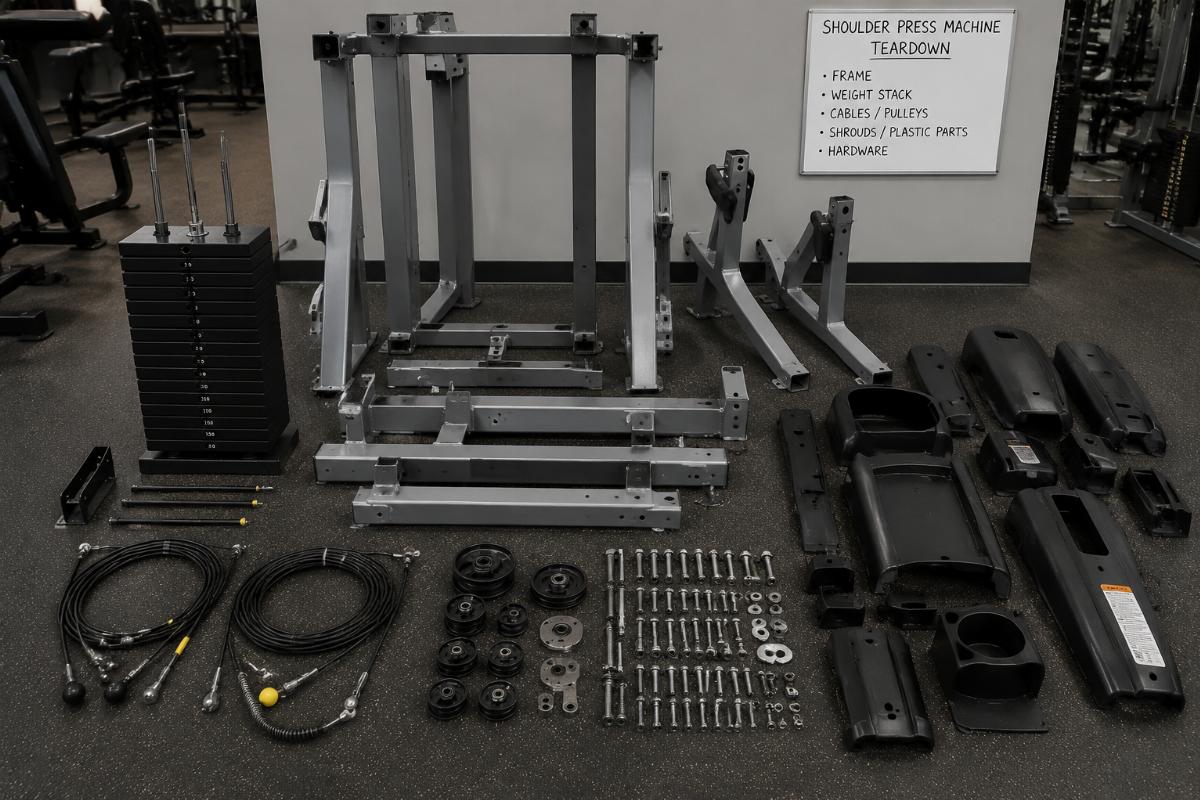
Shoulder press machine end-of-life recycling and disposal should be planned in reverse—from scrap day back to factory design—to maximize material recovery, minimize hauling cost, and avoid on-site sorting penalties. The core procedure involves separating frame steel, weight stacks, cables, pulleys, plastic shrouds, and electronic consoles by material type, then routing each stream to the correct recycler rather than selling everything as one blended lot.
I still remember a hotel fitness center clearance project in Lagos, Nigeria. Over thirty old machines needed to go, and the client assumed we would handle removal as part of the new equipment delivery. Nobody had mapped out a teardown sequence beforehand. We arrived on-site and started pulling apart selectorized shoulder press units without knowing whether the weight stacks were cast iron or rubber-coated, whether the cables were steel or nylon-sheathed, or how the electronic consoles were wired into the frame. The scrap dealer showed up, looked at the mixed pile, and quoted us based on the lowest-value material in the batch. Transport and on-site sorting ended up costing a noticeable premium over what we had budgeted, and the client was not happy. That job reshaped how I approach shoulder press machine end-of-life recycling and disposal for every project since. [NEED_CITE: International Bureau of Recycling scrap metal classification standards for mixed ferrous loads]
Let me walk you through the full procedure, from material identification to compliance paperwork, so you can avoid the same mistakes.
What Materials Are in a Shoulder Press Machine and How Should They Be Sorted?
A commercial shoulder press machine contains at least five distinct material streams—frame steel, weight stack plates, cable and pulley assemblies, plastic or rubber components, and electronic console parts—and blending them together guarantees the lowest possible scrap price.
Understanding what goes into these machines is the foundation of any sensible shoulder press machine end-of-life recycling and disposal plan. The main frame and guide rods are typically made from mild steel tube or solid bar, which commands the highest scrap value among the components. Weight stacks vary significantly: some units use bare cast iron plates, while others use rubber-coated or urethane-encased plates that require additional stripping labor before the iron can be melted down. [NEED_CITE: Fitness equipment material composition breakdown per BIR ferrous scrap categories]
Cables are usually braided steel wire with a nylon or vinyl outer sheath, and pulleys are cast iron or aluminum with steel bearings. Plastic shrouds, seat adjustments, and adjustment knobs are injection-molded ABS or polypropylene. Electronic consoles on newer selectorized machines contain circuit boards, small motors for pin-lock mechanisms, and wiring harnesses that may include copper and trace metals subject to e-waste regulations.
Here is how the material streams break down in typical sorting practice:
| Material Stream | Typical Components | Sorting Requirement | Relative Scrap Grade |
|---|---|---|---|
| Frame Steel | Main frame tubes, guide rods, base plates | Remove all non-steel attachments | Certified HMS-grade ferrous |
| Weight Stack – Bare Cast Iron | Uncoated plates, selector pin | Separate from coated plates | Noticeably higher value |
| Weight Stack – Coated | Rubber or urethane-encased plates | Strip coating before melting | Value reduced by stripping cost |
| Cable and Pulley | Steel wire, nylon sheath, cast iron pulleys | Separate sheath from wire | Standard ferrous plus plastic |
| Plastic and Rubber | Shrouds, knobs, seat pads, upholstery | Collect separately | Low-value plastic stream |
| Electronic Console | Circuit boards, wiring, small motors | Route to e-waste handler | Subject to hazardous waste rules |
The critical mistake I see repeatedly is loading everything into one container and expecting the scrap yard to sort it. They will not do it for free. The yard applies a blended rate based on the cheapest material present, which means your high-grade frame steel gets dragged down by the value of plastic shrouds and rubber-coated plates. [NEED_CITE: Scrap yard pricing methodology for mixed ferrous and non-ferrous loads]
A distributor in Southeast Asia learned this the hard way. They were refurbishing old shoulder press frames for resale and initially sent the entire machine—including weight stacks, cables, and consoles—to one recycler. The recycler quoted a steep discount because of the mixed materials. Once the distributor started separating bare cast iron plates from the frames and routing them independently, the price penalty dropped noticeably. The recovered value from clean steel and sorted cast iron was enough to offset a significant portion of their container shipping costs on the next order.

How to Plan End-of-Life Disposal Before Installation?
The most cost-effective shoulder press machine end-of-life recycling and disposal strategy begins at the factory, not at the scrap yard. Machines designed with teardown accessibility in mind can be dismantled on-site in a fraction of the time required for units built without disassembly planning.
This is the part most gym operators and even equipment distributors overlook. They think about installation, warranty, and maintenance—but never about what happens when the machine reaches the end of its usable life. [NEED_CITE: Design for disassembly principles applied to commercial fitness equipment per industry sustainability guidelines]
When we design a new selectorized shoulder press at our production facilities in Shandong, we now include material identification markings on structural members and fastener types that can be removed with standard tools. Weight stack guide rods are secured with accessible bolts rather than permanent welds where possible. Plastic shrouds snap on with standardized clips rather than being riveted. These decisions add negligible cost at the factory but dramatically reduce teardown time years later.
The practical steps for forward-planning disposal include:
-
Request material documentation at purchase. Ask your supplier for a breakdown of frame steel grade, weight stack type (bare or coated), and whether the console contains any regulated electronic components. This information should be part of the equipment specification package.
-
Label material streams during installation. When the machine is first set up, attach small tags or markings indicating the weight stack material, cable type, and console classification. This takes minutes during installation but saves hours of identification work during teardown.
-
Designate a decommissioning zone. In any commercial gym layout, reserve a staging area where old equipment can be moved for teardown before the new units arrive. This prevents teardown from happening in active workout spaces and allows systematic sorting.
-
Pre-negotiate scrap collection contracts. Rather than calling scrap dealers after the machines are already on the floor, establish collection agreements in advance based on sorted material streams. Dealers pay more for pre-sorted loads and will schedule pickups around your renovation timeline.
A hotel fitness center operator in the Middle East adopted this approach across their properties. By the time their shoulder press machines and other selectorized units reached end of life, the teardown crews already knew exactly what materials they would encounter, where the fasteners were, and which recycling channels to contact. The entire clearance was completed within a predictable timeline, and compliance documentation was prepared well in advance. [NEED_CITE: Commercial gym equipment lifecycle planning frameworks from facility management associations]

What Are the Step-by-Step Teardown and Sorting Procedures?
A disciplined teardown sequence—weight stack first, then cables and pulleys, then frame separation, then shell and console removal—prevents cross-contamination of material streams and keeps scrap grades intact.
Rushing into a shoulder press machine end-of-life recycling and disposal job without a defined sequence is how mixed piles happen. Here is the procedure our field teams follow on commercial gym clearance projects:
Step 1: Remove the weight stack and classify each plate. Pull the selector pin, lift the top plate, and remove plates one by one. Inspect each plate for rubber or urethane coating. Bare cast iron plates go into one container; coated plates go into a separate container marked for stripping. If the weight stack uses a plate-loaded configuration rather than a selectorized stack, remove each plate individually and sort by material.
Step 2: Detach cables and pulleys. Unhook cable ends from the weight stack carriage and from the handle attachment points. Feed cables off the pulleys. Cut cable sheathing if necessary to separate the steel wire from the nylon outer layer. Remove pulleys from their mounting brackets and sort pulleys separately from cables. [NEED_CITE: Cable and wire rope separation methods for fitness equipment recycling]
Step 3: Dismantle the frame. Using appropriate wrenches or socket sets, remove bolts connecting the main uprights to the base frame. Separate guide rods from the weight stack housing. Keep all fasteners in a designated container—mixed fasteners are low-value scrap, but sorted steel bolts can be sold separately if quantities are sufficient.
Step 4: Remove plastic shrouds, upholstery, and adjustment components. Snap off or unscrew all plastic covers. Remove seat pads and back pads from their mounting brackets. Collect all rubber bumpers and adjustment knobs. These materials go into a dedicated low-value stream.
Step 5: Extract and segregate electronic components. If the machine has a digital console, rep counter, or electronic weight selection system, disconnect wiring harnesses and remove the console assembly. Place electronic components in a separate container clearly marked for e-waste processing. Do not mix circuit boards with general scrap.
Step 6: Weigh and document each sorted stream. Use a floor scale to weigh each material category separately. Record weights and photograph sorted piles before collection. This documentation supports both scrap pricing negotiations and compliance reporting.
On the Lagos project I mentioned earlier, we skipped several of these steps because we had no plan. Cables were left attached to frames, coated weight plates were mixed with bare iron, and consoles were thrown into the same pile as steel tubes. The result was a pile that no scrap dealer wanted to buy at full value.

How to Maximize Scrap Value and Minimize Disposal Cost?
The finer your material sorting, the less room scrap dealers have to apply blended-rate penalties—and properly separated streams from a shoulder press machine end-of-life recycling and disposal project can recover enough value to cover a substantial portion of transport costs.
Scrap pricing is fundamentally about purity. A load of clean HMS-grade steel fetches a meaningfully higher per-ton price than a load contaminated with rubber, plastic, or coated components. The same principle applies to cast iron weight plates: bare plates sell at a higher grade than plates that still have rubber coating attached, because the recycler must account for the labor and energy required to burn off or strip that coating. [NEED_CITE: Ferrous scrap pricing differentials between clean and contaminated loads per regional metal recycling market reports]
The practical levers for maximizing recovery value are:
-
Sort before collection, not after. Dealers who arrive at your site and find pre-sorted piles will quote higher prices than dealers who must sort on-site or who apply blended rates to mixed loads.
-
Separate coated weight plates and budget for stripping. If your shoulder press machines use rubber-coated plates, factor in the cost of coating removal. In some cases, it is more economical to sell coated plates at a reduced rate than to pay for stripping labor. Compare quotes from dealers who accept coated plates versus those who require bare iron.
-
Bundle electronic components for specialized e-waste handlers. Circuit boards and wiring harnesses contain recoverable copper and precious metals, but they also contain regulated substances. Dedicated e-waste recyclers will pay for these components, whereas general scrap dealers may charge a disposal fee.
-
Consolidate loads across multiple machines. If you are clearing an entire gym, accumulate sorted materials from all machines before calling for collection. Larger sorted loads attract better pricing and reduce per-unit transport cost.
-
Negotiate based on documented weights. When you have weighed each stream and have photographic evidence of sorted quality, you are in a stronger position to negotiate prices. Dealers cannot easily claim contamination if you can demonstrate clean separation.
A fitness equipment distributor in Southeast Asia applied these principles when refurbishing old shoulder press frames for resale in secondary markets. By separating bare cast iron plates from frames and routing them to a dedicated iron recycler, and by sending frames to a steel scrap dealer separately, they reduced the dealer discount from a steep percentage to a much smaller margin. The recovered scrap value covered a significant share of their container consolidation costs for the next shipment of new equipment.

What Compliance Documents Are Needed for Legal Disposal?
Electronic consoles and rubber-coated components from shoulder press machines may be classified as regulated waste in many jurisdictions, and failing to prepare the correct disposal documentation before teardown can result in fines that far exceed the scrap value of the entire machine.
Compliance is the part of shoulder press machine end-of-life recycling and disposal that most operators think about too late. By the time the machines are already cut apart and sitting in a parking lot, the window for proper documentation has often closed.
The key compliance considerations include:
-
E-waste classification for electronic consoles. Many countries and regions have specific regulations governing the disposal of circuit boards, wiring, and electronic assemblies. These components may need to be handed to licensed e-waste processors who can issue a certificate of proper disposal. [NEED_CITE: E-waste disposal regulations for commercial electronic equipment by major regional environmental authorities]
-
Hazardous substance screening for coated components. Rubber-coated weight plates and certain plastic components may contain substances subject to restricted substance regulations. Before sending these materials to a general recycler, verify whether the recycler requires documentation confirming that the materials have been screened.
-
Transport manifests for regulated waste. In jurisdictions where electronic or coated components are classified as regulated waste, transport from the gym to the recycling facility may require a waste transport manifest signed by both the generator and the receiver.
-
Record retention. Most environmental regulations require generators to retain disposal records for a defined period. Keep copies of all receipts, certificates, and manifests associated with the decommissioning project.
A chain of fitness centers in the Middle East learned to prepare compliance documentation well in advance of their equipment refresh cycle. By identifying which machines contained electronic consoles and which had coated weight stacks, they engaged licensed e-waste and coated-material handlers months before the actual teardown. When the decommissioning date arrived, all paperwork was ready, collection was scheduled, and the facilities avoided any regulatory delays or penalties. [NEED_CITE: Commercial fitness equipment environmental compliance requirements per regional environmental protection agencies]

Conclusion
Shoulder press machine end-of-life recycling and disposal is not a cleanup task—it is a material recovery operation that rewards planning and punishes improvisation. Sort by material stream, plan teardown accessibility before installation, follow a disciplined disassembly sequence, negotiate scrap value on sorted loads, and prepare compliance documentation before the first bolt is removed. Operators who treat decommissioning as an afterthought pay for it in blended-rate penalties, transport overruns, and regulatory fines. Those who plan in reverse from scrap day to factory design recover meaningful value and keep their projects on schedule.