Wholesale Plyo Box Set Manufacturer for Commercial Gym Floors
Thicker rubber pads do not automatically mean better floor protection — in fact, mismatched density can accelerate wear and create slip hazards during box jumps.
Plyo box sets can be safely installed on commercial gym floors, but the flooring type, thickness, and density must be matched to the box material and intended drop height to prevent floor damage, equipment slippage, and user injury. A high-density rubber floor with Shore A hardness above 60 and a minimum thickness of 15mm serves as the baseline for most plyometric training zones, while higher drop heights require dedicated shock-absorbing underlayment beneath the surface layer.
I remember walking into a CrossFit affiliate in Ho Chi Minh City where the owner had just opened his doors with thirty wooden plyo box sets placed directly on standard 15mm rubber rolls. Within a couple of months, the anti-slip pads on the box bottoms had worn straight through the rubber surface, exposing the concrete subfloor underneath. Members doing box jumps started experiencing lateral slides on landings, and one near-miss with a twisted ankle nearly turned into a liability claim. The root cause was not the rubber itself — it was the density mismatch between the hardwood box base and the mid-range rubber mat, combined with the repetitive impact from daily high-volume classes. [NEED_CITE: flooring density and thickness requirements for plyometric training areas per EN 14904]
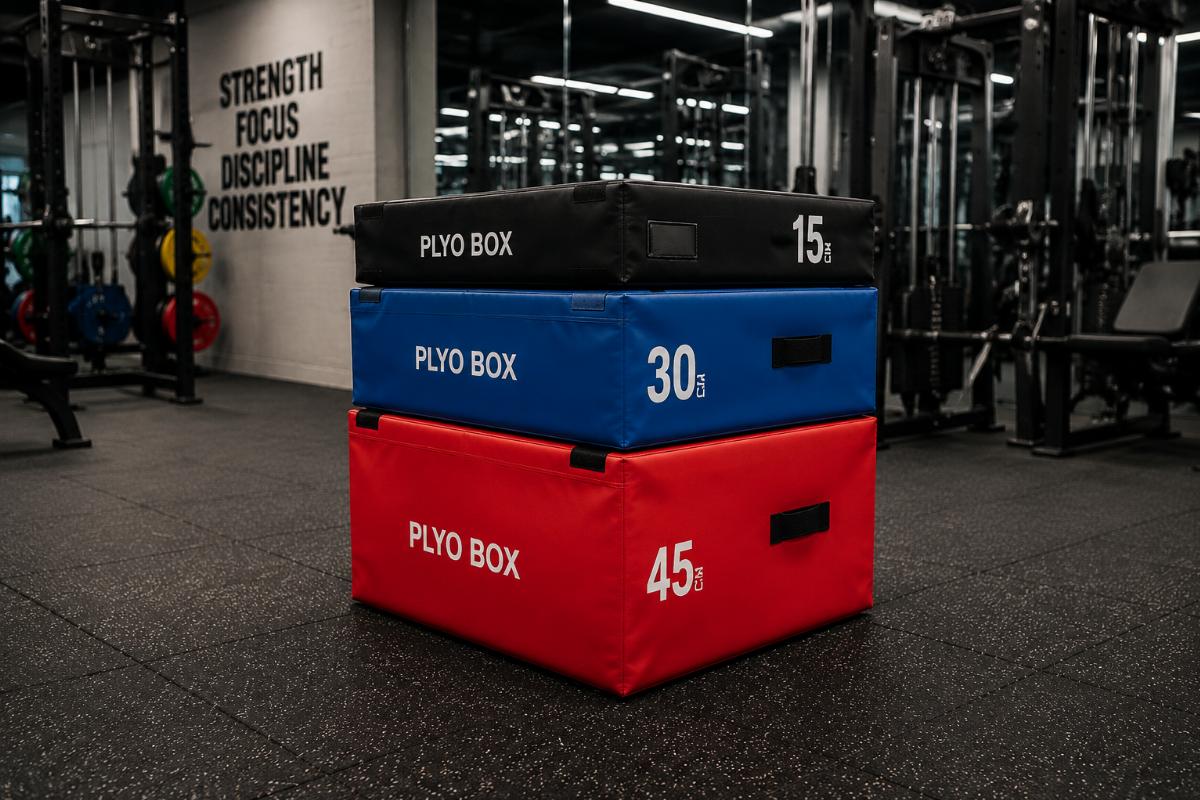
That field experience shaped how I now evaluate every plyo box set order against the client’s existing floor specification before anything ships.
What Flooring Types Work Best for Plyo Box Sets?
High-density rubber flooring rated at Shore A 60 or above, with a minimum thickness of 15mm, is the recommended surface for plyo box set installations in commercial gym environments — thin PVC rolls and low-density foam tiles should be avoided entirely in drop zones.
The physics behind this is straightforward. When an athlete lands on a plyo box set and the box contacts the floor, the impact energy transfers through the box base into the flooring surface. A flooring material that is too soft will compress unevenly, causing the box to tilt or shift mid-landing. A material that is too thin will transmit force directly to the subfloor, leading to delamination of layered flooring systems over time. [NEED_CITE: impact force absorption characteristics of rubber flooring types per DIN 18032]
Commercial gym floors generally fall into three categories relevant to plyo box set placement:
| Flooring Type | Density Range | Suitability for Plyo Box Set | Risk Level |
|---|---|---|---|
| High-density rubber (Shore A 60+) | Heavy commercial grade | Robust | Resistant |
| Mid-density rubber (Shore A 40-55) | Standard commercial | Vulnerable | Noticeably reduced lifespan |
| PVC / vinyl rolls | Low to medium | Unsuitable | High delamination risk |
| EVA foam tiles | Very low | Unsuitable | Chemical adhesion risk |
A hotel fitness center client in the Middle East once ordered a batch of soft foam plyo box sets and placed them on PVC flooring. After several months of static storage between classes, the foam material reacted chemically with the PVC surface, leaving stained residue that was nearly impossible to remove without damaging the top wear layer. The foam had essentially bonded to the floor at a molecular level. [NEED_CITE: chemical compatibility between EVA foam and PVC flooring surfaces]
We supply dedicated floor protection pad solutions matched to each plyo box set configuration, and reviewing the client’s existing floor type before finalizing the box material selection has become a standard step in our order process.

How to Match Plyo Box Height to Flooring Protection?
The higher the plyo box set, the greater the landing impact energy, and the thicker the shock-absorbing layer beneath the surface must be — boxes below 20 inches can work on standard commercial gym flooring, while boxes at 30 inches and above require a dedicated impact attenuation layer.
The relationship between drop height and impact force is not linear — it compounds. An athlete stepping off a 30-inch plyo box set generates substantially more kinetic energy on landing than one stepping off a 20-inch box, and that energy must be absorbed somewhere. If the flooring cannot dissipate it, the subfloor bears the load, and layered commercial gym floors begin to separate at the adhesive bonds between the shock pad and the wear surface. [NEED_CITE: impact energy calculation methods for plyometric drop heights per EN 957 safety standards]
Here is how the height-to-protection mapping typically works in field installations:
| Plyo Box Set Height | Recommended Floor Build-Up | Protection Layer |
|---|---|---|
| Up to 20 inches | Standard commercial rubber (15mm+) | Surface layer sufficient |
| 20 to 24 inches | Rubber surface plus dedicated shock pad | Additional attenuation layer |
| 30 inches and above | Full impact attenuation system | Controlled shock absorption mandatory |
A boutique studio operator in Southeast Asia ordered adjustable multi-height plyo box sets for a functional training zone built on a composite floating floor. The athletes were using the highest setting regularly, and within a short period, the repeated impacts caused the composite layers to separate at the seams. The floating floor had been designed for light aerobic movement, not for the concentrated point loads generated by plyo box set landings at maximum height. The repair cost several times what a proper impact attenuation underlayment would have cost upfront.
When we configure a plyo box set order for a facility with existing flooring, we request the floor specification sheet and cross-reference the intended box heights against the floor’s load-bearing capacity before confirming the shipment.

What Are Common Installation Mistakes That Damage Floors?
The three most frequent installation errors that cause floor damage under plyo box sets are: anti-slip pads wearing through the surface due to density mismatch, foam box materials chemically bonding to certain floor types, and excessive pad thickness creating instability that leads to lateral shifting and concentrated abrasion.
Most gym owners assume that adding any rubber pad beneath a plyo box set will protect the floor. The reality is more nuanced. The pad must match both the weight distribution of the box and the hardness of the floor surface. A pad that is too soft relative to the floor will compress unevenly, concentrating pressure on small areas and accelerating wear in those spots. A pad that is too hard will fail to absorb micro-vibrations from repeated landings, transmitting them into the floor structure. [NEED_CITE: friction coefficient matching between plyo box base materials and rubber flooring per surface engineering guidelines]
The mistake sequence typically unfolds like this:
-
Pad thickness miscalculation — A thicker anti-slip pad feels safer, but if it is too soft, the plyo box set sits on an unstable base. During a box jump landing, the box tilts slightly, and the edge of the base scrapes across the floor surface with each repetition. Over hundreds of sessions, this creates a visible wear groove.
-
Foam-to-floor chemical adhesion — Low-density foam plyo box sets left stationary on certain floor types — particularly PVC and some polyurethane-coated surfaces — can form a chemical bond over time. When the box is eventually moved, it pulls up a thin layer of the floor coating. This damage is often mistaken for normal wear, but it is actually a material incompatibility issue.
-
Ignoring floor layer structure — Many commercial gym floors use a two-layer system: a shock-absorbing underlayment bonded to a wear-resistant top surface. Plyo box set impacts concentrated in one zone can break the adhesive bond between these layers, causing the top surface to lift or bubble. This type of damage is structurally serious and requires section replacement, not just surface refinishing.
A CrossFit facility in Indonesia experienced all three issues within their first year of operation. The anti-slip felt pads on their wooden plyo box sets wore through within months, the foam boxes in the recovery zone left adhesive marks on the rubber floor, and the high-traffic landing area showed early signs of layer separation. A systematic review of the floor specification against the plyo box set materials resolved each issue.

How to Protect Existing Gym Floors When Adding Plyo Boxes?
Using removable dedicated plyo box set zone mats, rotating box positions on a scheduled basis, and selecting bottom materials that leave no chemical residue are the three most effective strategies for extending the life of existing gym floors when introducing plyometric equipment.
The goal is to distribute wear across a larger area and to eliminate the conditions that cause localized damage. This requires both the right materials and a simple operational discipline.
The approach works in three layers:
-
Dedicated zone mats — Place removable, high-density rubber mats beneath each plyo box set position. These mats serve as a sacrificial wear layer. When they show signs of compression or surface wear, they can be replaced at a fraction of the cost of repairing or replacing the main gym floor. The mat material should match or exceed the hardness of the existing floor to prevent differential compression. [NEED_CITE: removable protective mat specifications for high-impact gym equipment zones]
-
Position rotation schedule — Even with protective mats, keeping a plyo box set in the exact same position for extended periods creates a constant pressure point. Rotating the box positions — even by a small offset — every few weeks distributes the load across a broader floor area and prevents concentrated wear patterns from forming.
-
Residue-free bottom materials — Select plyo box sets with bottom surfaces made from materials that do not react chemically with the floor type. Rubber-on-rubber is generally safe when density levels are matched. Foam bottoms should be avoided on PVC and polyurethane floors entirely. Felt pads work on hard surfaces but require regular inspection for wear-through.
We provide matched floor protection pad solutions alongside each plyo box set order, designed to integrate with the client’s existing floor type rather than requiring a full floor replacement. This approach has consistently reduced long-term maintenance costs for our commercial gym clients across multiple regions.

What Maintenance Checks Should Be Done After Installation?
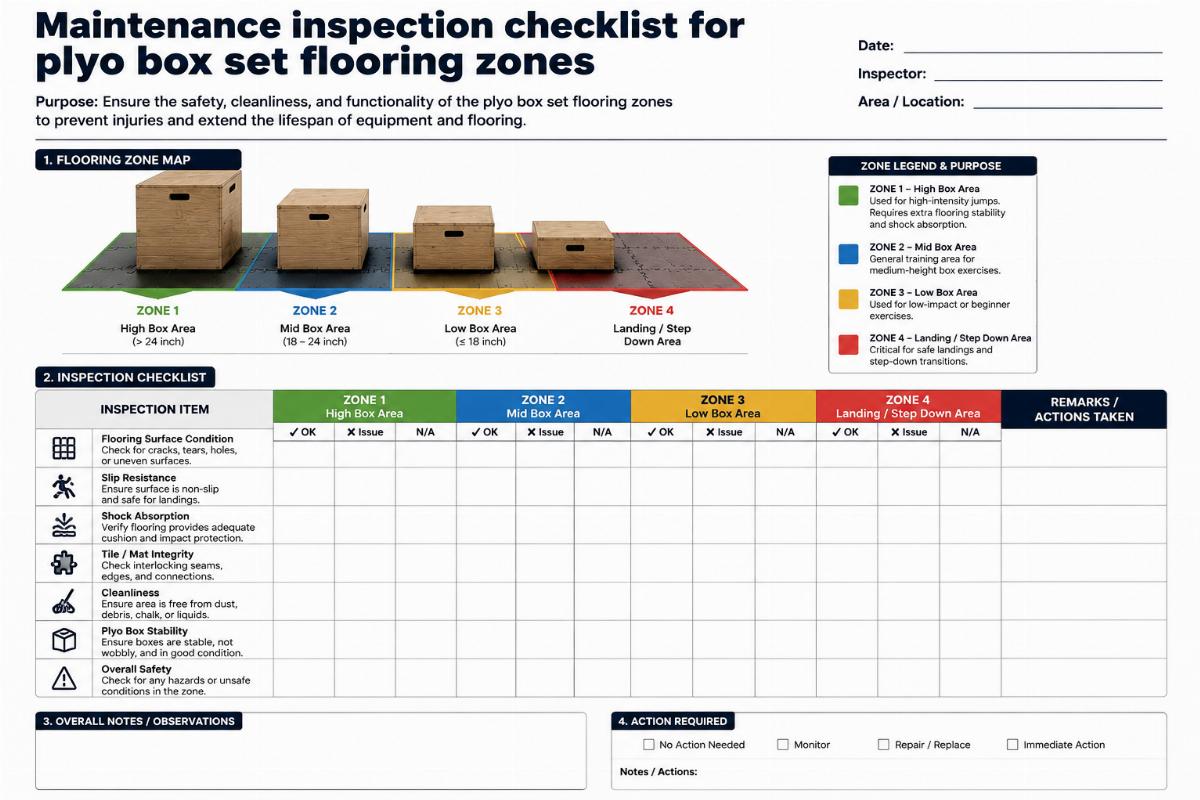
Monthly floor wear inspections, quarterly box bottom condition checks, and annual structural integrity assessments of the overall flooring system form the necessary maintenance rhythm for any commercial gym operating plyo box sets.
Preventive maintenance is significantly less expensive than reactive repair. A structured inspection schedule catches problems early, when they can be addressed by repositioning a box or replacing a zone mat, rather than discovering them after the main floor surface has been compromised.
The maintenance cycle breaks down as follows:
-
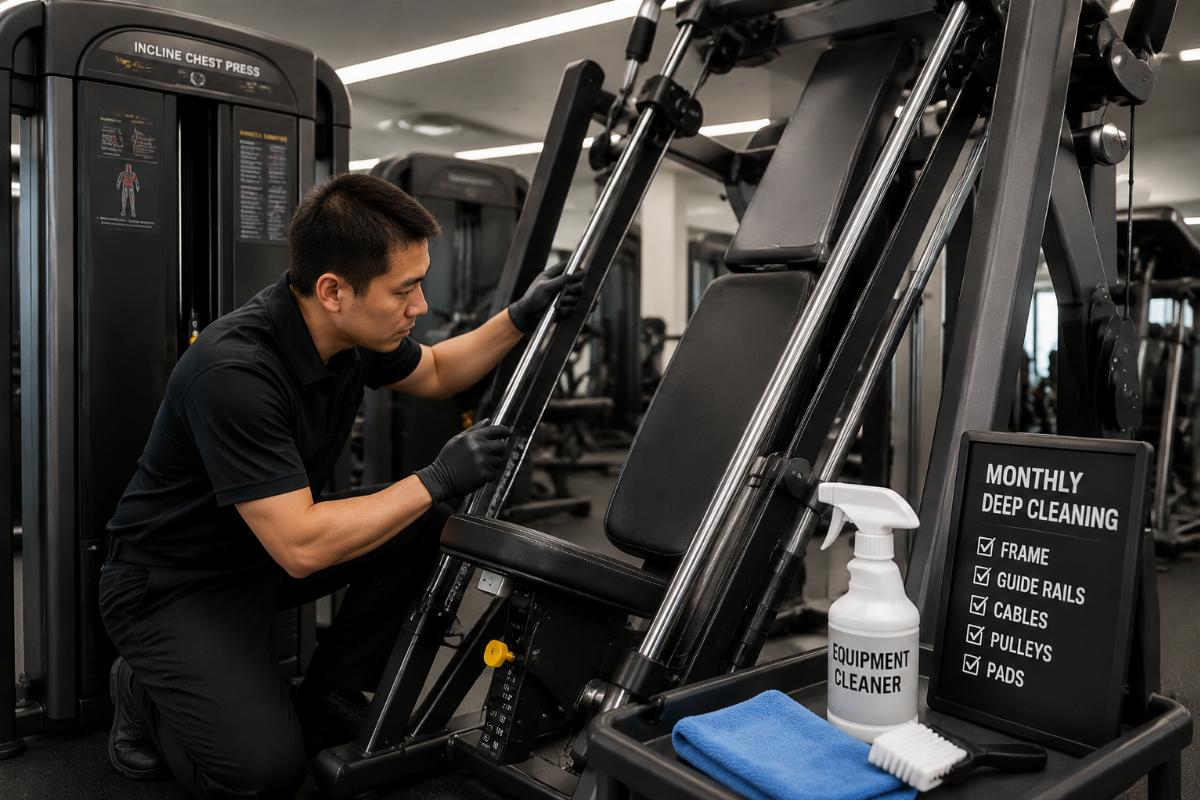
Monthly — Visually inspect the floor surface in the plyo box set zone for signs of abrasion, discoloration, or lifting at the seams. Check that the protective zone mats have not shifted out of position. Look for any residue transfer from box bottoms onto the floor surface.
-
Quarterly — Lift each plyo box set and examine the bottom surface for wear, material degradation, or residue buildup. Compare the condition of the box base against the floor surface directly beneath it. If the anti-slip pad shows thinning, schedule a replacement before it wears through completely. [NEED_CITE: preventive maintenance intervals for gym flooring under plyometric equipment per facility management guidelines]
-
Annually — Conduct a comprehensive assessment of the flooring structure in the plyo box set zone. Check for layer separation, subfloor impact marks, or adhesive failure at the edges of the protected area. This is also the point to evaluate whether the current plyo box set configuration still matches the floor’s load capacity, especially if the training program has evolved to include higher drop heights.
A commercial gym operator in the Middle East adopted this three-tier inspection rhythm after experiencing premature floor wear in their functional training area. Within the first annual cycle, they identified two zone mats that needed replacement and one plyo box set with a degraded foam base that was beginning to leave marks. Catching these issues early avoided what would have been a substantially larger floor restoration project.
Conclusion
Proper plyo box set installation on commercial gym floors depends on matching flooring density, thickness, and shock absorption capacity to the box material and intended drop height — not on simply adding any protective layer. Floor damage from plyometric equipment is almost always preventable through correct material pairing, zone protection strategies, and a disciplined inspection schedule. Reviewing the floor specification before finalizing the plyo box set configuration remains the single most effective step in avoiding costly repairs and safety hazards down the line.