Wholesale Abdominal Trainer Package for New High School Weight Rooms
Most buyers assume ab machines are the cheapest station on the floor plan. The pivot bearing tells a different story.
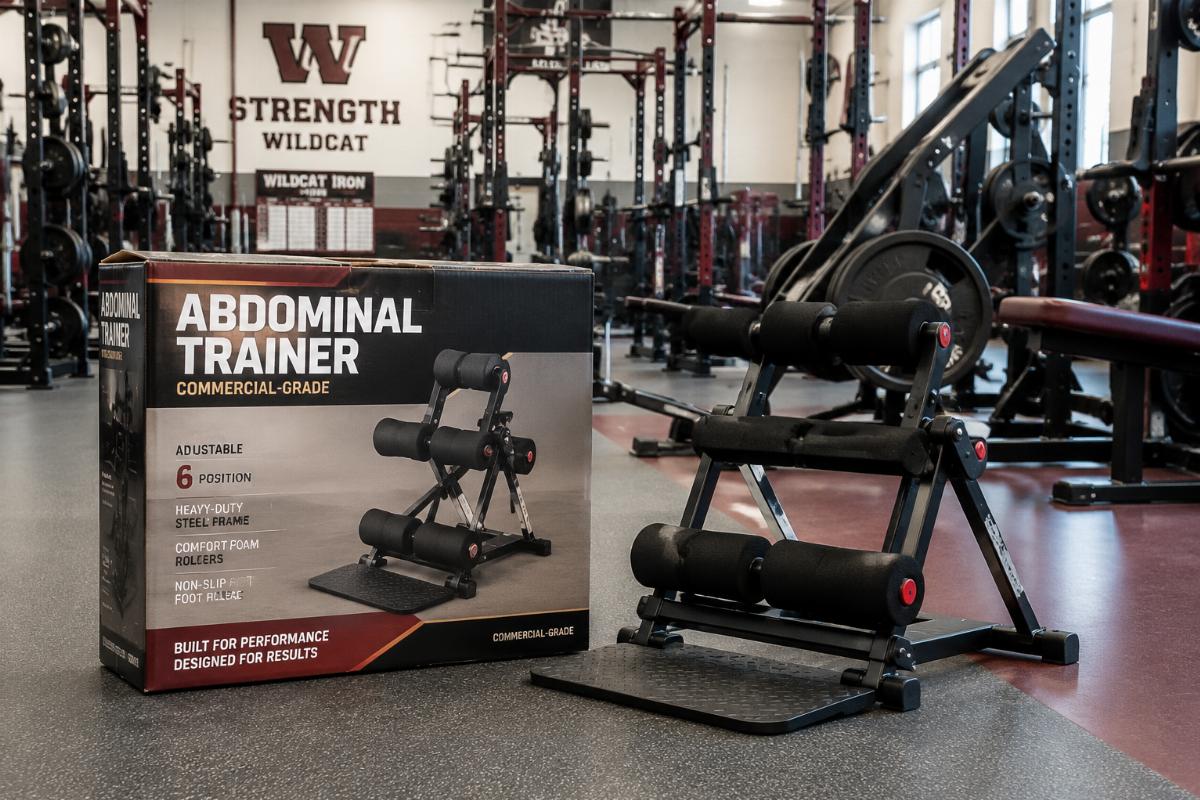
A high school weight room needs a commercial-grade abdominal trainer package built on plate-loaded or selectorized platforms with industrial pivot systems, heavy-gauge frames, and adjustable seating—not consumer-grade crunch benches—because student usage intensity, liability exposure, and institutional procurement rules demand equipment that survives repetitive daily abuse while meeting ASTM and EN safety standards.
I still remember the phone call from a school district PE coordinator in the southeastern United States. They had spec’d a full weight room refresh, and the abdominal trainer package arrived alongside the power racks and plate-loaded line. Within a single semester, the pivot arms on two of the ab stations developed noticeable play. The culprit was not the frame—it was the bearing housing, which had been designed for home-use cycle counts, not the back-to-back class rotations a high school schedule demands. We ended up rebuilding the pivot assemblies under warranty, but the lesson stuck: the real cost driver in an abdominal trainer package is never the steel tube, it is the durability of the moving joint under repetitive, often improper, student use [NEED_CITE: ASTM F2216 standard requirements for strength equipment pivot durability].
That rebuild experience shaped how we now spec every abdominal trainer package for school buyers. Let me walk you through what actually matters.
Why High School Weight Rooms Need Commercial-Grade Ab Trainers, Not Consumer Benches?
Student usage intensity demands industrial pivot systems and heavy-gauge frames that consumer equipment simply cannot sustain.
A typical high school weight room sees multiple class periods per day, five days a week, across an entire academic year. That translates to hundreds of repetitions on every station daily, often performed by users who have not yet developed consistent form. Consumer-grade crunch benches are engineered for a household of one or two users logging a few sessions per week. The gap between those two duty cycles is enormous.
The structural difference starts with the frame. Commercial units for institutional settings use heavy-gauge steel with reinforced gussets at every high-stress junction. Consumer benches often rely on lighter tubing and bolted joints that gradually loosen under repetitive loading. When a student performs a weighted decline crunch on a consumer bench, the entire assembly can flex noticeably. On a commercial plate-loaded ab station, the frame remains rigid, and the load transfers cleanly through the pivot system [NEED_CITE: comparative frame gauge standards between commercial and residential strength equipment per EN 957-1].
The pivot mechanism itself is where the divergence becomes critical. Commercial abdominal trainers in a school-appropriate package use sealed bearing assemblies designed for high-cycle rotation. These bearings resist contamination from chalk dust, sweat, and floor debris—the exact environment of a school weight room. Consumer units typically use simpler bushings or unsealed bearings that degrade quickly under the same conditions.
I reviewed a maintenance log from a school district that had purchased a mixed package: commercial plate-loaded stations for the major muscle groups and consumer-grade ab benches for the core station. The ab benches required replacement within a single academic year. The plate-loaded stations, including the commercial ab crunch machine in the same package, continued operating without issue well beyond that point. The maintenance cost differential was substantial enough that the district switched to a fully commercial abdominal trainer package on the next procurement cycle.
What Specs Matter Most When Specifying Ab Machines for Schools?
Pivot bearing quality, seat adjustment range for varying student sizes, and pad durability are the top three spec priorities in any abdominal trainer package for educational facilities.
When athletic directors and facility planners review spec sheets, they often focus on footprint and price per unit. Those matter, but they miss the three parameters that determine whether the equipment survives the actual usage environment.
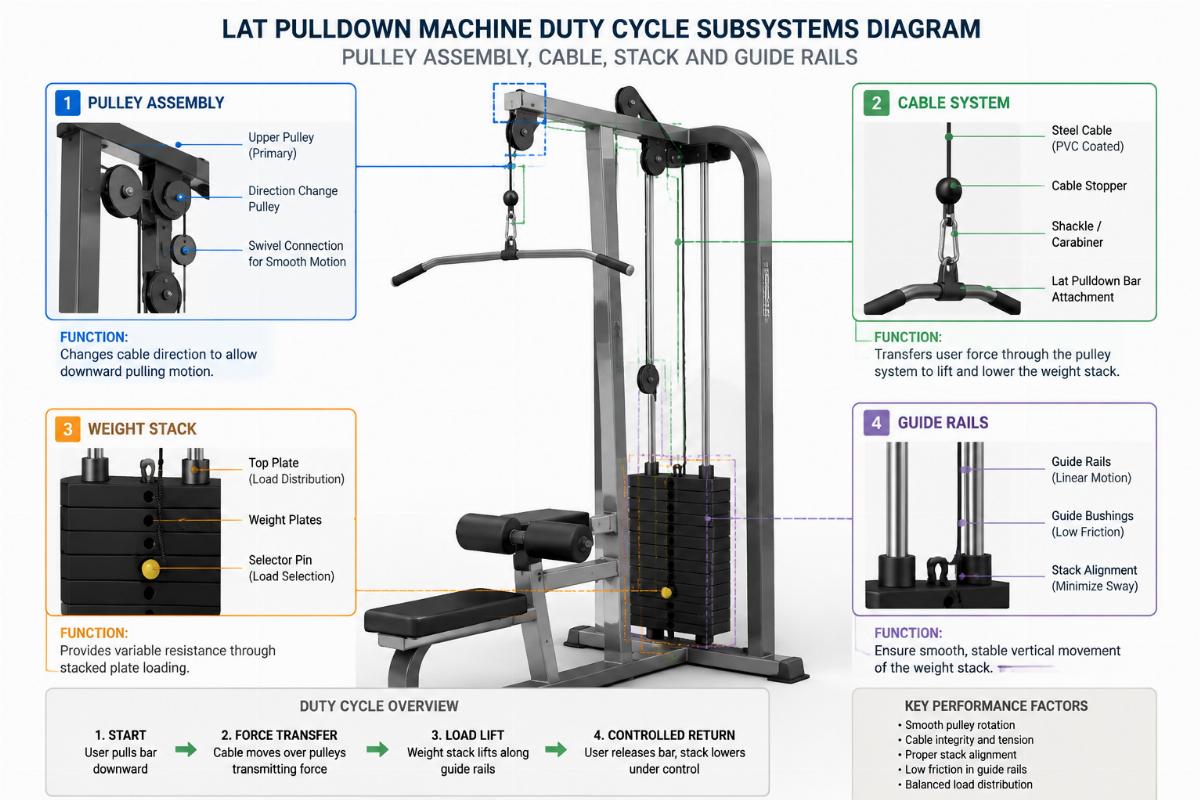
Pivot bearing quality is the single most important specification. The bearing must handle repetitive rotation under load, resist contamination, and maintain smooth operation over an extended service life. Sealed cartridge bearings outperform open bushings in school environments because they prevent sweat and debris ingress. The bearing housing should be machined to tight tolerances to eliminate lateral play, which is the first sign of premature wear [NEED_CITE: bearing seal classification and contamination resistance per ISO 15243].
Seat adjustment range is often overlooked but critical in a school setting. A high school weight room serves students whose heights and limb lengths vary considerably. A fixed-seat ab machine will force shorter students into improper form or taller students into uncomfortable positions, both of which increase injury risk and reduce exercise effectiveness. Commercial-grade abdominal trainers in a properly spec’d package offer multi-position seat rails or pin-adjustable back pads to accommodate this range.
Pad durability deserves separate attention. The foam density and vinyl cover quality determine how long the contact surfaces last. High-density foam retains its shape under repetitive loading, while low-density foam compresses permanently within months. The vinyl cover must resist abrasion from student clothing, sweat corrosion, and cleaning chemicals used by custodial staff. A commercial abdominal trainer package should specify pads rated for institutional use, not residential comfort.
Here is how these parameters compare across equipment tiers:
| Specification | Commercial School-Grade | Consumer Residential |
|---|---|---|
| Pivot bearing type | Sealed cartridge | Open bushing |
| Seat adjustment | Multi-position rail | Fixed or limited |
| Pad foam density | High-density institutional | Standard residential |
| Frame gauge | Heavy-gauge reinforced | Light-gauge bolted |
| Contamination resistance | Robust | Vulnerable |
A facility planner in a large Midwestern school district used this comparison matrix during their last procurement. They discovered that two of the three bids they received specified consumer-grade pads and open bushings, despite the solicitation calling for commercial equipment. The spec review caught the mismatch before purchase, avoiding a repeat of their previous replacement cycle.

How Do You Build a Complete Ab Trainer Package Within a School Budget?
Bundling ab stations with power racks and plate-loaded lines reduces per-unit landed cost and simplifies procurement for school buyers.
School budgets are constrained, and procurement rules often require competitive bidding. The instinct is to source each piece of equipment separately to find the lowest unit price. In practice, this approach increases total cost and complicates logistics.
A complete abdominal trainer package works best when it is part of a broader strength equipment package. The reason is straightforward: shipping and customs costs are calculated per container, not per machine. A single abdominal trainer shipped alone consumes the same container space as one that ships alongside a power rack and a set of plate-loaded stations. When the ab station is bundled into a full strength line package, the per-unit freight cost drops noticeably.
Container consolidation also simplifies customs clearance. Each shipment requires a commercial invoice, packing list, and classification documentation. Consolidating multiple stations into a single container means one set of documents, one customs entry, and one clearance event. Splitting the order across multiple smaller shipments multiplies the administrative burden and the risk of documentation errors.
We coordinated a school district order that included a full strength line—power racks, Smith machines, plate-loaded stations for every major muscle group, and an abdominal trainer package with two commercial ab crunch machines. The entire order consolidated into a single container. The lead time from order confirmation to port departure was managed as a unified production schedule, and the container arrived at the school’s receiving dock on a single truck. The district’s facilities manager noted that the unified delivery eliminated the scheduling conflicts that had plagued their previous procurement, where equipment arrived in staggered shipments over several weeks.
The budget impact extends beyond freight. When a manufacturer produces a complete package, they can optimize the production schedule and apply volume-based pricing across the line. The per-unit cost of the abdominal trainer in the package is lower than if the same model were ordered standalone, because the factory setup and quality control costs are distributed across a larger order.
School buyers should also consider the warranty structure. A complete package from a single manufacturer means one warranty provider, one spare-parts supply chain, and one technical support contact. If the ab station and the power rack come from different suppliers, a warranty claim on one does not benefit from the relationship established on the other.

What Common Procurement Mistakes Do Schools Make with Fitness Packages?
Misclassifying HS codes, underestimating container consolidation needs, and ignoring warranty spare-part availability cause costly delays and budget overruns.
The procurement process for school fitness equipment involves layers of administrative requirements that do not exist in commercial gym purchases. Understanding these requirements before placing an order prevents problems that no amount of equipment quality can fix.
HS code misclassification is the most frequent issue. Strength equipment falls under specific Harmonized System codes, and each code carries a different duty rate. An abdominal trainer package classified under the wrong code can trigger a customs hold, additional inspection, or reassessment of duties. I have seen shipments delayed at port for weeks because the customs broker classified a plate-loaded ab machine under a general exercise equipment code rather than the specific strength station code. The resulting demurrage costs exceeded the value of the machines themselves [NEED_CITE: Harmonized System classification guidelines for strength training equipment].
The correct classification requires understanding the equipment’s primary function. A plate-loaded abdominal crunch machine is classified as strength training equipment, not as a general fitness device. The申报要素 (declaration elements) must include the equipment type, loading method, and intended use. A commercial abdominal trainer package shipped to a school should be classified with these elements clearly stated on the commercial invoice.
Container consolidation underestimation is the second common mistake. Schools often order equipment in phases, assuming they can ship each phase separately. In reality, partial container loads are significantly more expensive per unit than full container loads. A school that orders an abdominal trainer package in one shipment and the rest of the strength line in another pays roughly double the per-unit freight cost compared to consolidating everything into a single container.
Warranty spare-part availability is the third mistake. Schools operate on multi-year equipment lifecycles. The original purchase price matters less than the total cost of ownership, which includes maintenance and spare parts. An abdominal trainer package from a manufacturer that does not maintain a spare-parts inventory will become a liability within a few years. Pivot bearings, cable sets, and pad covers are wear items that need replacement. If the manufacturer cannot supply these parts, the school must either fabricate them locally at high cost or retire the machine entirely.
A school district in the Pacific Northwest discovered this issue when their original ab equipment supplier went out of business. The machines were structurally sound, but the pivot bearings failed and no replacement parts were available. The district had to replace the entire abdominal trainer package at full cost, a mid-five-figure expense that could have been avoided by specifying a manufacturer with documented spare-parts support during the original procurement.

Conclusion
A commercial-grade abdominal trainer package is not a line item—it is a system decision that affects durability, budget, and liability for the entire weight room. High school facilities require equipment built on industrial pivot systems, adjustable for varying student sizes, and bundled into consolidated strength packages to control landed cost. Procurement success depends on correct customs classification, full container consolidation, and verified spare-parts availability from the manufacturer.