Wholesale Dumbbell Sets for Commercial Gym Setup | Bick Manufacturer
Most buyers think heavier dumbbells cost more and sell better. The real reason a dumbbell set for gym setup succeeds or fails is whether the weight progression matches the actual user base, not whether the heaviest pair sits on the rack.
A properly configured dumbbell set for gym setup balances material grade, weight ladder logic, grip finish, and packaging density against three variables: facility type, daily usage intensity, and end-user profile. Commercial chains need urethane or high-density rubber with tight concentricity; hotel gyms need compact low-weight ladders with branded packaging; distributors need mixed-SKU containers with private-label flexibility.
Back when I was sourcing fitness gear for a gym chain in Dubai, a full container of rubber dumbbells arrived at Jebel Ali and got rejected on the spot. The cast cores inside the rubber heads were off-center. Stack two plates on the floor and they wobbled like a spinning top. The client refused to accept the shipment, the container sat at the port for weeks, and the storage fees alone wiped out most of the margin on the deal. That single shipment taught me more about dumbbell quality control than a decade of catalog reading ever could. Since then, I have spent years walking gym floors from Riyadh to Doha, watching which dumbbell set for gym setup actually survives daily abuse and which one ends up as a warranty claim. [NEED_CITE: failure root causes in coated free weights per ISO 20957-1]
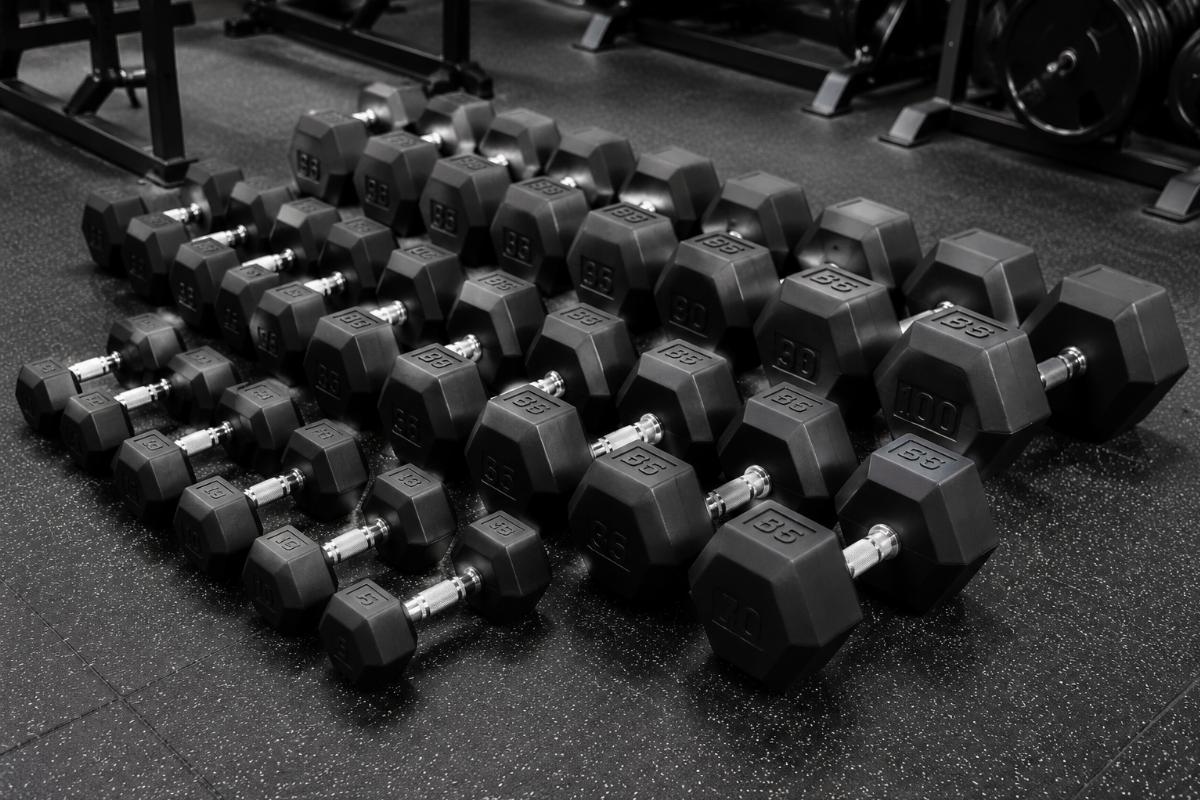
The pattern is always the same: the visible product is only half the story. What matters is what happens inside the rubber head, how the knurling is cut, and whether the packaging can survive a six-week ocean voyage. Let me walk through the decisions that actually separate a dumbbell set for gym setup that prints money from one that bleeds it.
What Material Should Different Gym Types Choose for a Dumbbell Set for Gym Setup?
Commercial high-traffic floors need urethane, mid-tier clubs need dense rubber, and budget or home setups can work with cast iron coated in rubber or neoprene. The material decision is not about preference; it is about matching abrasion resistance, odor profile, and unit cost to the facility’s daily rep count and member expectations.
Urethane sits at the top of the durability ladder. It resists chipping from repeated drops, holds color under UV exposure, and produces almost no odor even in enclosed spaces. The trade-off is unit cost, which runs noticeably higher than rubber. For a dumbbell set for gym setup serving a 24-hour commercial chain with hundreds of daily users, urethane pays for itself because replacement cycles stretch substantially longer. [NEED_CITE: material wear comparison of urethane versus rubber in fitness equipment]
High-density rubber occupies the middle ground. A well-vulcanized rubber head delivers solid drop resistance and acceptable odor levels, provided the curing cycle is complete. Here is where most sourcing problems hide. I once inspected a batch where the factory shortened the vulcanization time to push output. The dumbbells left the warehouse smelling like a tire yard, and no amount of airing out fixed it within a reasonable window. The odor issue was not a material defect; it was a process shortcut. [NEED_CITE: vulcanization cycle impact on rubber odor in fitness products]
Cast iron with rubber or neoprene coating works for hotel gyms, apartment fitness rooms, and entry-level retail packs where daily drop frequency stays low. The iron core is economical, and the coating protects floors from scratches. The limitation is that neoprene chips under heavy abuse, and bare iron edges exposed to humidity will corrode over time.
| Material | Drop Resistance | Odor Level | Unit Cost | Best Fit |
|---|---|---|---|---|
| Urethane | Robust | Noticeably reduced | Premium | High-traffic commercial gyms |
| Dense Rubber | Resistant | Standard when cured | Moderate | Mid-tier clubs and studios |
| Cast Iron + Neoprene | Basic | None | Entry | Hotels, apartments, home retail |
| Cast Iron + Rubber | Resistant | Standard | Low-Moderate | Budget commercial and garage gyms |
A distributor in Southeast Asia once ordered a dumbbell set for gym setup mixing urethane for the heavy pairs and rubber for the lighter ones. The logic was sound: heavy dumbbells get dropped harder, so they need urethane; light dumbbells get placed gently, so rubber suffices. The blended approach kept the per-container cost down while protecting the high-wear end of the rack. That kind of material segmentation is what separates informed buyers from those who just copy a catalog.

How Should the Weight Ladder Be Configured to Avoid Wasted Floor Space and Budget?
A dumbbell set for gym setup should follow a user-profile-driven weight progression, not a factory’s default catalog sequence. The most common mistake is loading the extremes heavy and leaving the middle thin, which creates dead rack space and frustrates members.
Commercial gym floors see three distinct user clusters: beginners who live in the lower range, intermediate lifters who occupy the middle, and advanced users who pull from the top. A balanced dumbbell set for gym setup allocates the highest unit count to the middle band, moderate density to the lower band, and a lean selection at the top. When the ladder is inverted or hollow in the middle, members crowd the popular pairs and ignore the rest.
For a typical commercial dumbbell set for gym setup, the progression runs from light pairs up to heavy pairs, with incremental jumps that stay small in the working range and widen at the top. A two-kilogram jump between pairs below twenty kilograms keeps progression smooth for hypertrophy work. Above that threshold, jumps can widen because the absolute load difference remains manageable. [NEED_CITE: weight progression standards in commercial free weight equipment]
Hotel and apartment gyms need a completely different ladder. The user base skews toward casual exercisers and travelers who rarely touch anything above moderate weight. A compact dumbbell set for gym setup in this context focuses on the lower-to-middle range, with pairs spaced closely for toning and light strength work. Adding a few branded neoprene pairs in the lowest range creates a visually appealing display that matches the room’s aesthetic.
A hotel developer in the Gulf region once asked me to spec a dumbbell set for gym setup across multiple properties. Each room needed a pair, and the lobby gym needed a full rack. We built the room pairs around the lowest weight range with custom-branded packaging, and the lobby rack concentrated on the lower-to-middle band with only a handful of heavy pairs. The result was a configuration that matched actual guest behavior instead of chasing a catalog maximum. [NEED_CITE: weight usage distribution in hotel fitness centers]
The anti-pattern I see repeatedly is a buyer who loads a container with equal quantities across every weight, assuming variety equals value. It does not. The middle weights sell out first, the light pairs gather dust, and the heavy pairs sit untouched because the facility’s member base does not train at that intensity. A dumbbell set for gym setup configured around real usage data will always outperform one configured around catalog symmetry.

How Can Buyers Prevent a Full Container of Dumbbells from Arriving Damaged?
Three control points determine whether a dumbbell set for gym setup arrives saleable or becomes a claims nightmare: core concentricity, packaging buffer design, and container loading supervision. Skipping any one of them turns a cost-saving purchase into a loss.
Core concentricity is the issue that killed my Dubai order. The cast iron core inside the rubber head must sit perfectly centered. If the core shifts during molding, the dumbbell will not sit flat, the rubber head will wear unevenly, and the pair will feel unbalanced in the hand. This defect is invisible from the outside until you stack the dumbbells or put them on a rack. A buyer inspecting a dumbbell set for gym setup should request a concentricity sample check before approving production, because once the rubber is cured around an off-center core, there is no rework possible. [NEED_CITE: concentricity tolerance requirements in coated free weights]
Packaging design is where ocean freight damage gets decided. A dumbbell set for gym setup shipped in loose bulk without internal dividers will arrive with rubber heads scuffed, chrome handles scratched, and cardboard boxes crushed into pulp. The fix is straightforward: individual carton separation for each pair, internal cardboard dividers to prevent head-to-head contact, and palletized stacking with stretch wrap for container loading. For premium urethane sets, foam inserts around the head add another layer of protection. The packaging cost per unit rises slightly, but the damage rate drops to near zero, which is a trade every experienced buyer accepts without hesitation.
Container loading supervision is the step that most overseas buyers skip because they are not on-site. I have seen containers where the factory loaded dumbbells loosely to maximize quantity, ignoring weight distribution. The result was shifted cargo during transit, crushed boxes at the bottom of the stack, and a receiver facing a mountain of damaged goods. A dumbbell set for gym setup should be loaded under supervision, with weight balanced across the container floor and pallets secured to prevent movement. [NEED_CITE: container loading best practices for heavy fitness equipment]
A distributor in Latin America learned this the hard way. His first order of a dumbbell set for gym setup arrived with a significant portion of the rubber heads cracked. The factory blamed the shipping line; the shipping line blamed the packaging. The real cause was that the cartons had no internal dividers, and the dumbbells had been stacked directly on top of each other inside the boxes. Every head-to-head impact over six weeks of ocean transit had created micro-fractures that turned into visible cracks at destination. The second order, packed with dividers and palletized properly, arrived clean.

What Are the Real Thresholds for Custom Logo and Retail Packaging on a Dumbbell Set for Gym Setup?
Most buyers assume private-label branding and custom packaging require massive minimum orders and long lead times. The reality is that flexible manufacturers now support mixed-SKU containers with low branding thresholds, which changes the math for distributors testing new markets.
The traditional model required a buyer to commit to a single weight, a single material, and a large quantity to justify the cost of logo molds and printed cartons. That model made sense when factories ran long production batches of one SKU. Today, a dumbbell set for gym setup destined for a distribution market often needs to cover multiple weights, multiple materials, and multiple retail pack sizes within a single container. The buyer who can mix SKUs in one shipment reduces the risk of dead stock and accelerates market testing.
Logo customization on dumbbell heads typically involves either laser engraving on chrome handles or embossing on rubber and urethane heads. Laser engraving has no mold cost and works for small batches. Embossing requires a mold, but the mold cost amortizes quickly across a full container. For a dumbbell set for gym setup targeting retail channels, the head logo and the carton printing together create a branded presentation that justifies a higher shelf price.
Custom retail packaging options range from plain brown boxes with a printed logo sleeve to full-color display boxes with foam inserts. The packaging choice should match the sales channel. A dumbbell set for gym setup sold through big-box retail needs retail-ready cartons with carry handles and clear weight labeling. The same set sold to a commercial gym can ship in plain cartons because the end user never sees the box.
A distributor in the Middle East wanted to test a dumbbell set for gym setup across three countries with different brand names. Instead of placing three separate orders, we consolidated the production into one container, with each country’s branding applied to its allocated portion. The mixed-container approach kept the per-unit branding cost low and allowed the distributor to test all three markets simultaneously. That flexibility is what makes a Shandong-based manufacturer with OEM and ODM capability valuable for distributors who cannot afford to lock capital into single-market bets. [NEED_CITE: OEM MOQ flexibility trends in fitness equipment manufacturing]

Conclusion
A dumbbell set for gym setup is never just a product specification; it is a system decision that ties material, weight logic, quality control, and packaging to the specific facility or market it serves. Buyers who configure around actual user behavior, enforce concentricity and packaging standards at the factory, and leverage mixed-container flexibility will consistently outperform those who treat dumbbells as a commodity line item. The margin is not in the unit price; it is in the decisions made before the container door closes.