Buy Commercial Seated Row Machine for Gym Setup | OEM Factory Direct
Most buyers fixate on weight stack size when spec’ing a seated row machine. The real failure points hide inside the rail cartridge, the cable winding drum, and the weld seams under the seat post.
When sourcing a seated row machine for commercial gym deployment, prioritize rail anti-corrosion treatment, cable strand construction, and frame load-bearing design over weight stack increments. A selectorized seated row machine with salt-spray-rated guide rods and a braided steel cable rated for repeated flex cycles will outlast a heavier-stack competitor by a wide margin — and factory-direct procurement with full-container consolidation can cut landed cost substantially versus buying branded units piecemeal.
I still remember a container that sat stuck at Manzanillo port for over a month. A gym chain in central Mexico had ordered a full set of plate-loaded and selectorized machines, and the seated row units were the first ones they pulled off the truck. The moment their technician sat down and pulled the handle, the weight stack carriage jammed halfway through the travel. He opened the side shroud and found the guide rods had already started pitting — microscopic rust spots that wedged the linear bearings solid. That entire pallet became dead inventory in their warehouse. The humidity during the Pacific crossing, combined with the absence of any vapor-phase corrosion inhibitor inside the packaging, had done the damage before the container even cleared customs. The demurrage fees alone wiped out the margin on the whole shipment. Since then, whenever I walk a buyer through seated row machine selection — whether they are outfitting a beachfront hotel in Cancún or a high-volume chain in São Paulo — the first question I ask is not about the weight stack. It is about their port climate, their warehouse humidity, and their turnaround cycle from container opening to floor installation. [NEED_CITE: corrosion failure modes in strength equipment during ocean transit per NACE marine environment guidelines]

Let me walk you through the parameters that actually determine whether a seated row machine survives its first two years on a commercial gym floor.
What Specs Matter Most When Buying a Seated Row Machine?
Frame wall thickness, rail surface treatment, and cable strand architecture decide commercial lifespan — the weight stack is largely a surface-level number.
Walk into any gym and you will see members judging a seated row machine by how heavy the stack goes. Procurement people, surprisingly, do the same thing when they open a spec sheet. The reality on the gym floor tells a different story. The structural frame is what absorbs the repetitive loading cycle after cycle, and the critical dimension is not the outer diameter of the tube but the wall thickness paired with the welding process at the joint nodes. A thicker outer tube with a thin wall will flex under load; a moderately sized tube with a properly thick wall and full-penetration welds at the stress points will remain rigid for the intended service life. [NEED_CITE: structural frame load testing methodology per EN ISO 20957 stationary training equipment standards]
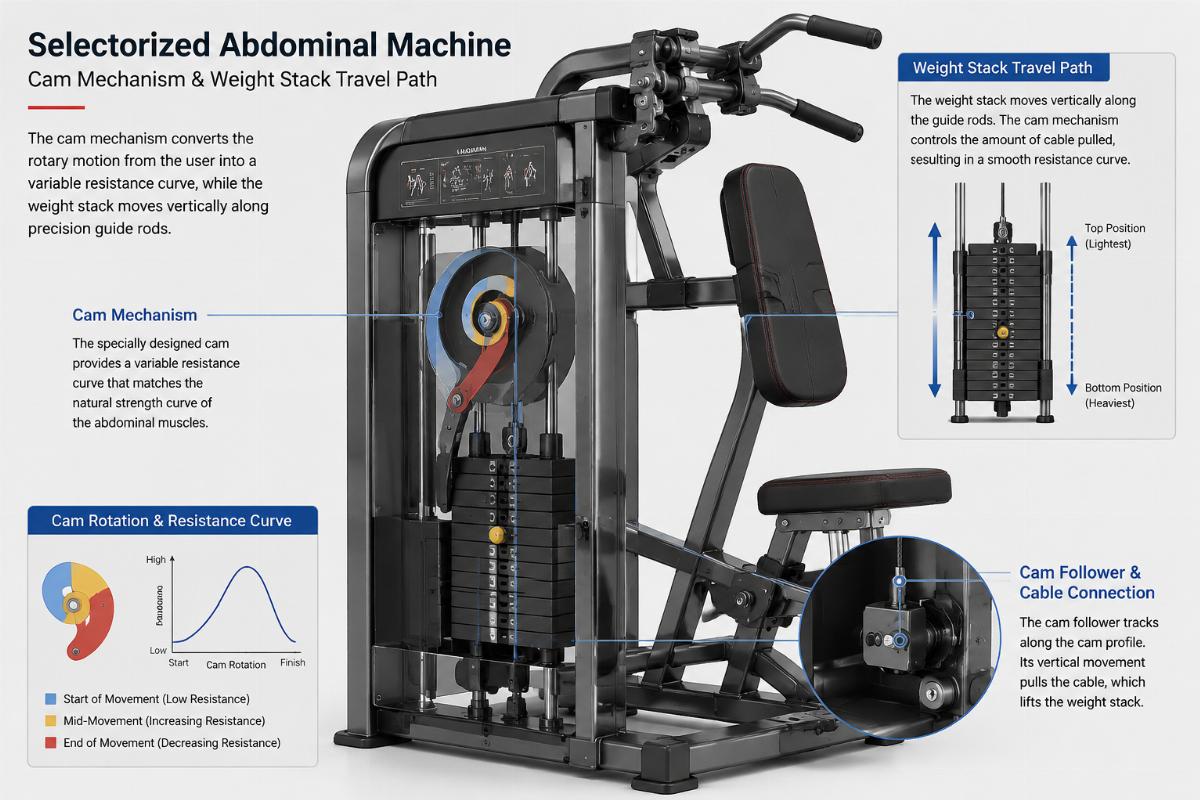
The guide rail system is where most hidden costs accumulate. Selectorized seated row machines rely on a weight stack traveling up and down on guide rods. If those rods are mild steel with only a cosmetic chrome look, they will begin corroding the moment ambient humidity crosses a threshold — and in coastal or tropical gym environments, that threshold is crossed almost permanently. The linear bearings or bushings riding on those rods then seize, and the machine feels rough or locks up entirely. The proper treatment involves a multi-step process: base grinding to a defined surface finish, a corrosion-resistant plating or coating layer, and finally a sealed bearing interface that keeps moisture out of the sliding contact zone. [NEED_CITE: linear guide rail salt-spray test protocols per ASTM B117]
The cable is the third critical element. A seated row machine routes its cable through multiple pulleys and around a drum, changing direction several times per repetition. Each flex cycle works the individual wire strands. A cable built from a high strand count with a proper core will resist internal fatigue far longer than a cheaper cable with fewer, thicker strands — even if both cables share the same outer diameter. The difference becomes visible after months of continuous use: the inferior cable begins to fray at the pulley contact points, while the better-constructed cable remains intact.
| Parameter | Commercial-Grade Seated Row Machine | Budget-Grade Alternative |
|---|---|---|
| Frame weld integrity | Full-penetration at all structural joints | Spot-welded or incomplete fusion at stress nodes |
| Guide rod surface treatment | Multi-layer corrosion protection with sealed bearing interface | Basic chrome-look plating, unsealed |
| Cable construction | High strand count, fatigue-rated for repeated flex cycles | Low strand count, standard-duty |
| Seat post adjustment mechanism | Positive-lock pin or gas-assist with verified retention | Friction-only clamp prone to slippage |
| Pulley bearing type | Sealed precision bearing | Open bushing, unshielded |
A mid-range gym operator in Colombia once showed me two seated row machines side by side after eighteen months of use. They looked identical from the outside. One had been sourced from a factory-direct seated row machine supplier that specified sealed bearings and coated guide rods; the other came from a vendor who quoted a lower unit price by cutting those invisible costs. The first machine still glided smoothly. The second had already needed its guide rods replaced twice and was showing cable fraying at the upper pulley. The purchase-price savings on the cheaper unit had been consumed many times over in maintenance calls and member complaints.

Selectorized vs. Plate-Loaded Seated Row: Which Fits Your Gym?
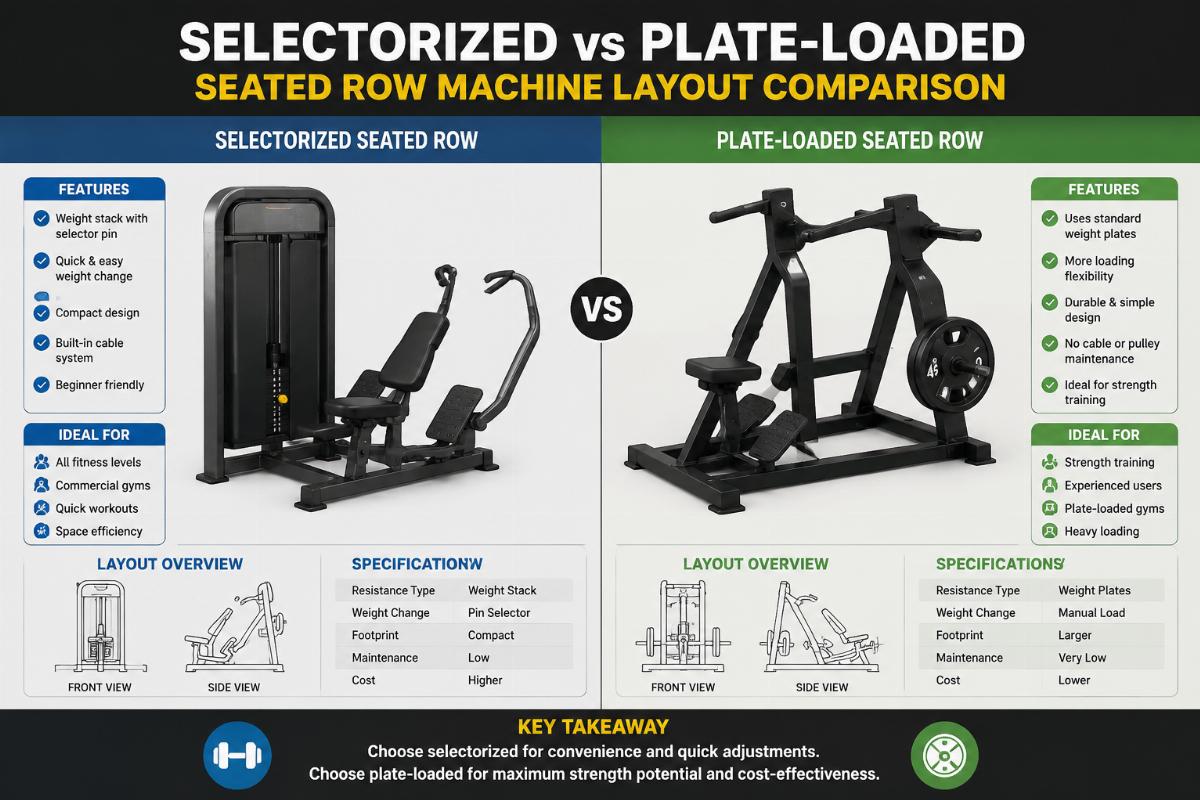
Selectorized machines serve high-traffic commercial floors where quick weight changes and low maintenance matter; plate-loaded machines suit strength-focused studios and hybrid training spaces where load customization and lower unit cost are priorities.
This is one of those decisions that looks simple on a catalog page but plays out very differently once the equipment hits the floor. A selectorized seated row machine lets the user move a pin and start lifting in seconds. That speed matters during peak hours at a commercial gym, when a queue forms behind every popular station. Members do not want to load and unload plates while three people wait behind them. The selectorized design also keeps the weight stack enclosed, which reduces dust accumulation and makes cleaning faster for the gym staff.
The plate-loaded seated row machine, on the other hand, accepts standard Olympic plates. For a CrossFit-style box, a hotel gym that also serves local lifters, or a strength studio where users often want to load non-standard weights or use micro-plates for progressive overload, the plate-loaded design offers flexibility that a fixed stack cannot match. The trade-off is that plates must be stored nearby, loaded and unloaded manually, and the machine sees more wear on the horn sleeves from repeated plate changes.
| Decision Factor | Selectorized Seated Row Machine | Plate-Loaded Seated Row Machine |
|---|---|---|
| Weight change speed | Instant — pin selection | Manual plate loading |
| Ideal user profile | General commercial gym members | Strength-focused athletes, hybrid training |
| Maintenance profile | Enclosed stack, lower daily wear exposure | Open horn sleeves, higher mechanical contact |
| Floor-space adjacency | Often paired with cable crossover and lat tower | Often paired with free-weight zone |
| Unit cost at volume | Higher per unit | Noticeably lower per unit |
A distributor in Chile was outfitting a chain of mid-format gyms — roughly mid-size floors, mixed membership, heavy evening traffic. They initially wanted plate-loaded across the board because the unit price was lower. After walking through the peak-hour flow analysis, they split the order: selectorized seated row machines for the main commercial floors where turnover speed mattered most, and plate-loaded units for the dedicated strength zones in their larger flagship locations. The mixed approach kept total capital cost reasonable while matching each machine type to the actual usage pattern. That kind of application-level thinking is what separates a procurement decision that works two years later from one that generates service calls within six months.
How to Verify Rail Durability for Humid or Coastal Gyms?
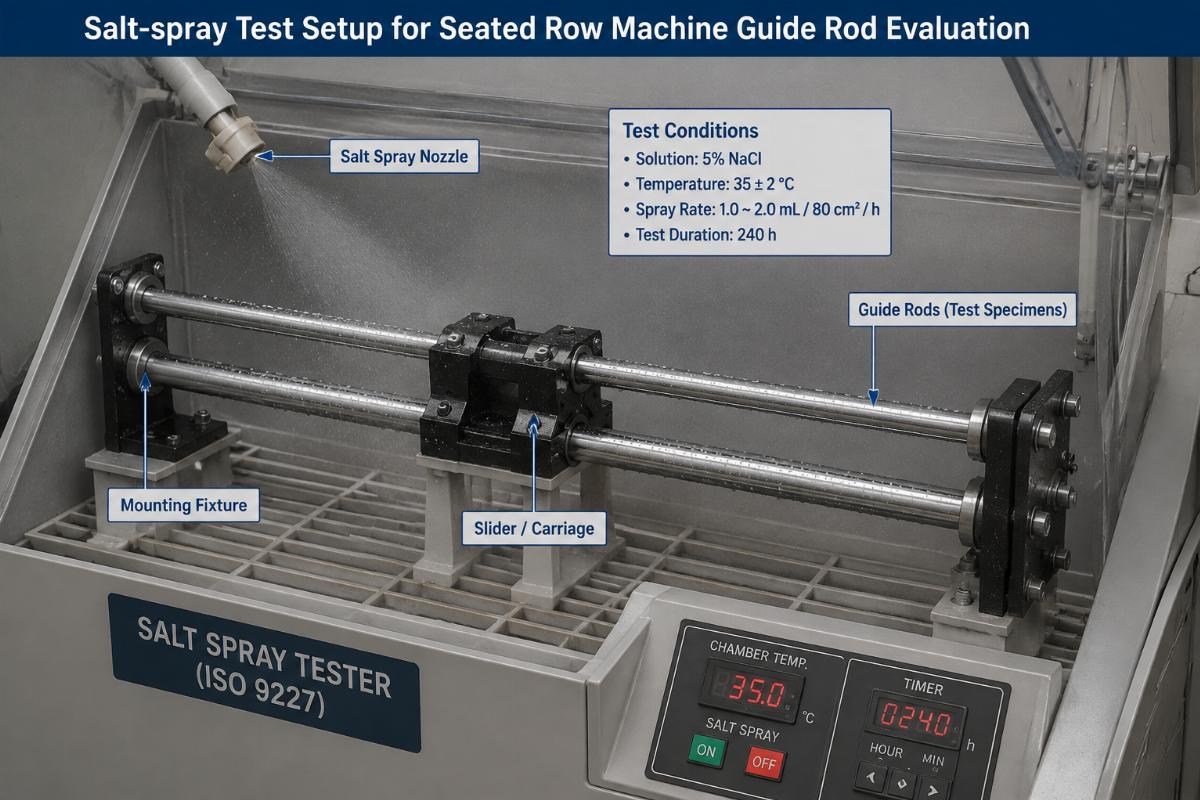
Request salt-spray test documentation from the seated row machine supplier before ordering, and plan a systematic unpack-and-test inspection at the destination port — not after the machines reach the gym floor.
This lesson came the hard way, as I mentioned at the start. The Manzanillo incident was not the first time I had seen guide rails fail after ocean transit, but it was the most expensive. The pattern is always the same: the machines look perfect when they leave the factory. They arrive at the port in a container that has been sitting in tropical heat and humidity for weeks. Inside the packaging, condensation forms on any unprotected metal surface. By the time the container is opened, the damage is already done — and it is invisible from the outside because the cosmetic panels still look clean.
The verification process needs to happen at three stages. First, before production begins, the seated row machine supplier should provide a salt-spray test report covering the guide rod treatment process. This is not a marketing document — it is a lab result showing how many hours the coated rod survived in a standardized salt-fog chamber before showing base-metal corrosion. [NEED_CITE: salt-spray test method and rating criteria per ASTM B117 for plated steel components] Different coating systems produce dramatically different endurance levels, and the report tells you which tier the supplier is running.
Second, during production, request a pre-shipment inspection of the guide rod assembly on a sampled basis. The inspector should check for coating continuity — no pinholes, no thin spots at the edges — and should cycle the weight stack by hand to confirm smooth travel before the units are sealed into packaging.
Third, and this is the step that most buyers skip, build a port-side inspection protocol into your receiving workflow. When the container arrives, open a defined number of units immediately — not next week, not after customs clears fully, but on the day of unloading. Pull the side shrouds, run your finger along the guide rods, cycle the stack, and confirm smooth travel. If you catch corrosion at this stage, you still have leverage with the supplier and the shipping insurer. If you wait until the machines are on the gym floor and a member reports a jam, the root cause becomes a dispute.
A buyer in Dubai ran into a related issue with their waterfront fitness center. The ambient salinity in the gym air was high enough that even properly coated guide rods began showing surface staining within months. The solution was not a different seated row machine — it was an upgraded coating specification negotiated with the supplier before production, moving to a higher-tier corrosion protection system designed for marine-adjacent environments. The per-unit cost increase was modest; the avoided maintenance burden was substantial.
Can You Save Costs by Consolidating a Full Container with Row Machines?
Yes — and the savings extend well beyond freight. A full-container order combining a seated row machine with complementary strength and functional equipment reduces per-unit landed cost, simplifies customs clearance, and opens the door to OEM branding at factory-direct pricing.
The economics of importing gym equipment shift dramatically once you move from loose orders to consolidated container loads. A single seated row machine shipped as part of a mixed LCL consignment carries a freight cost per unit that can be multiples of what that same machine costs when it rides inside a full container alongside matching lat pulldowns, cable crossovers, plate-loaded leg presses, and a set of adjustable benches. The container fills more efficiently because the machine footprints nest together, and the fixed costs of customs brokerage, port handling, and inland transport spread across a much larger equipment count.
Beyond the freight math, consolidation gives you procurement leverage that a single-SKU order cannot match. A seated row machine supplier operating at full-container scale is typically willing to offer factory-direct pricing that sits substantially below the retail or even dealer-tier pricing of major international brands. The same supplier can also accommodate OEM requirements — custom color schemes, branded shrouds, logo placement on the weight stack horns, localized language on the instruction placards — because the production run is large enough to absorb the setup effort.
| Procurement Approach | Per-Unit Landed Cost | OEM Branding Access | Supplier Engagement Level |
|---|---|---|---|
| Single machine, LCL shipment | Highest | Rarely offered | Transactional |
| Partial container, limited SKUs | Moderately reduced | Sometimes available | Standard |
| Full container, mixed strength and cardio package | Substantially reduced | Fully available, flexible MOQ | Strategic, with spare-parts commitment |
A hotel group in the Caribbean was developing fitness centers across several new resort properties. Their initial plan was to source cardio from one vendor and strength equipment — including the seated row machine — from another, then add free weights from a third. After reviewing the total landed cost and the coordination overhead of managing three separate shipments, three sets of customs paperwork, and three different warranty contacts, they consolidated the entire equipment package with a single factory-direct supplier. The result was a unified delivery timeline, a single warranty and spare-parts channel, and a per-unit cost that came in well below what the fragmented approach would have produced. The gym floors opened on schedule, and the operator had one phone number to call when anything needed attention.
This is where the turnkey package model earns its keep. A supplier capable of producing the full range — cardio, selectorized and plate-loaded strength machines, free weights, functional training accessories, and flooring — can engineer the equipment mix to fit the floor plan, the member profile, and the budget in one pass. The seated row machine does not sit in isolation; it gets spec’d alongside the matching lat tower, the cable crossover, and the functional trainer so that the aesthetic, the biomechanics, and the maintenance profile all align.

Conclusion
A seated row machine lives or dies by the details nobody photographs for the catalog — the rail coating, the cable construction, and the weld quality at the frame joints.
Match the machine type to your actual floor usage pattern, verify corrosion protection with documentation and port-side inspection rather than trust, and consolidate your container load to unlock factory-direct pricing and OEM flexibility. The machines that look the same on a spec sheet diverge sharply after two years on a busy gym floor — and the divergence starts with the decisions you make before the purchase order goes out.