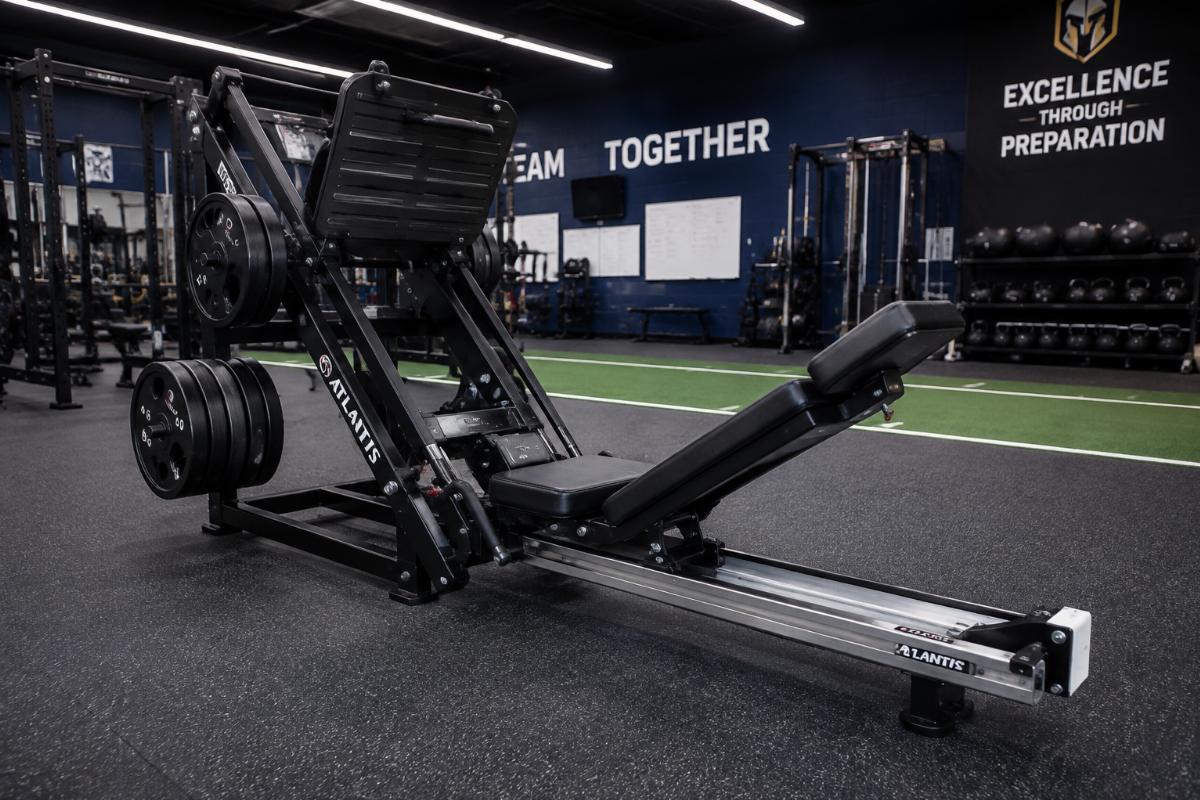
Leg Press Machine for Professional Sports Team Facilities in Peru | Bick OEM Manufacturer
Most buyers assume commercial-grade leg press machines are ready for professional athletes out of the box. The reality is that standard seat rail travel and pedal geometry are calibrated for average gym-goers, not elite athletes whose femur length and hip mobility exceed commercial norms by a wide margin.
Equipping a professional sports team facility with a leg press machine requires athlete-body-driven specifications and on-site field measurement before a single unit enters production. Seat rail length, pedal angle range, and frame load capacity must be matched to the team’s anthropometric data, not to generic commercial gym defaults.
I learned this the hard way at a Las Vegas trade show years ago. A Peruvian professional football club came to source equipment for their new training center. I quoted them our standard commercial leg press configuration—seat rail, pedal angle, frame weight, all stock specs. The machines shipped to Lima without a second thought. When the first-team players tried them, the problem surfaced immediately: the squad averaged well above typical commercial user height, and the seat rail ran out of travel before athletes reached full hip flexion under heavy load. Every unit had to be reworked with extended rails. The rework cycle consumed months, and the club’s pre-season preparation fell behind schedule. [NEED_CITE: biomechanical mismatch between commercial equipment dimensions and elite athlete anthropometrics in strength training] Since that project, I never spec a professional team order without first collecting athlete body measurements and walking the actual facility floor.
That single mistake reshaped how I approach every professional team inquiry today. Let me walk you through the specifications, measurement methods, and procurement pitfalls that separate a successful pro team installation from an expensive rework cycle.
Why Standard Commercial Leg Press Fails Pro Athletes?
The core failure point is not frame strength or upholstery quality—it is the mismatch between commercial seat rail travel and elite athlete femur length, combined with pedal geometry that does not accommodate sport-specific movement patterns.
Commercial leg press machines are engineered for a broad user base. The seat rail travel distance, pedal angle, and footplate dimensions are set based on population-average anthropometric data. [NEED_CITE: anthropometric percentile ranges used in commercial fitness equipment design per international standards] For a general commercial gym, this approach makes economic sense. But professional athletes cluster at the extreme upper percentiles of height, limb length, and joint mobility.
Consider the Peruvian football project again. The first-team squad included multiple players whose standing height placed them well beyond the commercial design envelope. When these athletes loaded the machine with sport-specific resistance, the seat rail reached its mechanical stop before the knee joint achieved the flexion angle required for their training protocol. The result was not just discomfort—it was a forced compromise in range of motion that undermined the entire purpose of the exercise.
A separate project with a Middle East basketball academy revealed a different dimension of the same problem. Their strength coach prescribed high-load leg press work to simulate the eccentric demands of repeated jumping. The standard pedal angle on the commercial unit forced the knee joint into a torque pattern that did not align with the athletes’ natural squat mechanics. Several players reported knee strain within the first training week. The pedal tilt had to be redesigned with a wider adjustment range to accommodate the academy’s specific loading protocol. [NEED_CITE: knee joint torque variation under different pedal angles during leg press exercise]
A third case involved a Southeast Asian rugby training center. Their program emphasized wide-stance leg press to develop the hip abduction strength needed for contact sports. The standard footplate width was simply too narrow. Athletes could not achieve the stance width their coaches required, and the frame showed lateral flex under asymmetric loading. The solution involved widening the footplate and reinforcing the frame structure to handle the increased moment arm.
The pattern across all three projects is consistent: the bottleneck is never the weight stack or the upholstery. It is always rail length, pedal geometry, and frame rigidity under sport-specific movement patterns.

How to Measure and Spec Before Ordering?
The only reliable path to correct specifications is combining athlete anthropometric data collection with on-site field measurement before production begins. Skipping either step guarantees costly rework.
Professional team procurement cannot follow the same workflow as a commercial gym order. A commercial gym owner selects from a catalog, and the equipment fits a broad user range. A professional team order demands a custom specification process grounded in actual data from the athletes who will use the machine and the facility where it will be installed.
The measurement process breaks into two parallel tracks.
The first track is athlete anthropometric data collection. The team’s strength and conditioning staff should provide femur length measurements, hip flexion range of motion data, and typical stance width preferences for the leg press exercise. These data points directly determine three critical specifications: seat rail travel distance, pedal angle adjustment range, and footplate width. [NEED_CITE: field measurement protocol for athlete anthropometrics in strength equipment specification] Without this data, you are guessing—and guessing at elite athlete dimensions is how rework cycles begin.
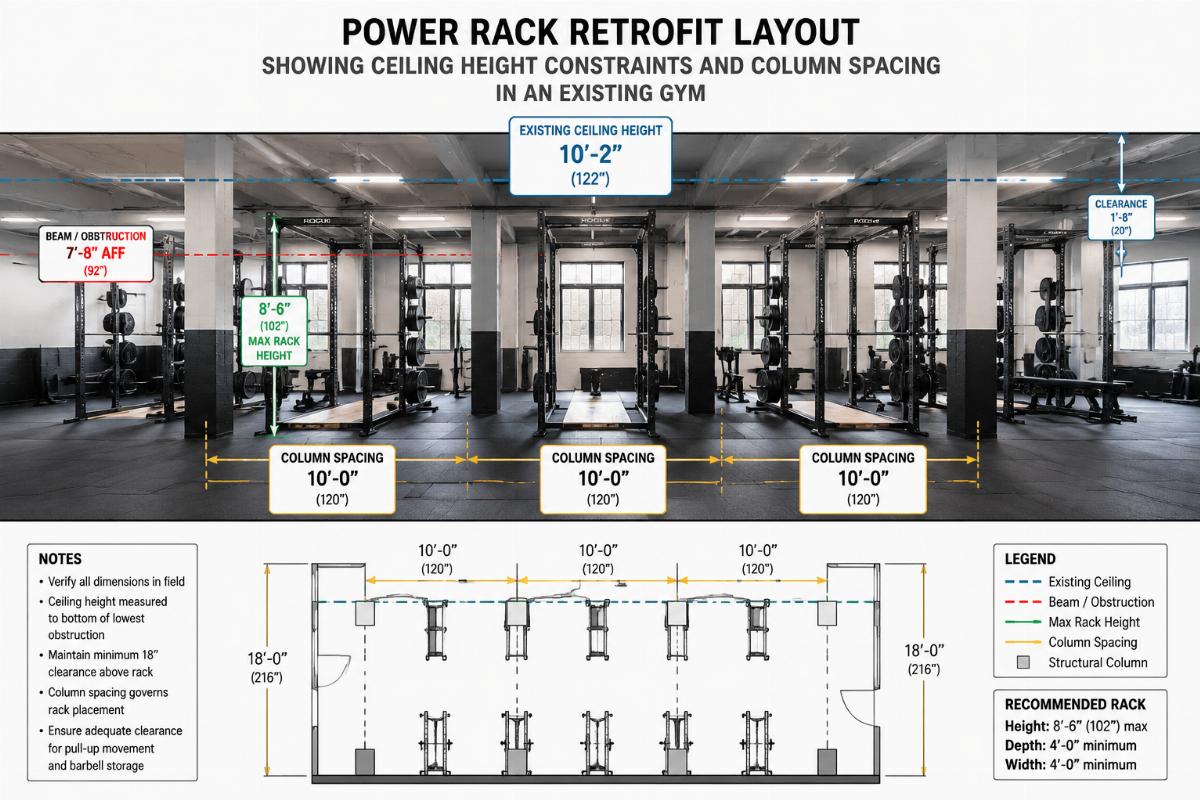
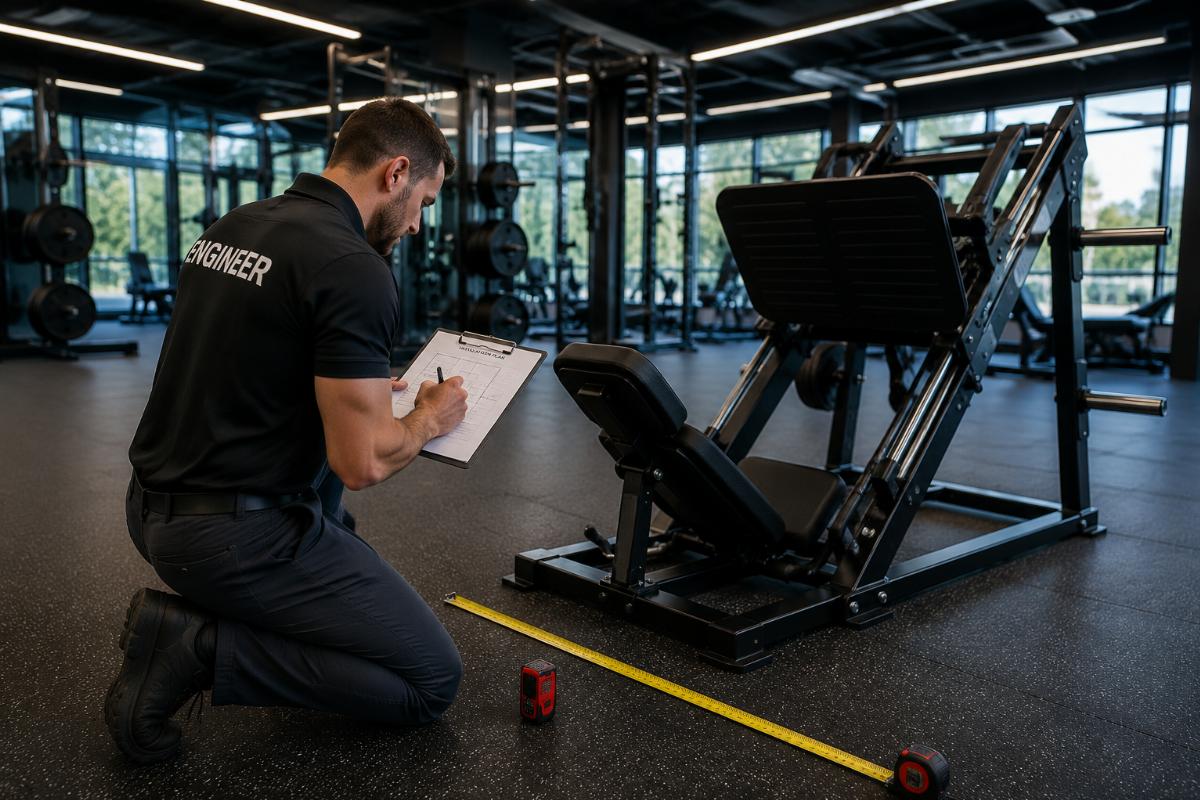
The second track is on-site field measurement. Ceiling height determines whether a plate-loaded or selectorized configuration is viable. Floor load capacity dictates whether the facility needs additional structural reinforcement before heavy frames arrive. The approach path—doorway widths, corridor turns, elevator dimensions—determines whether the machine ships assembled or requires on-site assembly, which in turn affects frame joint design.
This is where Bick’s OEM and ODM customization capability becomes operationally relevant. Because we manufacture in-house, we can adjust seat rail length, pedal geometry, and frame reinforcement based on the specific data a professional team provides, without the minimum order constraints that typical commercial catalogs impose. A single-unit custom order for a pro team receives the same engineering attention as a full facility package. The factory-direct model means the cost of customization does not carry the markup layers that make bespoke equipment prohibitively expensive when sourced through intermediaries.
What Specs Matter Most for High-Load Training?
Rail travel, pedal geometry, and frame load capacity under sport-specific demands are the three specifications that determine whether a leg press machine serves professional athletes or fails them.
Seat rail travel must be evaluated against the athlete’s femur length. The ratio of rail travel to femur length determines whether the athlete can achieve full hip and knee flexion under load. [NEED_CITE: seat rail travel to femur length ratio requirements for full range of motion in leg press] For athletes at the upper percentile of height, standard rail travel falls short. The solution is not simply a longer rail—it is a rail extension calibrated to the specific anthropometric data of the team, with the carriage mechanism re-engineered to maintain smooth travel over the extended distance.
Pedal geometry encompasses both the base angle and the adjustment range. Professional athletes do not all use the same pedal angle. A sprinter’s program may call for a steeper angle to emphasize hip extension, while a basketball player’s protocol may require a shallower angle to reduce knee joint torque under high load. The pedal must offer a meaningful adjustment range, not a single fixed position. [NEED_CITE: pedal angle adjustment range requirements for sport-specific leg press training] The pivot mechanism must hold position firmly under heavy load without drift.
Frame load capacity must be evaluated not as a static number but as a dynamic requirement. Professional athletes generate asymmetric forces during unilateral or wide-stance leg press work that standard commercial frames are not designed to resist. The frame must handle not just the total load but the lateral and torsional forces that sport-specific movement patterns introduce. [NEED_CITE: frame load capacity testing standards for professional sports strength equipment] This is where frame weight and structural reinforcement matter—not as marketing numbers, but as engineering responses to real-world loading conditions.
A specification matrix for professional team leg press procurement should address these three dimensions with qualitative rigor rather than marketing claims:
| Specification Dimension | Standard Commercial Grade | Professional Athlete Grade |
|---|---|---|
| Seat Rail Travel | Population-average range | Extended to match team femur length data |
| Pedal Angle | Fixed or minimal adjustment | Wide adjustment range with secure locking |
| Footplate Width | Standard stance width | Widened for sport-specific stance requirements |
| Frame Load Response | Static load rating | Dynamic lateral and torsional force resistance |
| Carriage Mechanism | Standard rail tolerance | Re-engineered for extended travel smoothness |

How to Avoid International Procurement Delays?
Pre-shipment verification against athlete data and on-site adjustment protocols are the only reliable safeguards against the multi-month rework cycles that derail professional team facility timelines.
The Peruvian project taught me that the most expensive phase of international procurement is not shipping—it is rework after arrival. When machines arrive on the other side of the world and do not fit the athletes or the facility, the cost is not just financial. It is measured in delayed season preparation, disrupted training periodization, and damaged trust between the equipment supplier and the team’s management.
The prevention protocol is straightforward in principle but demanding in execution. Before production begins, the specification sheet must be reviewed against the athlete anthropometric data and field measurements. This review is not a formality—it is a structured verification that rail travel matches femur length ratios, pedal adjustment range covers the team’s training protocols, and frame specifications account for sport-specific loading patterns. [NEED_CITE: pre-shipment verification checklist for international strength equipment procurement]
During production, critical dimensions must be verified at the factory before the machine is packed. Rail travel distance, pedal angle range, and footplate width should be measured and documented with photographic evidence. This documentation travels with the shipment, giving the on-site installation team a reference to confirm that what arrived matches what was specified.
On-site adjustment protocols must be built into the installation plan. Even with perfect factory verification, field conditions can reveal minor calibration needs. The installation team should have the tools and technical guidance to make on-site adjustments to pedal angle, seat position, and carriage tension without waiting for factory support across time zones. Bick’s technical support model includes spare parts supply and remote technical guidance precisely for this reason—professional team timelines do not tolerate week-long waits for a replacement component shipped from another continent.

Conclusion
Professional sports team leg press procurement demands athlete-driven specifications and field-verified measurements, not commercial gym defaults. Seat rail travel, pedal geometry, and frame load response must be calibrated to the actual dimensions and training protocols of the athletes who will use the equipment. Pre-shipment verification and on-site adjustment readiness prevent the rework cycles that derail facility timelines and compromise season preparation.