Plate Storage Tree Selection for 24-Hour Gym Chains Wholesale Supplier
A plate storage tree is not a shelf—it is a structural member that absorbs hundreds of high-impact loading cycles every single day.
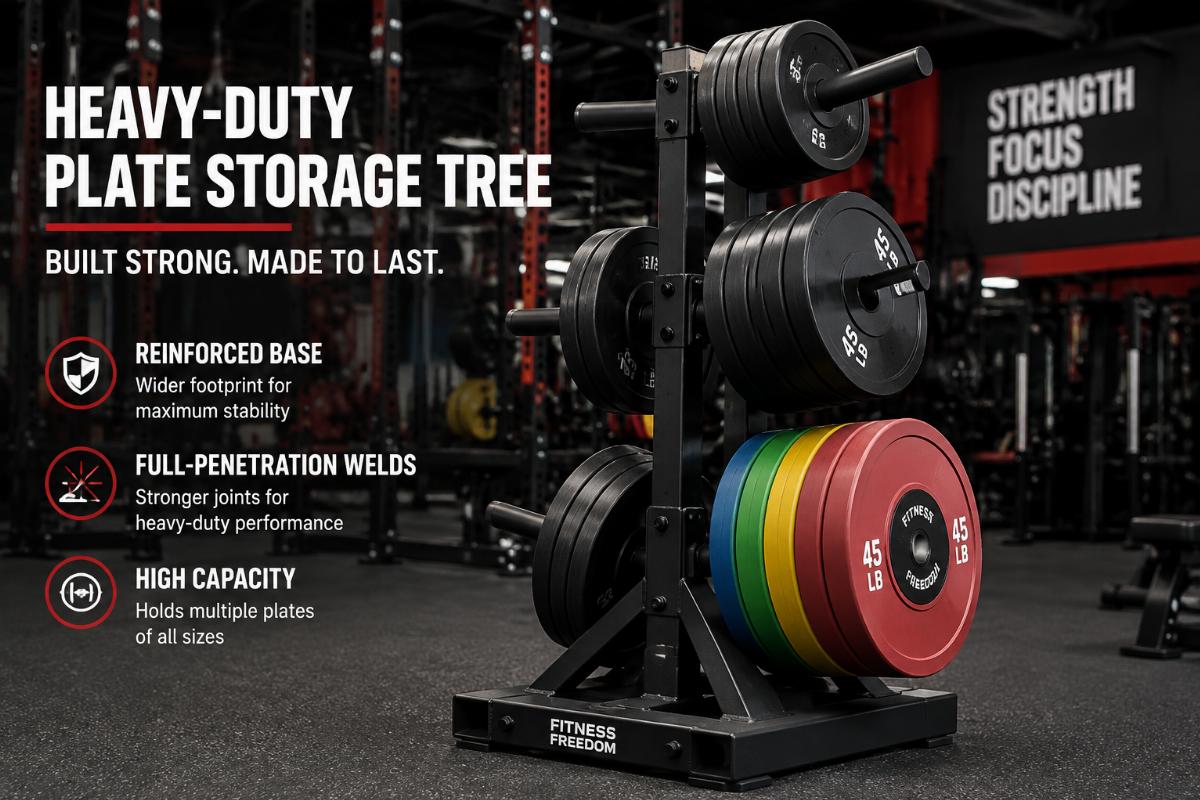
For 24-hour gyms, plate storage tree selection must prioritize steel tube wall thickness, base mass, and full-penetration welding over cosmetic finish, because unsupervised, high-frequency use will expose thin tubing and spot-welded joints within weeks.
I once waited three days at the Santos port watching a container of plate racks get unloaded, only to find the uprights already bent before they even reached the gym floor in São Paulo. The packaging had no internal bracing, and the base plates were too light to survive the rough handling of a 24-hour, unstaffed facility where members routinely drop twenty-kilogram plates onto the horns. Within two months, the base welds cracked on multiple units, and an entire row toppled, tearing through rubber flooring. Since then, every time a gym owner asks me about plate storage tree selection, the first question I ask is not about color or finish—it is about how many tonnes of impact load those racks will absorb every day. [NEED_CITE: failure mode distribution of free-weight storage equipment in unsupervised gym environments]
That incident reshaped how I approach every container of plate storage tree selection for high-traffic facilities. What follows is a field-based breakdown of what actually matters when racks are used hard, around the clock, with no staff watching.
Why 24-Hour Gyms Destroy Standard Plate Trees?
Standard plate trees fail in 24-hour gyms not because of rust or paint peeling, but because the structural joints and base geometry were never designed for repetitive impact loading.
The trend is consistent across regions. Operators running unstaffed, round-the-clock facilities report noticeably higher replacement rates for free-weight storage compared to staffed boutique studios. [NEED_CITE: comparative equipment failure rates between staffed and unstaffed commercial gym environments] Members in 24-hour gyms tend to slide plates onto the horns and let them drop, rather than placing them gently. A single plate drop generates a shock load many times the static weight of the plate itself. Multiply that by hundreds of drops per day, across dozens of racks, and the cumulative fatigue becomes enormous.
I worked with a Middle East gym chain that opened several 24-hour locations using the same plate storage tree selection they had used in their staffed clubs. Within months, the power-rack area racks developed visible cracks at the horn-to-upright junction. The staffed locations, where trainers reminded members to place plates carefully, showed no such issues. The equipment was identical. The difference was usage pattern.
Two structural weaknesses give way first. The horn weld—especially when it is only tack-welded or spot-welded—develops hairline cracks that propagate with every impact. The base, if underweighted relative to the loaded height of the rack, acts as a lever arm: a fully loaded tall rack with a light base will tilt forward when a member loads or removes plates from the top horn, eventually causing the entire unit to tip. [NEED_CITE: tipping stability criteria for tall free-weight storage per EN 957-1]
The lesson is straightforward. In a 24-hour environment, plate storage tree selection must treat the rack as a dynamically loaded structural component, not a passive storage accessory.

What Are the Critical Specs for Heavy-Duty Plate Storage?
Steel tube wall thickness, base mass ratio, and welding method are the three parameters that determine whether a plate tree survives a 24-hour gym or fails within a season.
These are the specifications that separate commercial-grade plate storage tree selection from the light-duty racks sold for home garages. Each one addresses a different failure mode, and skipping any one of them leaves the rack vulnerable.
| Parameter | Light-Duty / Home Use | Commercial-Grade for 24-Hour Gyms |
|---|---|---|
| Upright tube wall thickness | Thin-walled, visibly flexible under load | Heavy-wall tube, minimal deflection under full load [NEED_CITE: deflection comparison of thin-wall vs heavy-wall steel tube under lateral impact] |
| Base mass relative to loaded height | Light base, racks tilt when top horns are loaded | Weighted base or widened footprint, resists forward tipping |
| Horn-to-upright welding | Spot weld or tack weld | Full-penetration continuous weld around the joint |
| Horn reinforcement | Horn welded directly to upright | Gusseted or sleeved horn joint for impact distribution |
| Surface treatment on welds | Paint over raw weld | Weld ground smooth before coating, no slag pockets |
A distributor in Southeast Asia once returned an entire container of plate racks because the horn welds were failing during normal use. Investigation showed the manufacturer had used spot welding on the horn joints—a cost-saving measure that is acceptable for a home gym where plates are placed gently, but catastrophic in a commercial setting where plates are dropped repeatedly. The rework cost, including return shipping and on-site re-welding, was several times the original purchase price. That case is now a standard reference whenever I walk a buyer through plate storage tree selection.
Base mass deserves special attention. A common mistake is to assume that a heavier rack costs more to ship and therefore should be avoided. In reality, an underweighted base leads to tipping incidents, and the cost of replacing damaged flooring, handling injury claims, and shipping replacement units dwarfs the incremental freight cost of a heavier base. [NEED_CITE: relationship between base-to-loaded-height ratio and tipping resistance in free-weight storage]

How to Match Plate Trees to Different Gym Zones?
Not every zone in a gym needs the same plate storage tree selection—power zones demand fixed, high-capacity racks, while functional and CrossFit areas benefit from movable, lighter units.
A large 24-hour gym chain I advised was initially ordering the same plate rack model for every zone. This was inefficient and, in some areas, unnecessarily expensive. Once we mapped the usage pattern of each zone, a clearer plate storage tree selection strategy emerged.
In the main powerlifting and strength zone, members load and unload heavy plates—often in sets of twenty-kilogram competition plates—multiple times per minute during peak hours. The racks here need maximum load capacity, the heaviest possible base, and fixed positioning. These are the racks that take the most abuse. Moving them is rare, so casters are unnecessary and actually introduce a structural weak point. Full-penetration welding on every horn is non-negotiable here.
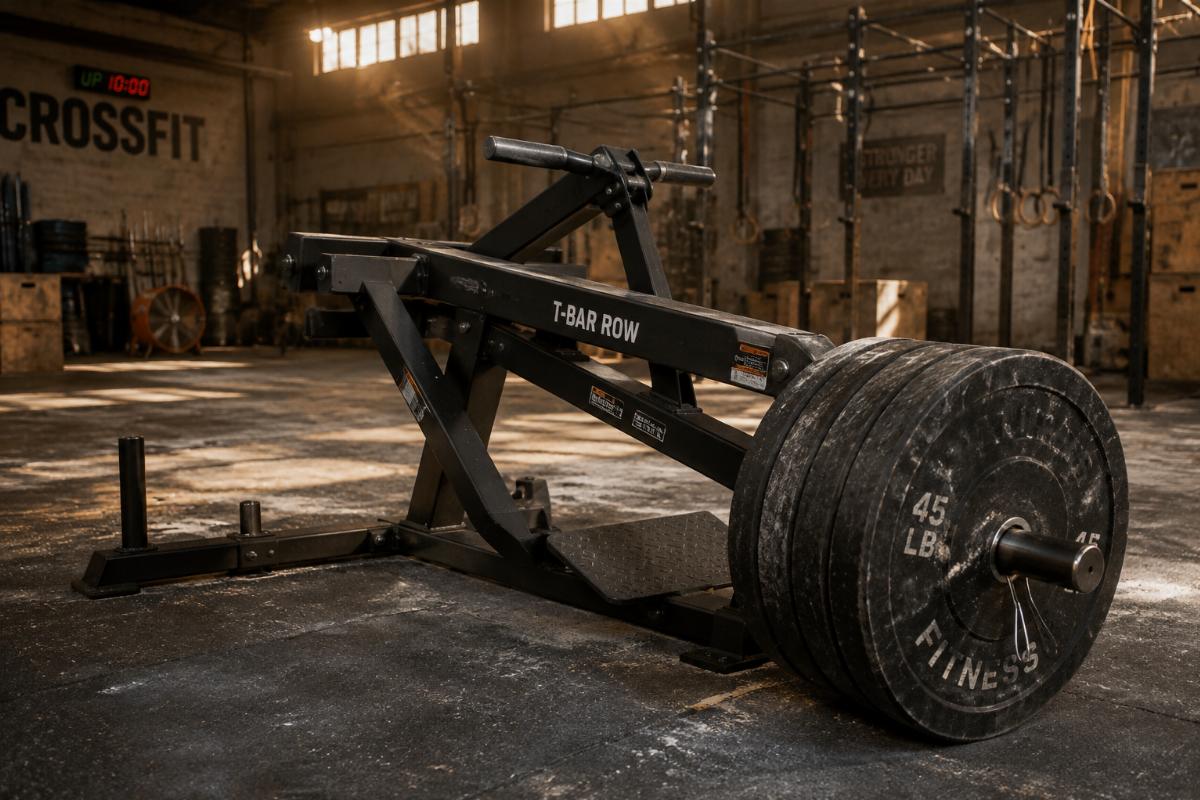
In the functional training or CrossFit-style area, members frequently move plates between stations, use bumper plates that are larger in diameter, and rearrange equipment for WODs. Fixed heavy racks are impractical here. Instead, lighter plate trees with heavy-duty casters and moderate load capacity work better. The key is that the casters must be industrial-grade, rated for the loaded weight of the rack, and equipped with locks. Cheap casters crack under repeated loading and make the rack unstable during use.
For the stretching or recovery zone near the entrance, a small, aesthetically finished plate tree with fewer horns is sufficient. Members here are typically loading lighter plates for accessory work, and impact loading is minimal. This is the one zone where appearance can take priority over structural overengineering.
A European gym operator running multiple 24-hour locations adopted this zoned plate storage tree selection approach and reported a noticeable drop in warranty claims. The power-zone racks, built to the heaviest spec, stopped failing. The functional-zone racks, being lighter and on casters, were easier to replace individually when casters eventually wore out. Overall, the total cost of ownership dropped because each zone got exactly what it needed, rather than a one-size-fits-all solution that either overbuilt or underbuilt.

What Questions Should Buyers Ask Suppliers?
Before placing a bulk order, buyers must ask suppliers to confirm tube wall thickness, base weight, welding method, and provide sample test evidence—vague promises are not enough for plate storage tree selection in 24-hour gyms.
Too many buyers accept supplier claims at face value and discover the truth only after the container arrives and the racks are in use. A structured set of questions, asked before order confirmation, can prevent costly failures.
First, ask for the exact upright tube specification: outer dimension and wall thickness. Suppliers who hesitate or give only outer dimensions without wall thickness are often using thin-wall tube. For 24-hour gym use, the wall thickness matters far more than the outer dimension. A thick outer tube with a thin wall will flex and fatigue faster than a slightly smaller tube with a thick wall. [NEED_CITE: effect of wall thickness on lateral deflection and fatigue life of welded steel rack uprights]
Second, ask for the base weight of each rack model, unloaded. Compare this to the maximum loaded height of the rack. If the base is light relative to the loaded height, the rack will tip when members load or unload the top horns. A responsible supplier will have calculated the base mass to maintain stability even when the top horns are fully loaded and the bottom horns are empty.
Third, ask specifically whether the horn joints are spot-welded or full-welded. Request photos of the welds before coating is applied. Spot welds will show as small, discrete circles. Full-penetration welds will show as a continuous bead around the entire joint. If the supplier cannot provide pre-coating weld photos, assume the worst.
Fourth, request a sample unit for destructive testing before committing to a full container. Load the sample to its rated capacity, then drop a loaded barbell onto the horns repeatedly. Inspect the welds and base for cracking or deformation. This single step has saved multiple buyers from accepting an entire shipment of structurally inadequate racks.
When I source plate storage tree selection for Bick’s commercial clients, every unit is built with heavy-wall upright tube, full-penetration welding on all horn joints, and a base mass calculated to resist tipping under full top-horn loading. We provide pre-coating weld photos and, on request, ship sample units for buyer-side destructive testing before bulk production begins. This is not because we expect buyers to distrust us—it is because the 24-hour gym environment is unforgiving, and the only way to prove a rack is fit for purpose is to test it under conditions that mimic actual use.

Conclusion
Plate storage tree selection for 24-hour gyms is an exercise in structural engineering, not interior design. Tube wall thickness, base mass, and welding method determine whether a rack survives months of unsupervised, high-impact use or fails within weeks. Zoning the gym by usage pattern ensures each area gets the right rack, and asking suppliers for verifiable specifications—backed by sample testing—protects buyers from costly field failures. In a 24-hour environment, the cheapest rack is almost always the most expensive one.